About Juniperus sabina L.
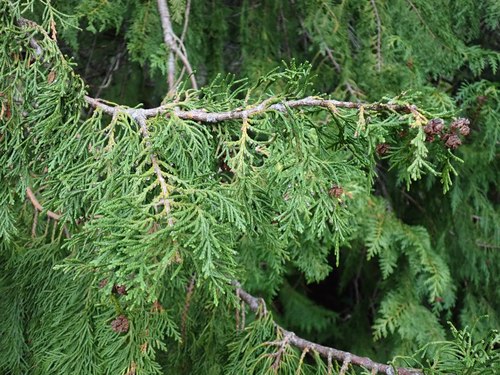
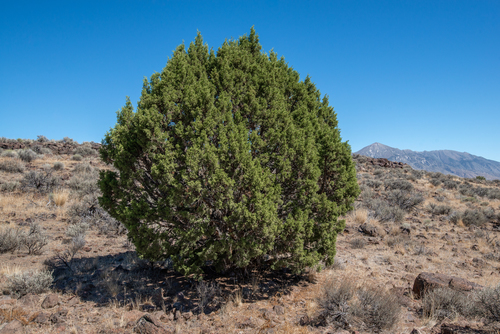
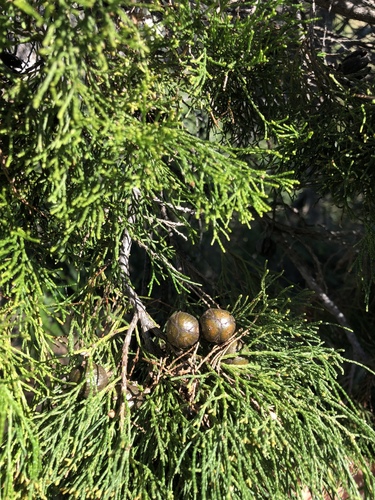
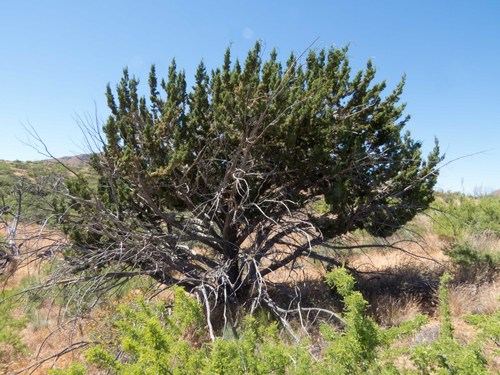
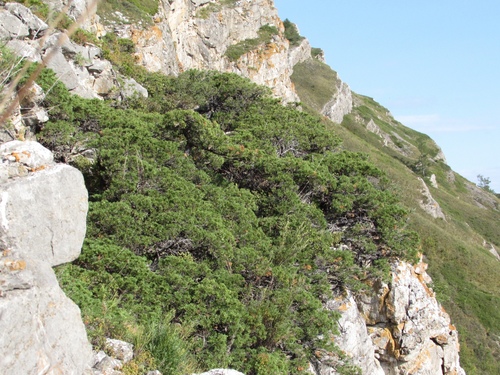
Juniperus sabina L. is a highly variable shrub that grows 1 to 4 metres (3+1⁄2 to 13 feet) tall. It produces two forms of leaves: juvenile needle-like leaves that are 5 to 10 millimetres (1⁄4 to 3⁄8 inch) long, and adult scale-leaves that are 1 to 2 mm long. These adult leaves grow on slender shoots that measure 0.8 to 1 mm thick. Juvenile leaves occur primarily on seedlings, but mature shrubs sometimes retain some juvenile leaves alongside adult leaves, especially on shaded shoots located low in the crown. This species is mostly dioecious, meaning it produces male and female reproductive structures on separate individual plants, though some individual plants bear both sexes. Its seed cones are berry-like, 5 to 9 mm in diameter, blue-black with a whitish waxy coating, and hold 1 to 3 seeds, with 4 or 5 seeds occurring rarely. The cones reach maturity in approximately 18 months. Male cones are 2 to 4 mm long, and release their pollen in early spring. All parts of this plant are poisonous, because it contains multiple toxic compounds including ethereal oils. It acts as the alternate (telial) host for the Pear Rust fungus Gymnosporangium fuscum. Juniperus sabina is a widely popular ornamental shrub grown in gardens and parks, and many named cultivated varieties have been selected for cultivation. In 19th-century America, savin was used as an ingredient in abortifacient drugs. In Iran, savin fruit, called ابهل abhal in the local language, is used as a traditional remedy to ease urinary and digestive symptoms.