About Juniperus rigida Siebold & Zucc.
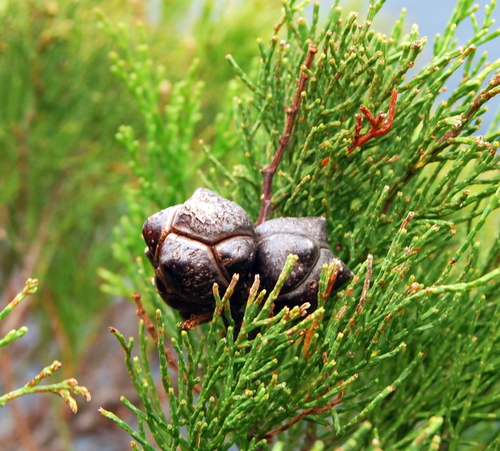
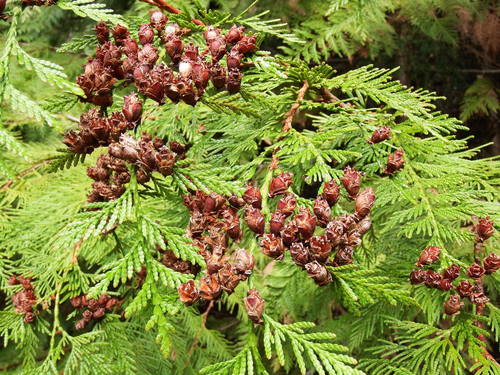
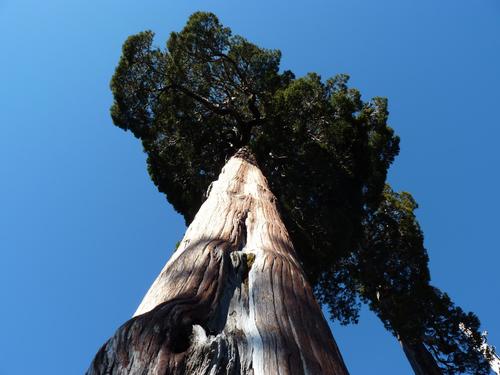
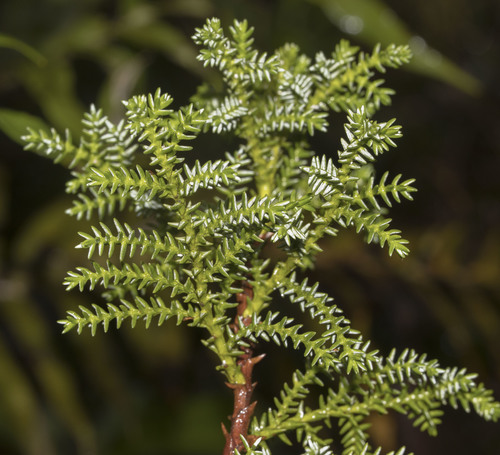
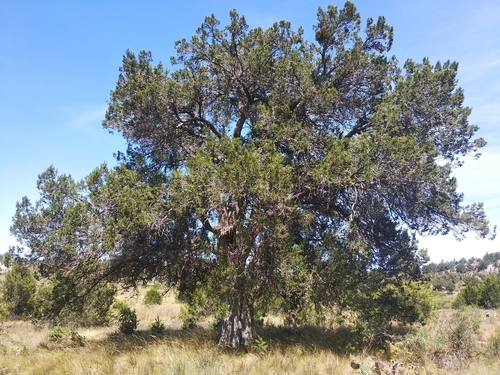
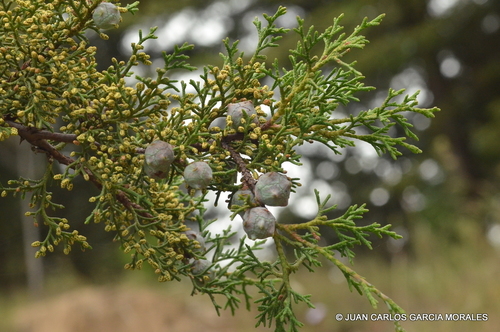
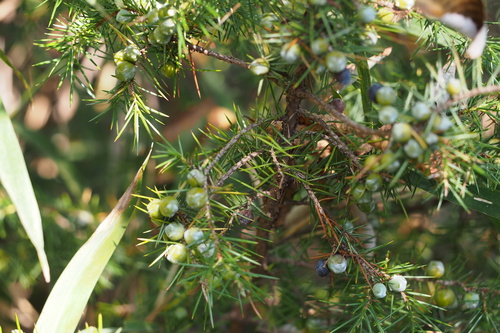
Juniperus rigida, commonly called temple juniper, is a species of juniper. It is native to northern China, Mongolia, Korea, Japan, and the far southeast of Russia, specifically Sakhalin and Primorsky Krai, where it grows at altitudes ranging from 10 to 2,200 metres (33 to 7,218 ft). This species has also become naturalized in California and Alabama, United States. It is closely related to Juniperus communis (common juniper) and Juniperus conferta (shore juniper); J. conferta is sometimes classified as a variety or subspecies of J. rigida. Temple juniper is a shrub or small tree that reaches 6–10 metres (20–33 ft) in height, with a maximum trunk diameter of 50 centimetres (20 in). Its leaves are evergreen and needle-like, arranged in whorls of three, and colored bright green to yellowish-green. The leaves measure 10–23 millimetres (1⁄2–1 in) long and 1–1.3 mm broad, with a single white stomatal band on the inner surface. The species is dioecious, meaning individual plants produce either all male or all female reproductive structures. The seed cones are berry-like; they start green and ripen over 18 months to dark purple or brownish, with a variable whitish waxy coating. The cones are spherical, 5–9 mm in diameter, and have three fused scales (rarely six) arranged in one whorl of three (rarely two). Each scale bears one seed; when six scales are present, only the three larger scales produce seeds. Seeds are dispersed when birds eat the cones, digest the fleshy scales, and excrete the hard seeds in their droppings. Male pollen cones are yellow, 3–5 mm long, and fall shortly after releasing their pollen in spring. Juniperus rigida is cultivated as an ornamental tree, and it is frequently planted on temple grounds in Japan. It is also commonly grown as bonsai.