About Juniperus monosperma (Engelm.) Sarg.
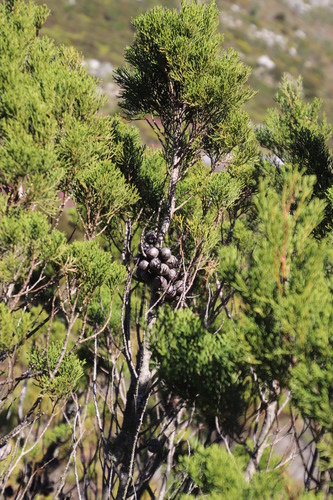
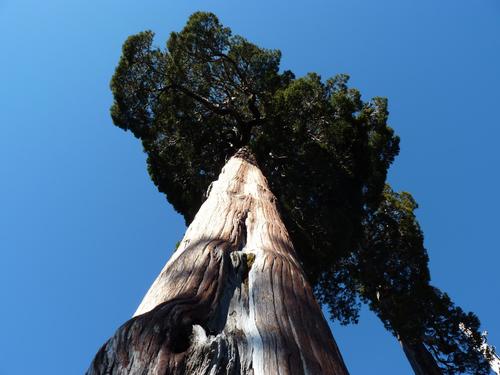
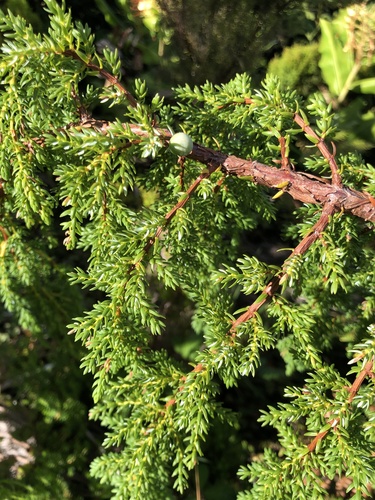
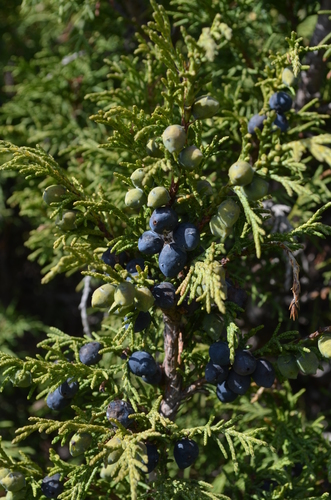
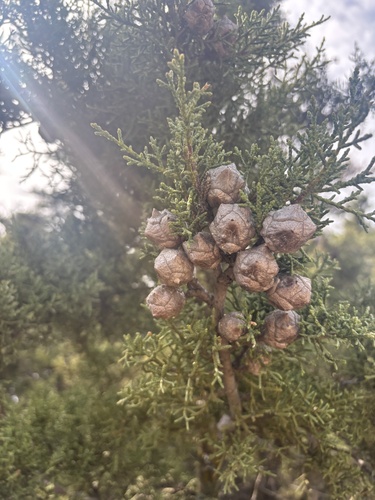
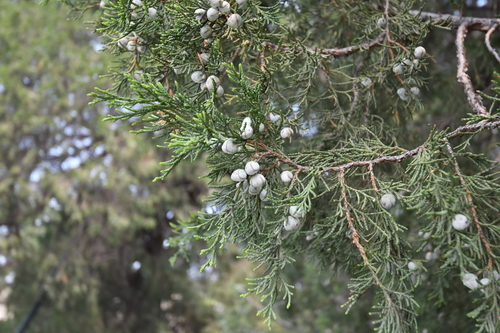
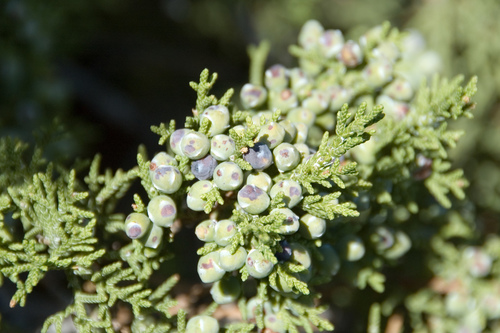
Juniperus monosperma, commonly called New Mexico juniper or one-seed juniper, is a juniper species native to western North America. In the United States, it occurs in Arizona, New Mexico, southern Colorado, the Oklahoma Panhandle (western Oklahoma), and western Texas. In Mexico, it is found in extreme northern Chihuahua. It grows at altitudes between 970 and 2300 meters. This species is an evergreen coniferous shrub or small tree, typically reaching 2 to 7 meters (rarely up to 12 meters) in height. It is usually multistemmed, with a dense, rounded crown. The bark is gray-brown, and exfoliates in thin longitudinal strips, exposing bright orange-brown tissue underneath. Its ultimate shoots are 1.2 to 1.9 millimeters thick. Mature leaves are scale-like, measuring 1 to 2 mm long and 0.6 to 1.5 mm broad on small shoots, and growing up to 10 mm long on vigorous shoots. They are arranged in alternating whorls of three, or in opposite pairs. Only young seedlings produce needle-like juvenile leaves. The female cones are berry-like, with soft resinous flesh, and range from subglobose to ovoid in shape. They are 5 to 7 mm long, dark blue with a pale blue-white waxy bloom, and almost always contain a single seed (rarely two or three). The cones mature about 6 to 8 months after pollination, and are eaten by birds and mammals. Male cones are 2 to 4 mm long, and shed their pollen in late winter. This species is usually dioecious, meaning male and female cones grow on separate plants, though occasional monoecious individuals (with both male and female cones on one plant) do occur. Its roots have been recorded extending as far as 61 meters below the surface, making it the plant with the second deepest known roots, after Boscia albitrunca. It is very rare or even extinct in Mexico; only a single 1880 herbarium collection from the country has been verified, and more recent searches have failed to locate the species there. New Mexico juniper cones often have the seed apex exposed. This trait was formerly used to recognize a separate species, Juniperus gymnocarpa, but it is now known to be caused by insect damage to developing cones (a damage that can affect many different juniper species), and seeds from such cones are sterile. The closely related species Juniperus angosturana was formerly classified as a variety of this species, named J. monosperma var. gracilis Martínez; it differs from J. monosperma by its more slender shoots, which are 1.0 to 1.3 mm in diameter. Additional occasional common names for this species include single-seed juniper and cherrystone juniper. In its ecology, Hopi chipmunks, quail, foxes, rock squirrels and deer eat the berry-like cones, and goats in New Mexico browse the foliage. Historically, the Navajo people ate the ripened cones of New Mexico junipers in fall and winter, made dye from the bark and cones, and used the wood for a variety of purposes. Among the Zuni people, a poultice of chewed root was applied to increase the strength of newborns and infants. An infusion of the leaves was taken to relieve muscle aches and to prevent conception, and also taken after childbirth to prevent uterine cramps and stop vaginal bleeding. A simple or compound infusion of twigs was used to promote muscular contractions during childbirth, and used after birth to stop bleeding. The wood was a favored ceremonial firewood, and shredded fibrous bark was specifically used as tinder to ignite the fire sticks used for the New Year fire.