About Juncus tenuis Willd.
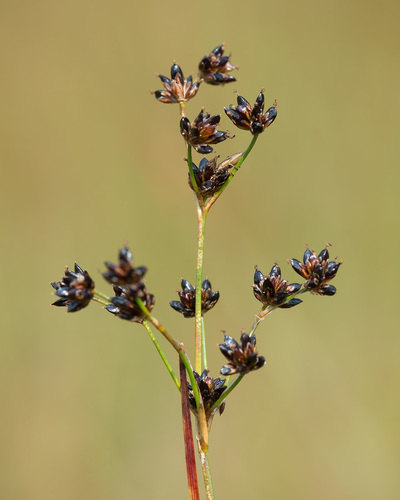
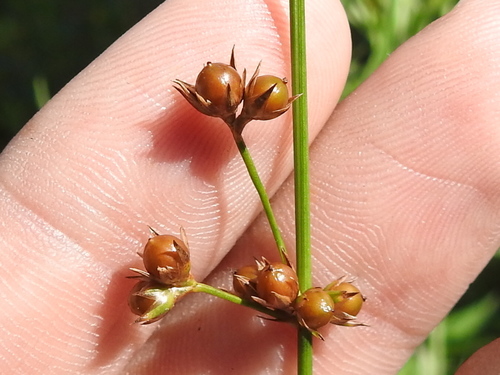
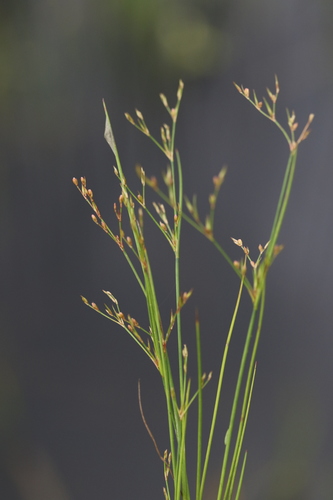
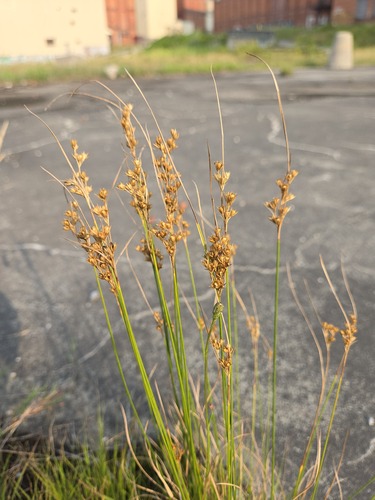
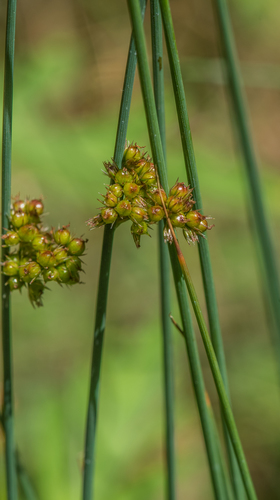
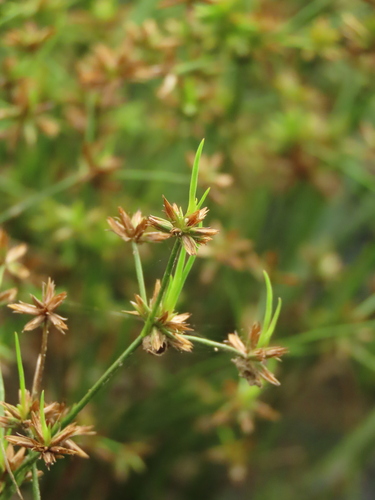
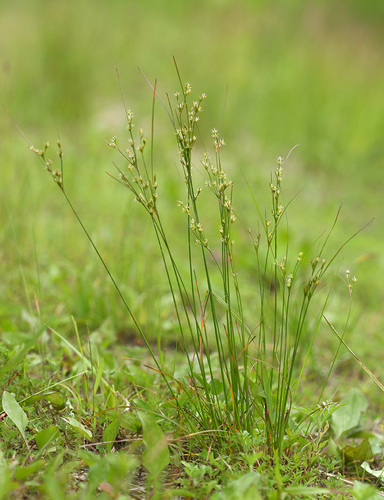
Juncus tenuis Willd., commonly known as slender rush, is a clump-forming perennial with round stems, belonging to the rush family Juncaceae. Slender rush reaches a height between 15 and 60 cm. It is generally classified as a weed, and is rarely sold by retailers as a household container plant. In locations where it has been introduced, it carries the common colloquial names path rush, field rush, slender yard rush, poverty rush, and wiregrass. All of this plant's leaves grow from the base, and are much shorter than the stems. Stems are partially covered by sheaths, and bear the species' most distinctive feature: terminal clusters called cymes. These cymes are made up of branches that hold small, egg-shaped seed capsules at their tips. When fully ripe, the seed capsules split into three parts. The plant also spreads through rhizomatous root growth. Slender rush grows in landscapes, cultivated crops, roadsides, and all types of fields. It tolerates both wet and dry sites, and grows well in soils that are primarily sand or clay. Thanks to its high tolerance for compacted soils, it can outcompete other plant species in these areas, which is the origin of the common name "path rush". It is native to all fifty U.S. states, most of Canada, and parts of northern Europe.