About Juncus dichotomus Elliott
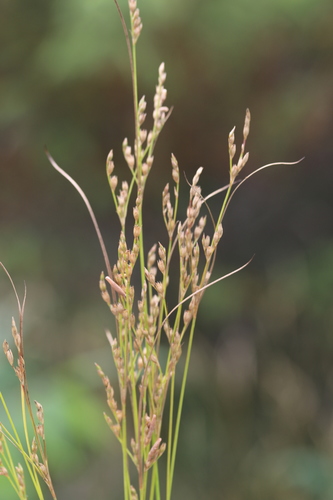
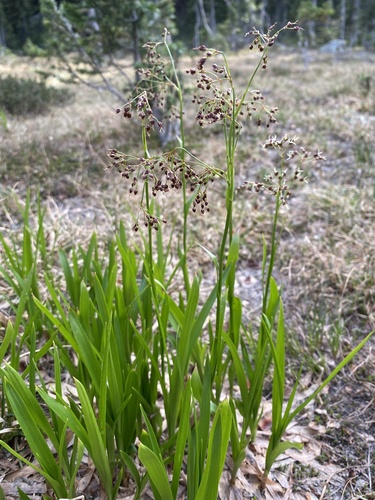
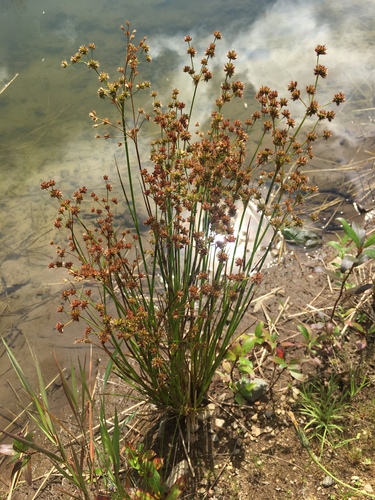
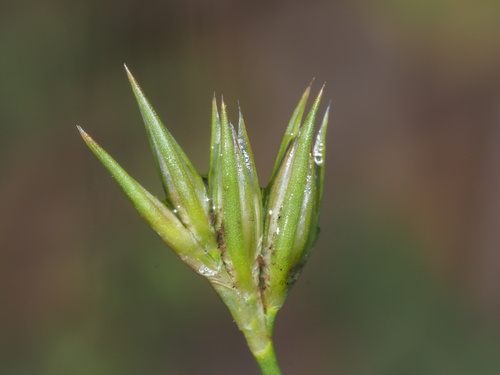
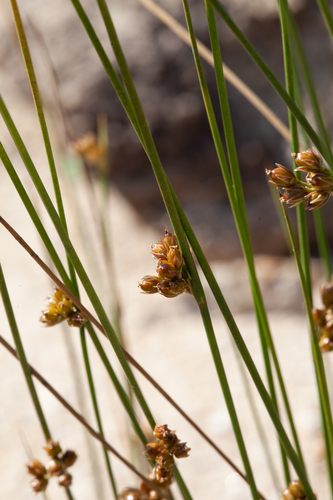
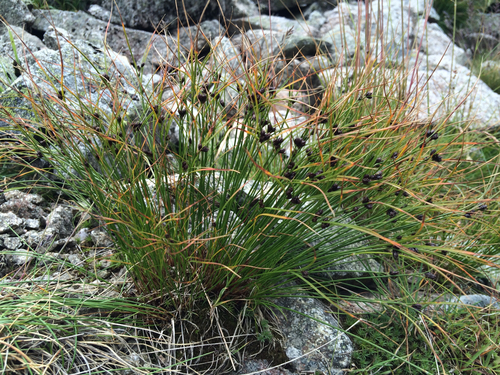
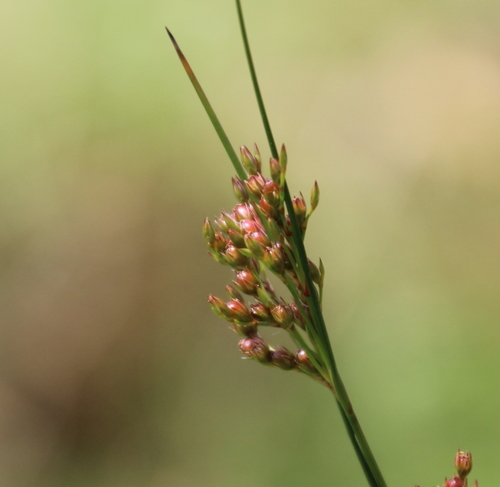
Juncus dichotomus Elliott is a perennial grass-like graminoid species of rush in the Juncaceae family, belonging to the monocot group. It is a relatively short species that lacks many distinctive features, making it especially hard for non-specialists to identify. This rush has stems (10–)15–40 cm tall, which are usually reddish at the base. Its rhizomes are densely branched and short-creeping. It has 2–3 basal or sub-basal leaves that are nearly terete, channeled or flat. These leaves measure 10–25(–40) cm long and about 0.7 mm wide. The plant's auricles are very short, 0.2–0.5 mm in length, with a scarious to leathery texture and a white to faint purple color. Its inflorescences are terminal, holding (5–)10–85(–100) flowers. The flower cluster is often congested, and more rarely somewhat loose. Flowers have bracteoles and green tepals. Mature capsules are tan to brown, and ellipsoid to broadly shaped. Seeds are brownish to amber, ellipsoid to lunate in shape, and measure about 0.3–0.4 mm across. In North America, Juncus dichotomus is most frequently observed from July through August. It can grow in dry sites, but thrives best in damp soils, such as frequently flooded roadside ditches. This species is native and widely distributed across temperate zones of the Americas, and has been reported as introduced in other temperate climate zones around the world. It is common throughout the southeastern United States, and in some northeastern regions of the country. It is a specialized species that occurs in temporarily wet habitats including riverbanks, pond margins, depressions in heaths, and sometimes near rice fields. It usually grows in sandy soils, or any habitat that holds sufficient groundwater with stable temperate temperatures. Flowering and fruiting occur in late spring to summer in open areas such as ditches, shores, and clearings, usually in sandy, well-drained but frequently wet soil. Uses for Juncus dichotomus are limited. Since it often grows near water sources, it can play a role in preventing erosion.