About Juncus bufonius L.
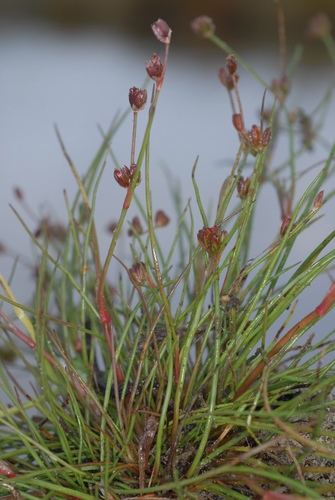
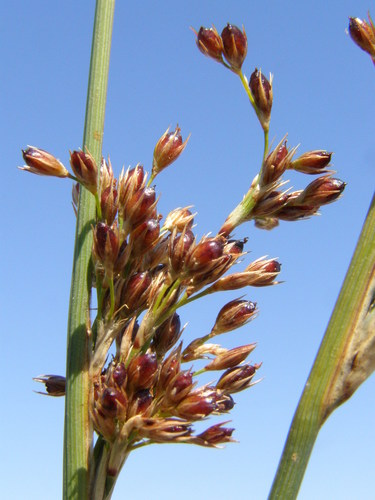
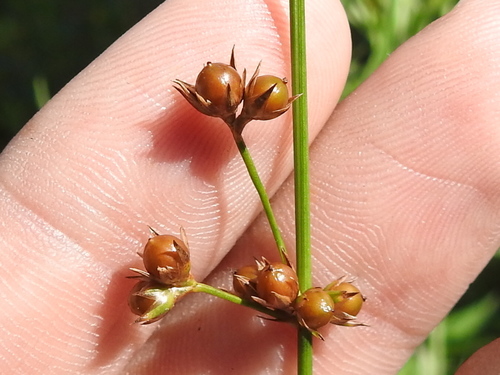
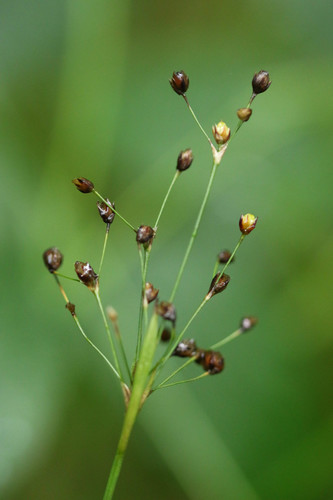
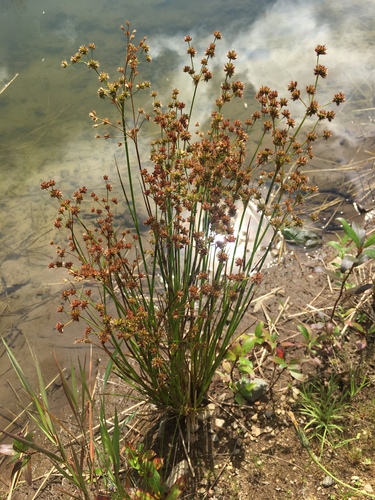
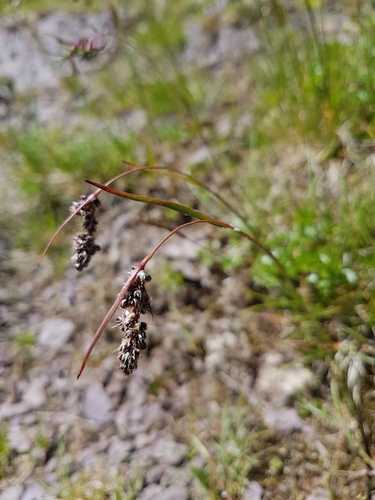
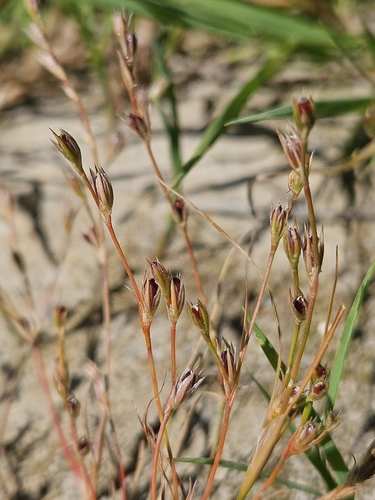
Juncus bufonius L. is an annual monocot with a highly variable appearance. It is typically a green, clumping, grass-like rush, with many thin stems covered by a small number of threadlike leaves. Its flowers grow in inflorescences, and also develop at the node where the inflorescence branches from the main stem. Each grassy flower is folded within tough bracts and sepals. In the Northern Hemisphere, its blooming period runs from March to May; in the Southern Hemisphere, it blooms from September to November. Its native range is circumpolar, spanning tropical, subtropical, subarctic, and temperate climate regions across both the Northern and Southern Hemispheres. It is also widely distributed as an introduced species in suitable habitats across the globe. It grows in moist and muddy locations, most commonly in wetlands and riparian areas. In non-native regions where it has become naturalized, it may be classified as a weed. The distinction between North American populations of this species and the Eurasian species Juncus ranarius is poorly defined.