About Juncus acutiflorus Ehrh. ex Hoffm.
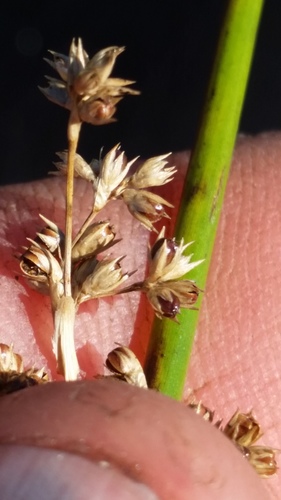
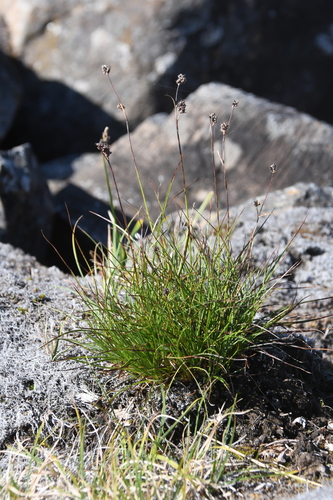
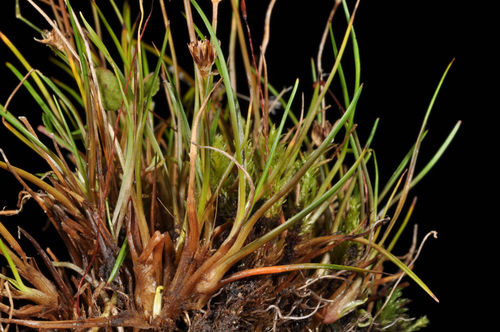
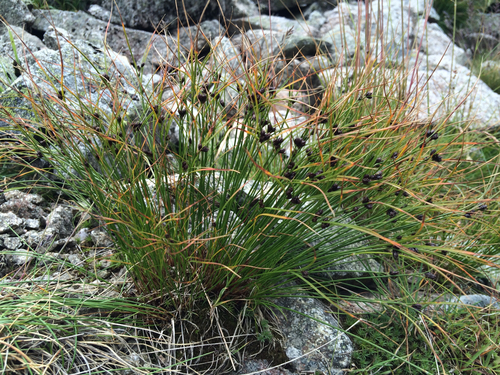
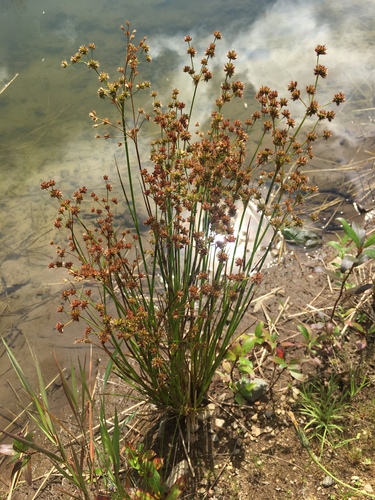
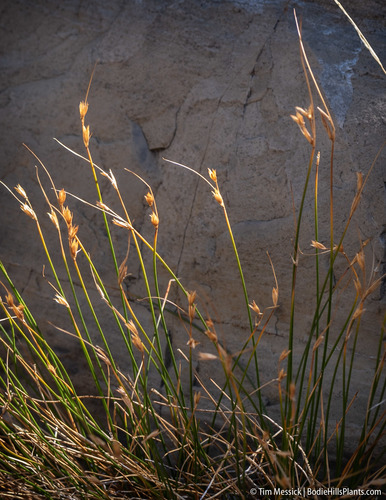
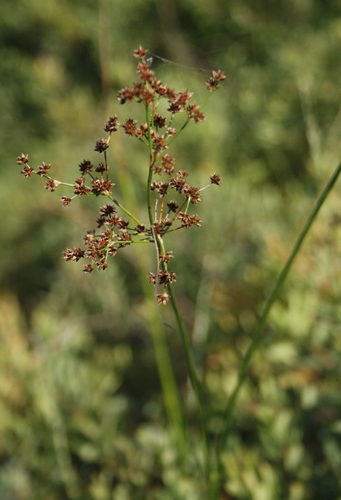
Juncus acutiflorus Ehrh. ex Hoffm. has leaves that are round or elliptical in cross-section, with darker horizontal lines visible against light at intervals, similar to the jointed rush. When pollination occurs, new branches grow from existing branches and multiply to form a growth that resembles a small bush. Its flowers come in various shades of warm brown and maroon. Fruits are small pointed capsules. The whole plant grows straight, reaching around 3 feet in height. Its leaves are straight, smooth, circular in cross-section, and hollow; transverse septa give the leaves a jointed feel when touched or held. This species commonly grows on acid soils in swampy wetlands, wet heathland, and woodlands. It is sensitive to environmental nitrate levels. In a Dutch rich-fen, chlorosis was observed in stands of Juncus acutiflorus at locations where high-nitrate groundwater reached the surface. Experiments found that this chlorosis could be attributed to iron deficiency, even though iron levels in the plant shoots were well above the established physiological threshold for iron deficiency. Currently, groundwater nitrate concentrations as high as 1000 μM are no longer uncommon in the Netherlands.