About Juglans mandshurica Maxim.
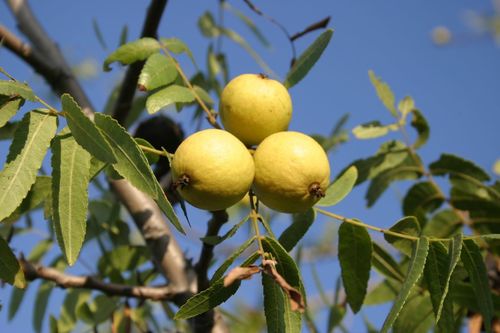
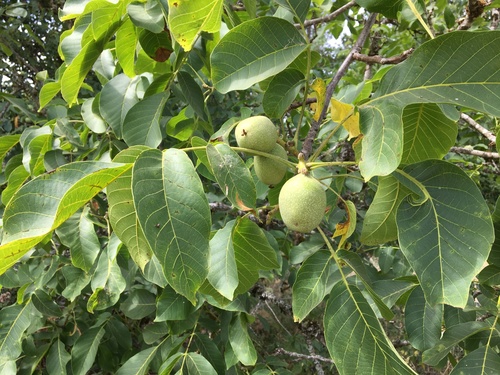
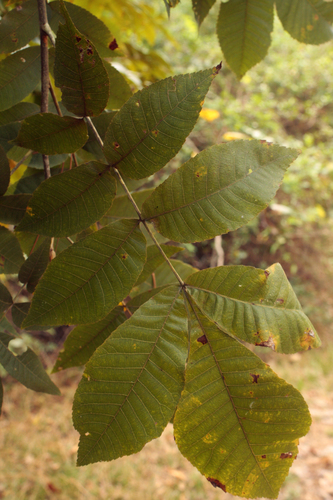
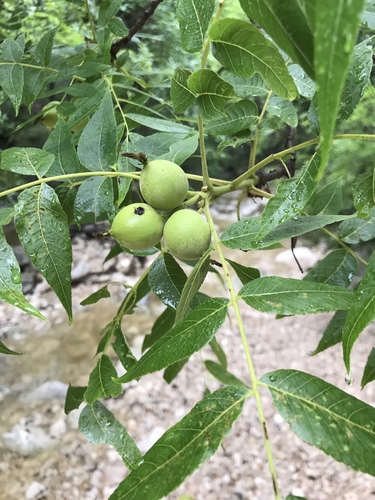
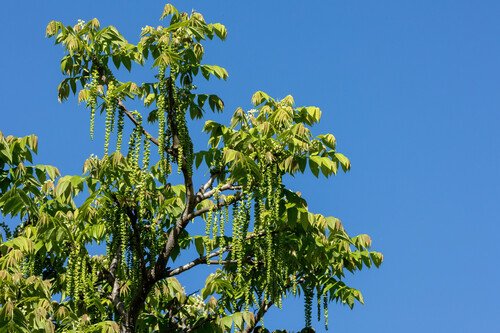
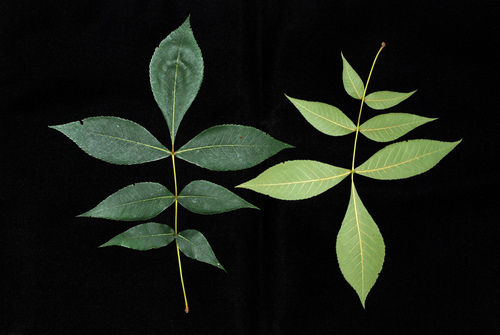
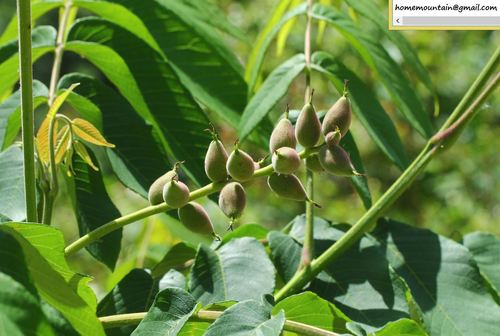
Juglans mandshurica Maxim. is a tree that reaches around 25 meters (82 ft) in height. Its leaves are alternate, odd-pinnate, and measure 40–90 centimeters (15+1⁄2–35+1⁄2 in) long, with 7–19 leaflets. Each leaflet is 6–17 cm (2+1⁄2–6+1⁄2 in) long and 2–7.5 cm (3⁄4–3 in) wide, with a serrate or serrulate margin and an acuminate apex. Male flowers grow in drooping catkins 9–40 cm (3+1⁄2–15+1⁄2 in) long. Wind-pollinated female flowers bloom from April to May, are terminal, and form spikes holding 4 to 10 flowers. These ripen into nuts between August and October; the nuts measure 3–7.5 by 3–5 cm (1–3 by 1–2 in), with a densely glandular pubescent green husk and a very thick shell. This species contains and releases far smaller amounts of allelopathic compounds such as juglone than other popular Juglans species, and typically causes few significant allelopathic effects when grown in cultivation. Juglans mandshurica is native to the Eastern Asiatic Region, occurring in China, the Russian Far East, North Korea, and South Korea. The tree is exceptionally hardy, tolerating temperatures down to at least −45 °C. It has a relatively shorter vegetation period than other walnuts, grows quickly, and is cultivated as an ornamental in cold temperate regions across the Northern Hemisphere; for example, it has been observed growing satisfactorily in Edmonton, Alberta, Canada. The kernels of its nuts are edible, but they are small and difficult to extract. Its timber is used, but it is less valuable than the timber of English walnut or black walnut.