About Jubaea chilensis (Molina) Baill.
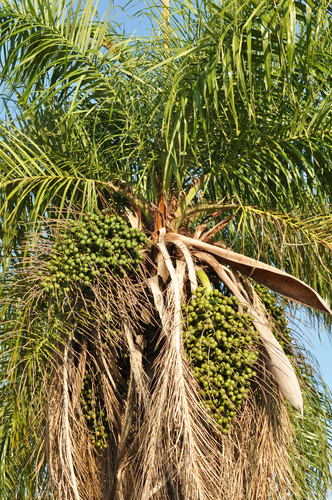
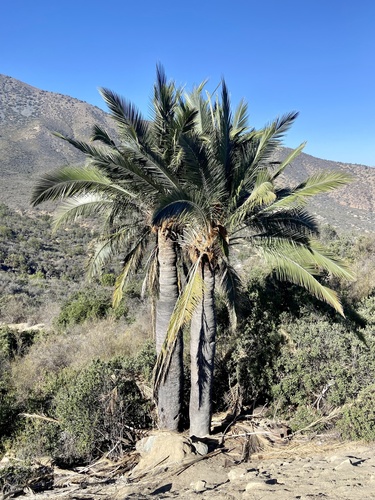
Jubaea is a genus of palms that contains just one living species: Jubaea chilensis (Molina) Baill. This species is commonly called the Chilean wine palm or Chile cocopalm in English, and palma chilena in Spanish. It is native to southwestern South America, and is endemic to a small area of central Chile located between 32°S and 35°S, covering the southern Coquimbo, Valparaíso, Santiago, O'Higgins, and northern Maule regions. An extinct palm species from Easter Island was originally classified as part of the Jubaea genus. In 1991, this Easter Island palm was moved into its own separate genus, Paschalococos, but this reclassification has not been widely accepted by the scientific community. The leaves of Jubaea chilensis can be used to weave baskets. Its seeds are edible, widely eaten, and known as Coquito nuts. The tree's sap can be processed to make palm wine and palm syrup. Unlike other palms that can be tapped for sap without killing the tree, harvesting sap from Jubaea chilensis requires felling the entire tree. This practice is now restricted due to legal protections for the species.