About Jasminum officinale L.
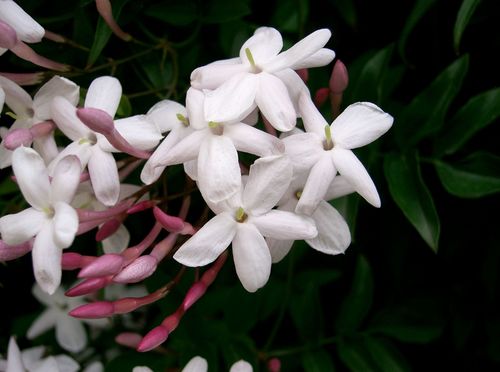
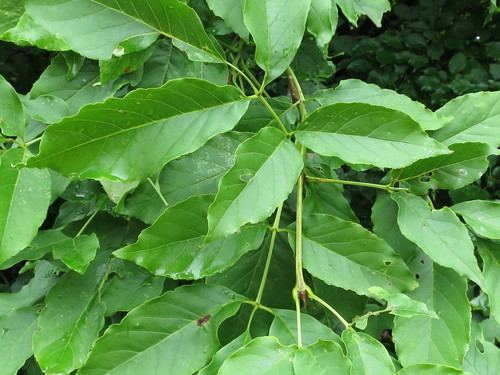
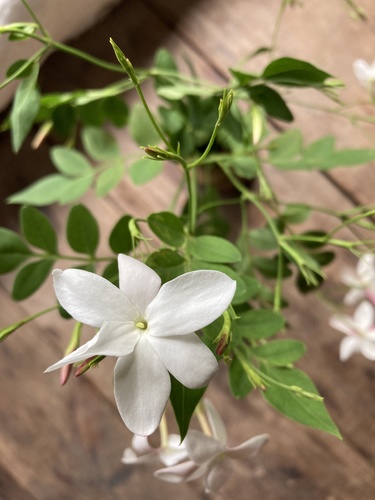
Jasminum officinale L. is a vigorous, twining deciduous climbing plant. It has sharply pointed pinnate leaves, which are made up of 5 to 9 leaflets. In summer, it produces clusters of star-shaped, pure white flowers that give off a strong, rich scent. This species is native to the Caucasus, northern Iran, Afghanistan, Pakistan, Tajikistan, India, Nepal, the Himalayas, and western China (specifically Guizhou, Sichuan, Xizang (Tibet), and Yunnan). It is also widely cultivated around the world, and has been reported to be naturalized in Spain, France, Italy, Portugal, Romania, Croatia, Bosnia and Herzegovina, Montenegro, Serbia, Algeria, Florida, and the West Indies. In terms of safety, the U.S. Food and Drug Administration lists jasmine from this species as "generally recognized as safe" (GRAS) for use as a food ingredient. There is not enough research to know if consuming jasmine affects breastmilk, and the safety and effectiveness of jasmine use for nursing mothers or infants has not been adequately studied. Drinking small amounts of jasmine tea is likely not harmful during nursing. Allergic reactions to jasmine can occur in some people.