About Jaltomata procumbens (Cav.) J.L.Gentry
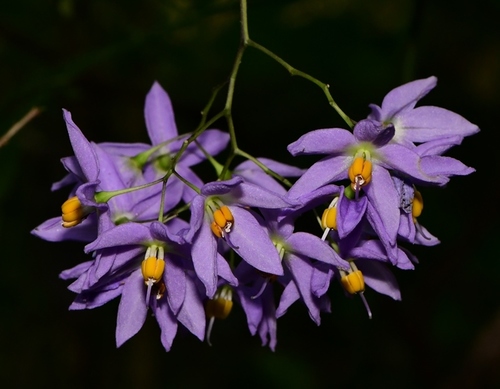
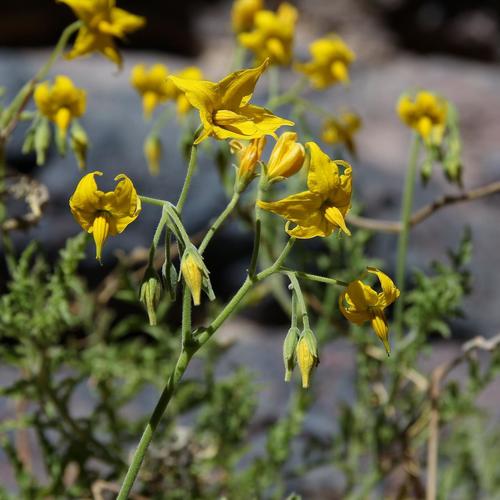
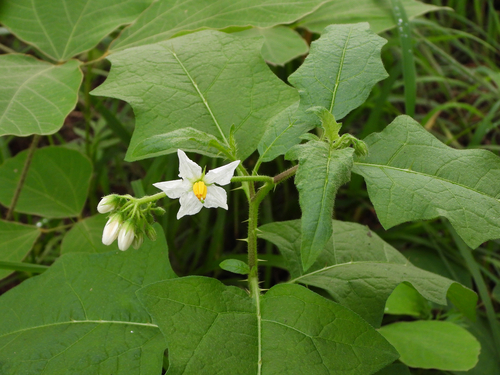
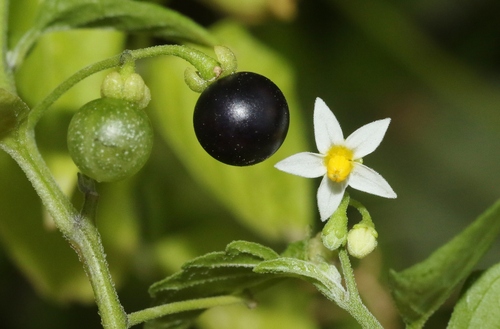
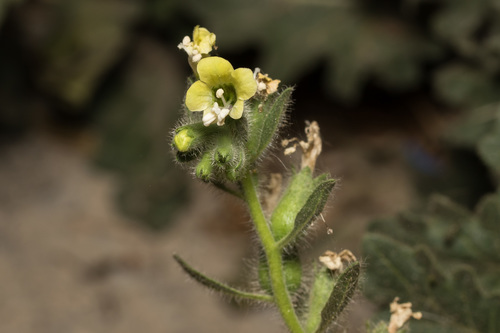
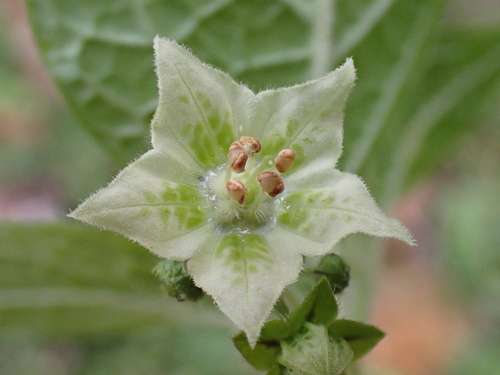
Jaltomata procumbens, commonly called creeping false holly, is a plant species native to Arizona (USA), Mexico, Central America, Colombia, Ecuador, and Venezuela. It grows as a weed in agricultural fields and other disturbed areas, but people often protect it because it produces edible fruits. It is a spreading herb that can grow trailing or ascending, producing many shoots from a single root system. Its leaves are broadly lanceolate, dark green, and can reach up to 20 cm in length. Its flowers are rotate in shape, pale yellow-green, with darker green spots near the center. The berries are dark purple and spherical, about 1 cm in diameter, with a strong scent that resembles grapes (Vitis spp.). The fruit has a pleasant taste and aroma, and it is valued as a food source by many groups of people. The Tarahumara and Pima Bajo (Mountain Pima) peoples of the Sierra Madre Occidental in northwestern Mexico recognize this species when it grows in their agricultural fields, and they protect it and encourage its growth. Many crop historians believe that many other species now classified as crops began their domestication process under similar conditions, growing as volunteer plants in fields planted for other crops.