About Isotrema californicum (Torr.) H.Huber
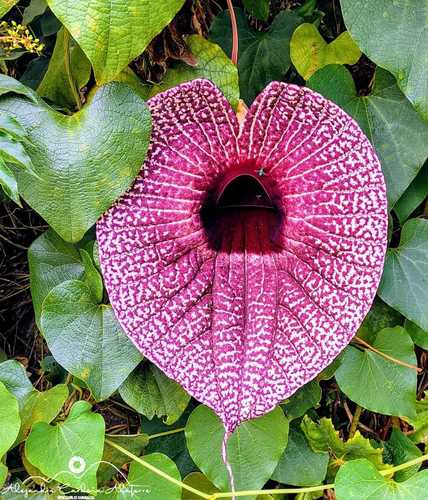
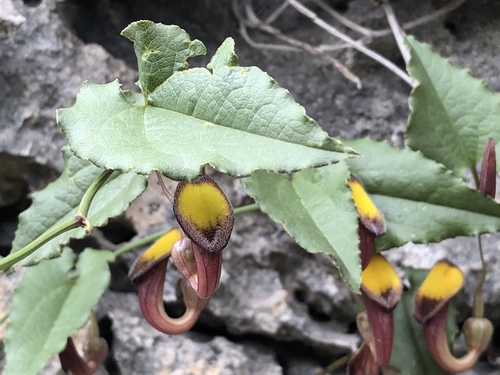
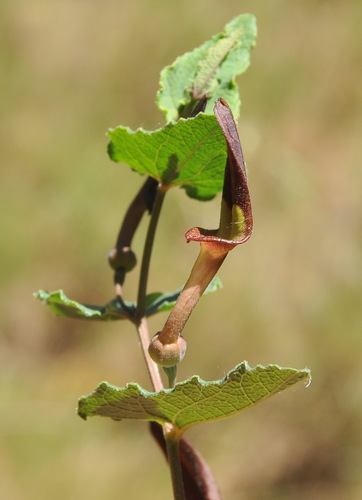
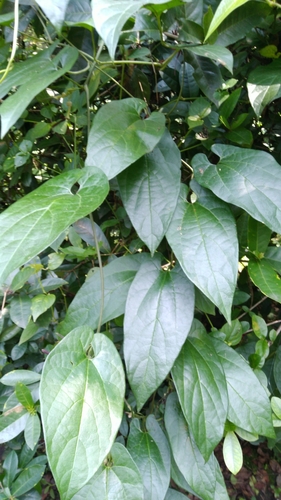
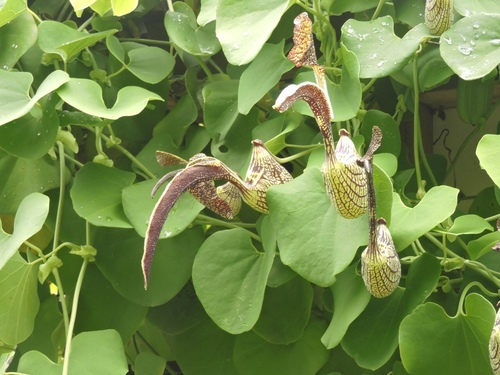
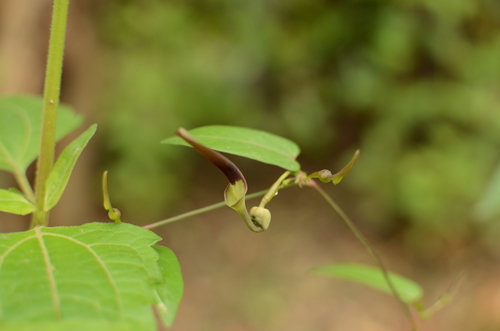
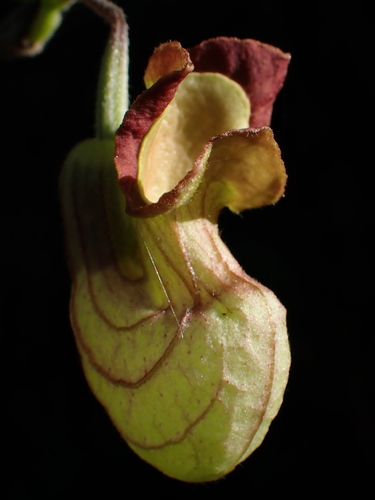
This species, currently classified as Isotrema californicum (Torr.) H.Huber, was previously known as Aristolochia californica, the California pipevine. It is a deciduous vine that grows from rhizomes. It typically reaches around 5 feet (1.5 m) in length, though it can grow to over 20 feet (6.1 m). At maturity, its twining trunk can develop a very large circumference. New green heart-shaped leaves emerge after the plant blooms. Its blooming season runs from January to April. It produces large, curving pipe-shaped flowers that range in color from green to pale brown, marked with purple veins and lined with tissue that is yellow to red. After flowering, it forms U-shaped flowers that produce green winged capsular fruits. This vine is endemic to northern California. It is native to the Sacramento Valley, northern Sierra Nevada foothills, San Francisco Bay Area, Northern Inner California Coast Ranges, and southeastern Klamath Mountains. It grows in riparian streambank areas, within chaparral, oak woodland, and mixed evergreen forest habitats, and occurs below 2,300 feet (700 metres) in elevation. The flowers of California pipevine produce an unpleasant musty odor that attracts small carrion-feeding insects. Insects crawl into the complex, convoluted flowers and often become stuck and disoriented for a period, picking up pollen as they move around. Most insects eventually escape the flower. Contrary to past belief, this plant is not insectivorous. Fungus gnats in the family Mycetophilidae may be the species' primary effective pollinators. Botanist G.L. Stebbins suggested this plant engages in pollination by deceit.