About Ischnura hastata (Say, 1840)
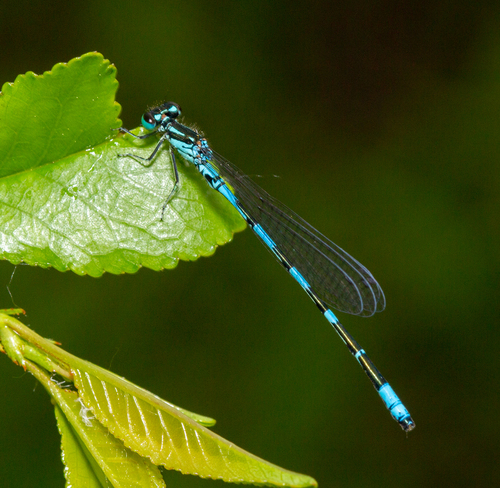
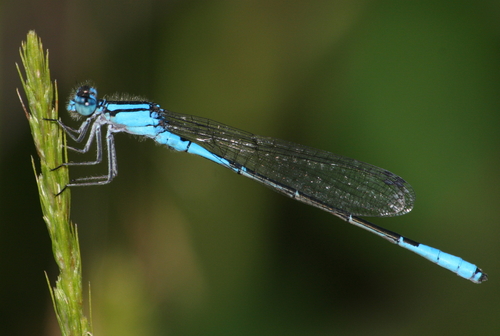
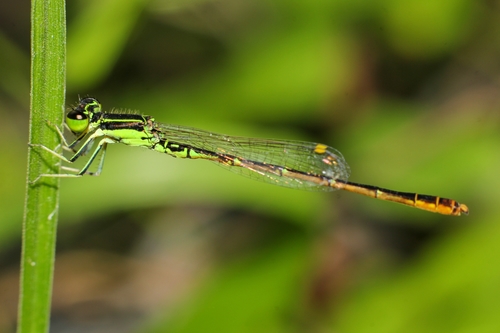
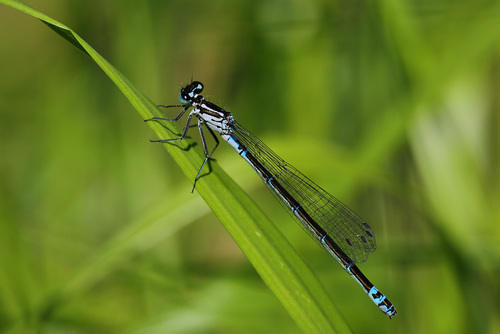
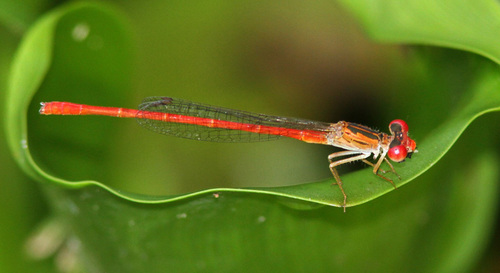
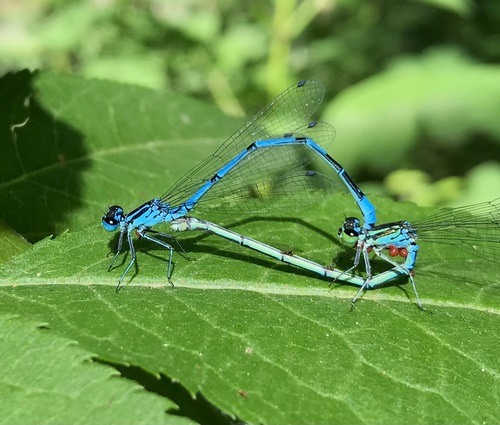
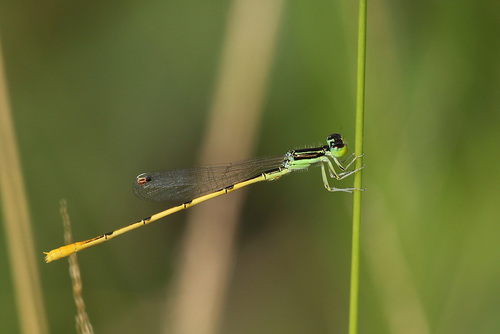
Ischnura hastata, commonly called the citrine forktail, measures 20–27 mm in total length, with hindwings 11–15 mm long. This makes it considerably smaller than most European members of the genus Ischnura. The common name 'citrine' refers to the species' characteristic yellowish colouration. Adult males have a black head and thorax marked with blue, and a largely yellow abdomen with black markings along its upper surface. Uniquely among the world's damselflies, male citrine forktails have a pterostigma that is positioned away from the leading edge of the wing. When newly matured, adult females are mostly orange, with black markings on the upper head and the rear section of the abdomen. As they age, they change colour, shifting through brown or olive to a greyish shade. The species is native to North and South America, and there is an established population on the Azores. The Azorean population has likely been present since the late 19th century, but it was not correctly identified as Ischnura hastata until 1990.