About Ischnura erratica Calvert, 1895
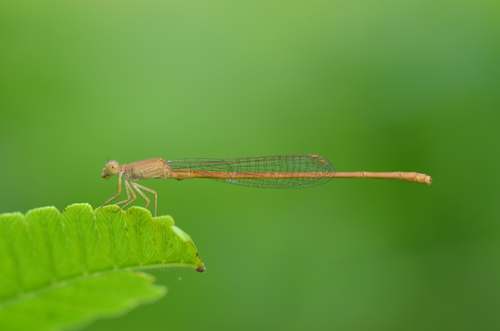
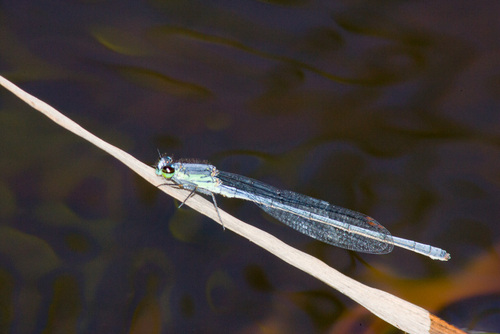
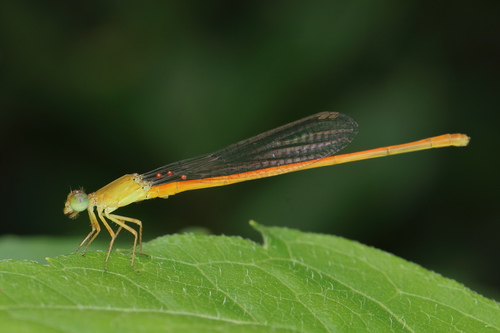
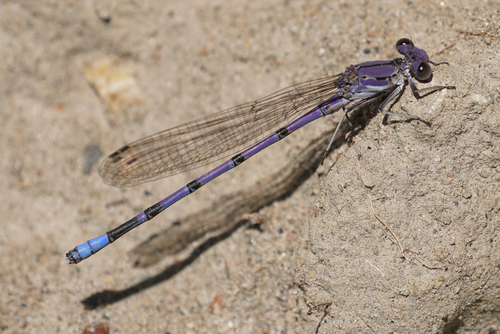
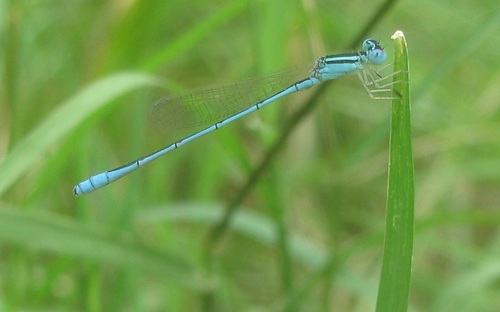
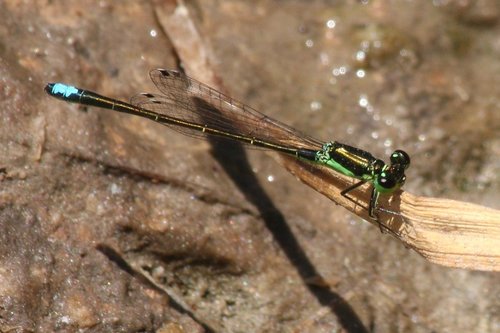
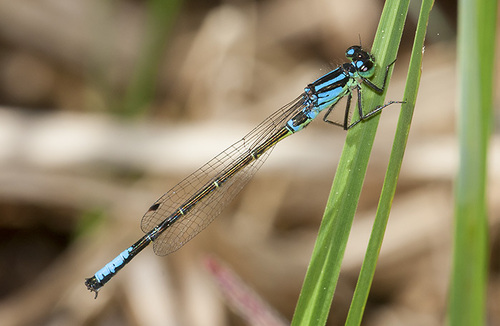
Ischnura erratica Calvert, 1895 is a robust species, measuring 30 to 35 mm (1.2 to 1.4 in) in length, with a wingspan of 35 to 40 mm (1.4 to 1.6 in). For males, the head is black with a green facial stripe and three blue spots on the forehead, and the lower portions of the eyes are green. The thorax is black on its dorsal side and yellowish-green on its ventral side, with two blue lateral stripes. The abdomen is shiny black on the upper side and yellowish-green or yellowish-orange on the lower side. Segments 1 and 2 have blue bands on their dorsal sides, segments 3 to 6 have narrow yellow rings, and a large blue dorsal patch extends from segments 7 or 8 to segment 10. The tip of segment 10 extends into an upward-pointing forked tail. Females of this species have two distinct color phases. One phase is similar to the male, but with duller eyes, and greenish-blue appears in place of blue. The other phase has pale patches on the head, a greenish thorax, and a black abdomen with narrow green rings at the base of some segments. Immature females have dull orange patches on the head and thorax. Ischnura erratica is native to the Pacific Northwest, occurring in lowland and upland habitats across British Columbia, Washington, Oregon, and northern California. It breeds across a range of habitat types that include acid peat bogs, forest lakes, beaver dams, field ponds, ditches, and the backwaters of cool streams, and only breeds in clear water. In British Columbia, it is often associated with drooping woodreed (Cinna latifolia), and it lays its eggs in the plant’s submerged stems. It also perches on lily pads, rocks, logs, and the ground, with the tip of its abdomen resting on the surface.