About Ischnura elegans (Vander Linden, 1820)
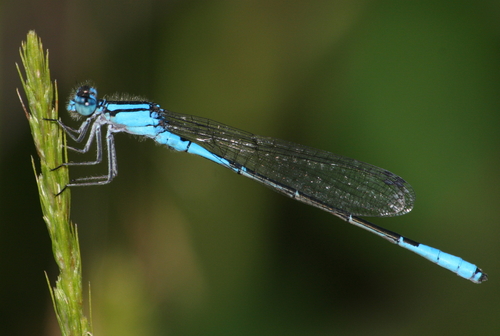
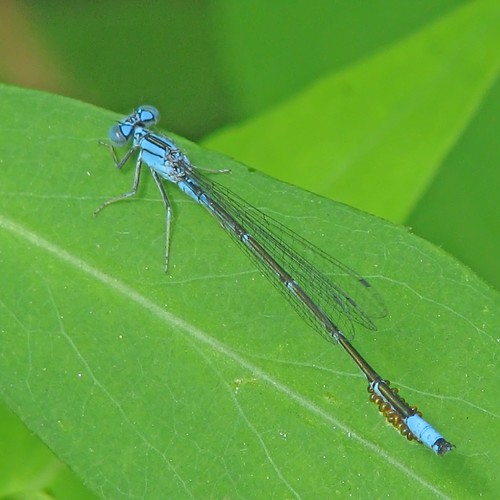
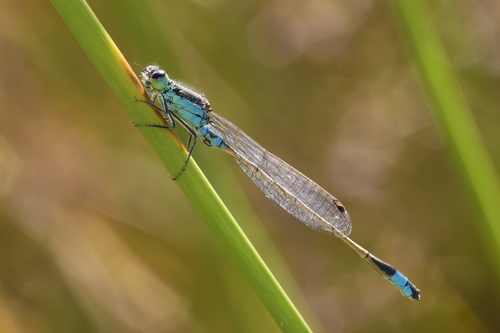
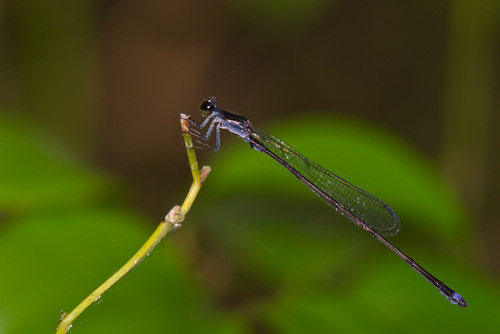
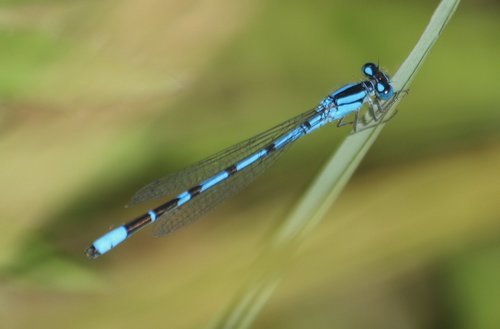
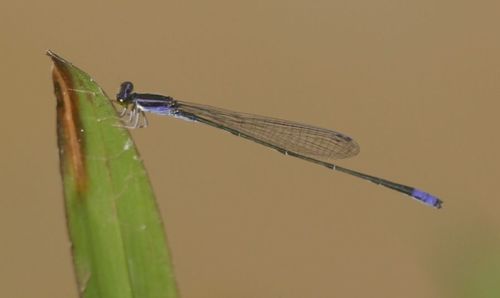
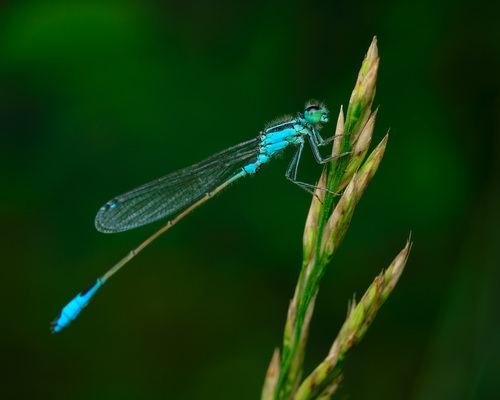
Ischnura elegans (Vander Linden, 1820), commonly called the blue-tailed damselfly, reaches a body length of 27–35 millimetres (1.1–1.4 in), a wingspan of approximately 35 millimetres (1.4 in), and has hindwings that measure 14–20 millimetres (0.55–0.79 in) in length. Adult male blue-tailed damselflies have blue and black patterning on the head and thorax, a bi-coloured pterostigma on the front wings, and blue eyes. Their abdomen is mostly black, with very narrow pale markings at the junction between each abdominal segment; the eighth abdominal segment, however, is entirely pale blue. Like most damselfly species—and unlike dragonflies, which rest with their wings held flat and out—Ischnura elegans holds its wings back together aligned with the body when at rest. The thorax of juvenile males has a green tinge. Female blue-tailed damselflies display a range of distinct colour forms. Juvenile females may be salmon pink (the rufescens form), violet (the violacea form), or pale green. Their colour darkens as the damselfly matures. Mature females may be blue similar to males (the typica form); have an olive green thorax and brown spot (the infuscans form); or have a pale brown thorax and brown spot (the infusca-obseleta form). This common species occurs across most of Europe and in the Middle East. These damselflies inhabit a wide variety of lowland environments that contain standing water, slow-flowing water, brackish water, or polluted water.