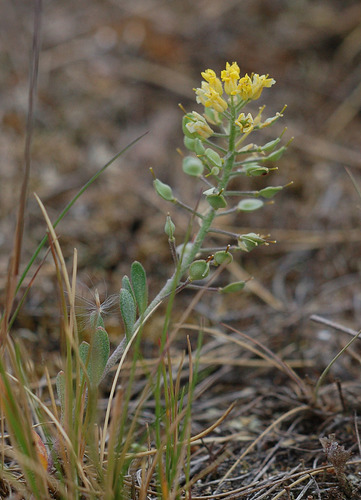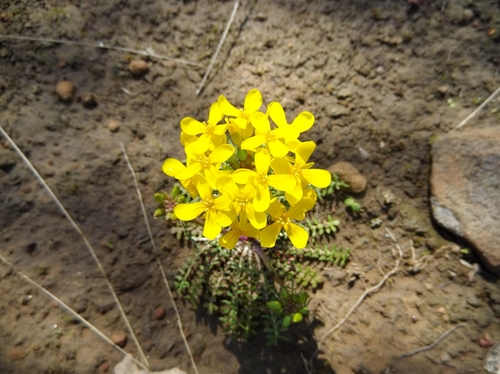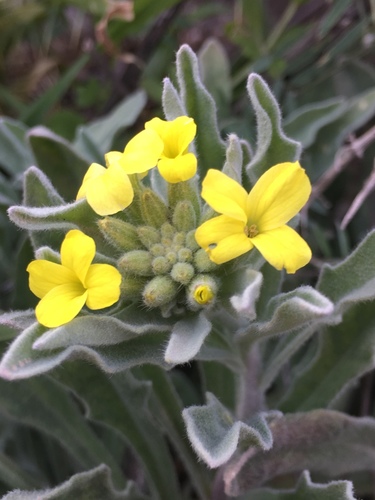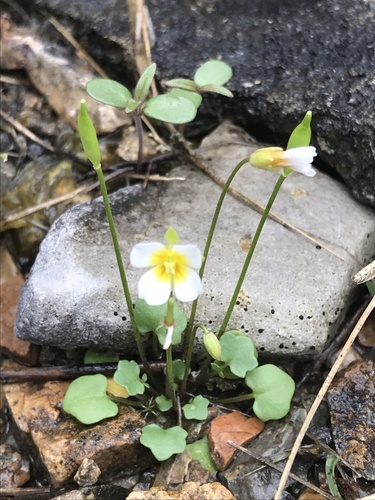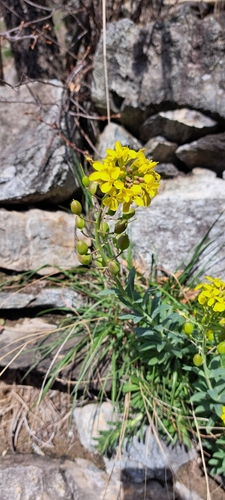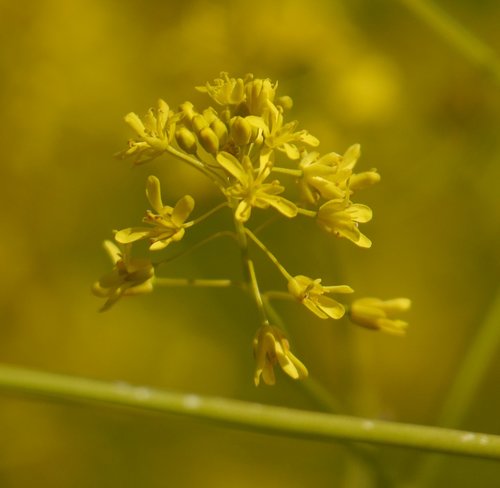
About Isatis tinctoria L.
Isatis tinctoria, commonly known as woad, dyer's woad, dyer's-weed, or glastum, is a flowering plant in the mustard family (Brassicaceae). It has a well-documented history of use as a source of blue dye and as a medicinal plant. The genus name Isatis comes from the ancient Greek word ἰσάτις, which refers to this plant. It is occasionally called Asp of Jerusalem. The term woad is also used for the blue dye made from the plant's leaves. Woad is native to the steppe and desert zones of the Caucasus, Western Asia, and Central Asia extending to Eastern Siberia. Today it can also be found in Central and South-Eastern Europe, and western North America. Woad was historically an important source of blue dye, and was cultivated across Europe, particularly in Western and Southern Europe. In the medieval period, major woad-growing regions existed in England, Germany, and France, and towns such as Toulouse grew prosperous from the woad trade. Cultivation of woad spread across the continent, and it remained an important trade good until the 16th century, when indigo from the New World began to replace it. Woad was eventually replaced by the higher-yielding Indigofera tinctoria. In the early 20th century, both woad and Indigofera tinctoria were replaced by synthetic blue dyes. Woad has been used for medicinal purposes for centuries. This dual use is reflected in its scientific name: the genus name Isatis connects to its ancient use for wound treatment, while the specific epithet tinctoria refers to its use as a dye. There has been a recent revival of woad use for craft purposes. The earliest archaeological finds of woad seeds date to the Neolithic period. Seeds have been recovered from the cave of l'Audoste in Bouches-du-Rhône, France. Impressions of woad seeds have been found on pottery from the Iron Age settlement of Heuneburg, Germany. Seed and pod fragments have also been discovered in an Iron Age pit at Dragonby, North Lincolnshire, United Kingdom. Textiles dyed with woad were found in the Hallstatt burials of the Hochdorf Chieftain's Grave and Hohmichele. It is considered very likely that woad was used as a dye in ancient Egypt. A passage from Julius Caesar's Commentarii de Bello Gallico (Commentaries on the Gallic War) describing Britons has been the subject of much discussion. The passage reads: Omnes vero se Britanni vitro inficiunt, quod caeruleum efficit colorem, atque hoc horridiores sunt in pugna aspectu; in English translation this is: All the Britons paint themselves with vitrum, which produces a dark blue color; and for this reason they are much more frightful in appearance in battle. While vitrum has often been translated as woad, the word more typically means glass. Experimental tests of body paint made with woad mixed with different binders have produced colors ranging from grey-blue through intense midnight blue to black. Though many people have argued that woad was used as a pigment for tattooing, experimental attempts to do this have been unsuccessful, due to woad's caustic nature. Analysis of the Cheshire bog body Lindow Man, dated to the late Iron Age/early Roman period, shows that Britons of this era may have used copper- or iron-based pigments for body decoration instead.