About Iris xiphium L.
Iris xiphium, commonly called the Spanish iris, is an iris species native to Spain and Portugal. It has also been recorded in Corsica, southwestern France, southern Italy, Algeria, and Tunisia. This species is also known by the common names small bulbous-rooted iris and xiphium iris. It was first illustrated in the publication 'Flowers of the Mediterranean' in 1965.
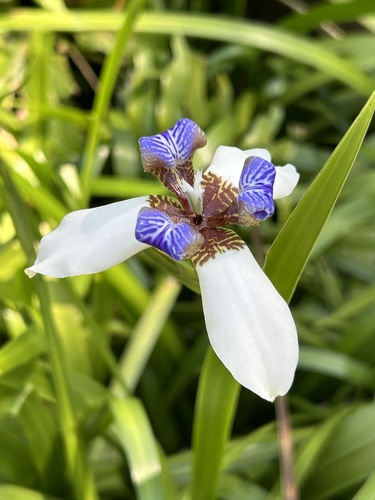
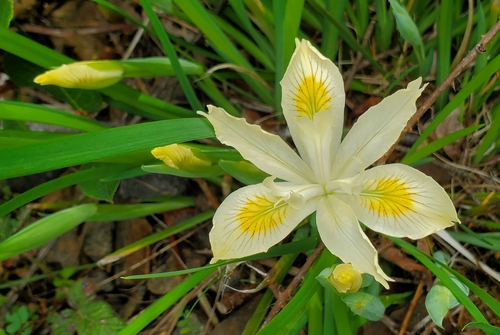
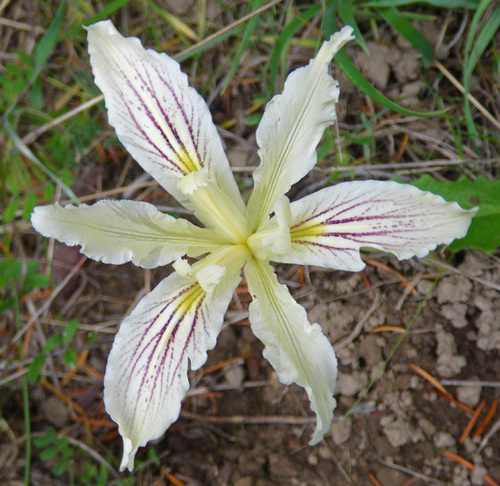
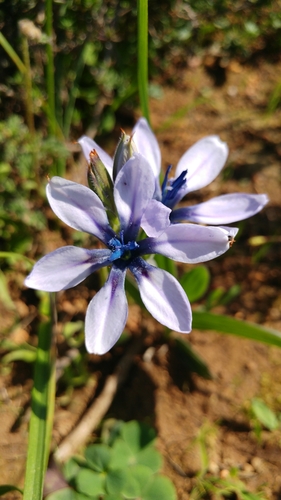
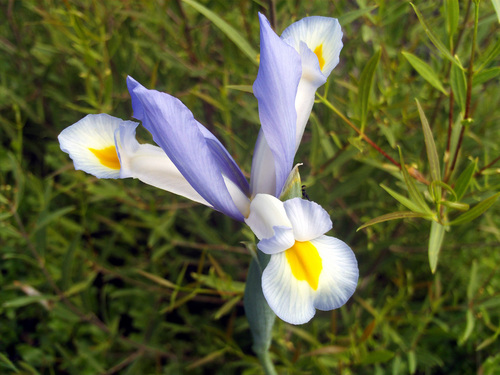
It is a bulbous iris that produces flowers in shades of blue, violet, white, or yellow. These flowers are smaller than those of Iris xiphiodes, reaching around 6 cm in width. The entire plant can grow up to 80 cm tall, and typically blooms during May and June, though blooming timing is not always consistent. Its greyish-green leaves emerge in autumn, growing to between 20 and 70 cm tall, and die back after the flowers fade.
Spanish iris is valued by florists for its striking color combinations. It has several varieties that are popular in horticulture, including var. lusitanica, which produces entirely yellow flowers. It is one of the hardier bulbous iris species, and can be grown in northern Europe. However, it cannot be grown across all of North America, where frosts can damage its autumn foliage. It requires planting in thoroughly drained beds in very light, open, moderately enriched soil, and prefers a fairly sheltered growing position.