About Iris versicolor L.
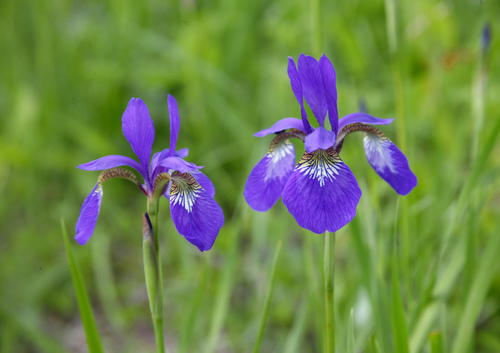
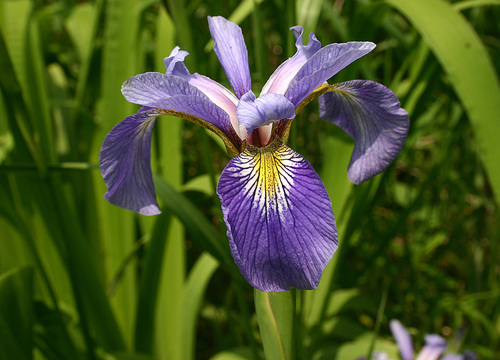
Iris versicolor L. is a flowering herbaceous perennial plant that grows 10 to 80 cm (4 to 31 inches) tall. It typically forms large clumps from thick, creeping rhizomes. Its unwinged, erect stems usually bear basal leaves that are more than 1 cm (1/2 inch) wide. Leaves are folded along their midribs, creating an overlapping flat fan structure. The fully developed blue flower has six petals and sepals that spread nearly flat, and occurs in two distinct forms. The longer sepals are hairless, with a greenish-yellow blotch at their base. The inferior ovary has blunt angles. Flower colors typically range from light to deep blue, with purple and violet also common, and flowering occurs from May to July. The fruit is a three-celled capsule with blunt angles, and the plant's large seeds can be seen floating in autumn. Both leaves and roots of Iris versicolor are poisonous, capable of causing inflammation of the stomach and intestines. Consumption of the plant can be fatal to calves. The rhizomes and rootstocks contain a purgative irritant known by the names irisin, iridin, or irisine; ingesting large amounts causes gastroenteritis, and this compound may help protect the plant from herbivory by rabbits and deer. Native Americans widely used blue iris medicinally: externally for treatment of burns, wounds, swellings, and sores, and internally for conditions including liver and kidney disease, among other uses. The plant has also been used in magical practices: people carry its root or rhizome to attract financial gain, and place it in cash registers to improve business.