About Iris tenax Douglas ex Lindl.
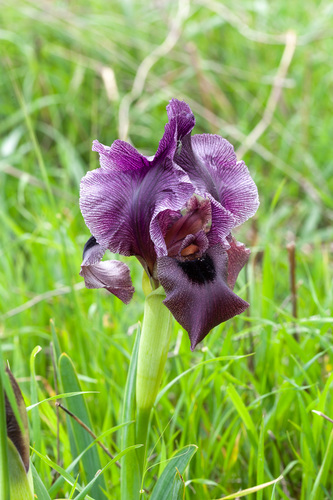
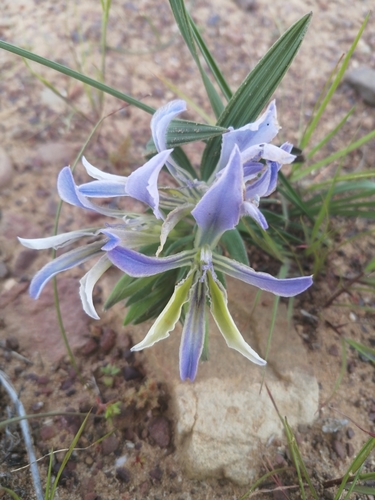
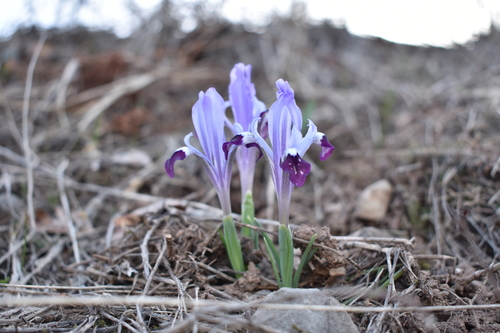
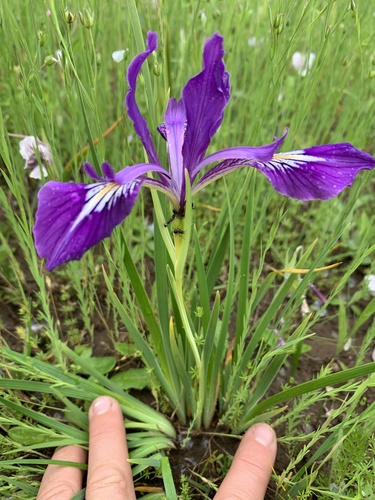
Like many other irises, Iris tenax produces large, showy flowers. Its blooming period falls in mid to late spring, and flowers are most often lavender-blue to purple, though white, yellow, pink, and orchid-toned blooms sometimes occur. For an iris species, the leaves of Iris tenax are very slender, rarely growing more than 5 mm wide, so the plant is frequently mistaken for a type of grass when it is not blooming. Its rhizomes spread slowly, which leads the plant to grow in a tight clump. The species epithet tenax means "tough" or "tenacious", referring to the plant's strong, fibrous leaves. These leaves were used by indigenous peoples to braid into snares and other types of cordage. Iris tenax is native to southwestern Washington, western Oregon, and northwestern California. It grows along roadsides, in grasslands, and in forest openings at low to middle elevations. The subspecies Iris tenax ssp. klamathensis is endemic to the Klamath Mountains of northern California.