About Iris histrio Rchb.f.
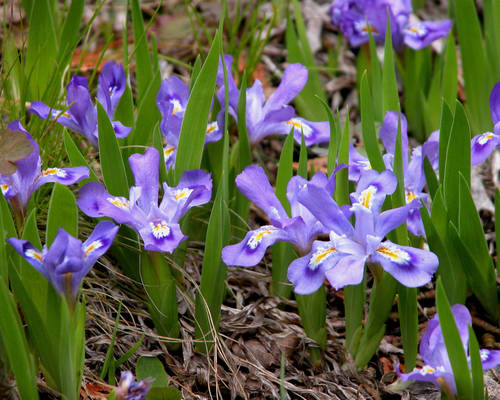
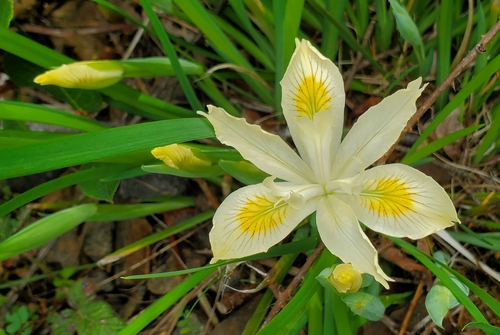
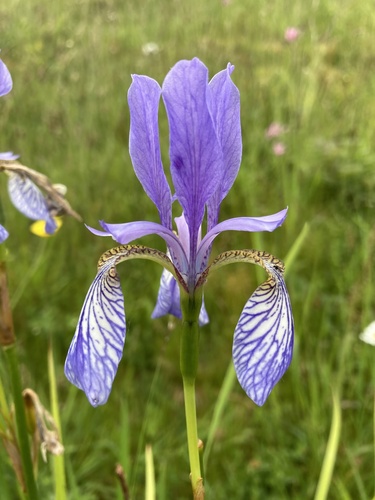
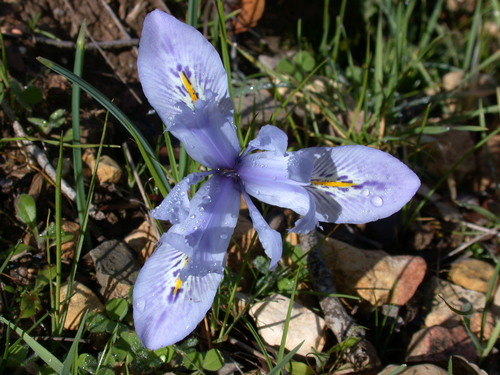
Iris histrio, commonly known as the Syrian iris, is a species of flowering plant in the genus Iris. It is classified in subgenus Hermodactyloides and section Reticulatae, and this name is recognized as accepted by the RHS. It is a bulbous perennial native to Central Asia and parts of the Middle East, including Kyrgyzstan, Israel, Lebanon, Syria, and southern Turkey. The species was first collected by Charles Gaillardot in Lebanon in 1854. In 1873, Heinrich Gustav Reichenbach (Rchb.f) published a description of the bulb in his work Botanische Notizen. It was previously treated as a subspecies of Iris reticulata, before being grouped with other related species under subgenus Hermodactyloides. It produces pale baby blue flowers with intricate markings, that shade to purplish blue at the base. Like other members of the Reticulatae group, including Iris vartanii and Iris danfordiae, Iris histrio produces a very large number of small bulbils around the base of its main bulb. If these bulbils are planted separately in a prepared reserve bed, they will develop into mature, flowering bulbs within two to three years. Seedlings of Iris histrio normally require constant protection, especially when grown in the UK. The species can grow in loamy soils.