About Iriartea deltoidea Ruiz & Pav.
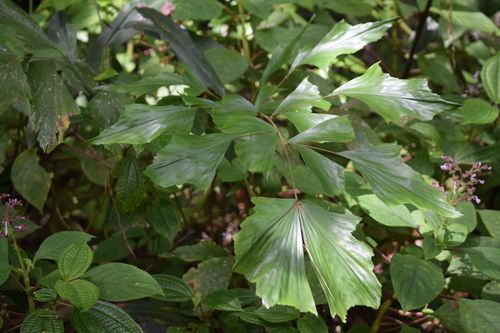
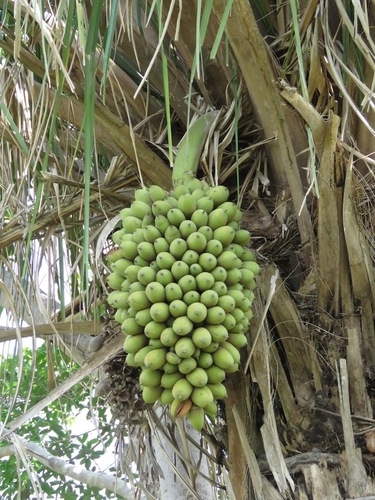
Iriartea deltoidea Ruiz & Pav. are canopy palms that reach 20–35 meters in height. This species is easy to recognize by two key features: a prominent bulge in the center of its trunk, and stilt roots that form a dense cone up to 1 meter in diameter at the base. It can be easily distinguished from Socratea exorrhiza, another palm species with stilt roots, because I. deltoidea’s stilt roots are much less tightly pressed against each other. Its leaves are pinnate and can grow up to 5 meters long, with numerous fan-shaped pinnae held in a variety of different planes. Each individual leaflet reaches up to 1 meter long and 25 centimeters wide at its widest point. The fruit of I. deltoidea is a drupe 2 centimeters in diameter, and it is primarily dispersed by bats and toucans. Toucan foraging behavior leaves a distinct mark on the regeneration of young second-growth forest. In some cases, seedlings that grow around a mature fruiting Iriartea deltoidea palm actually originate from dozens of different trees located hundreds of meters away. The fruit of this species is also eaten by humans. Its wood is used for construction and handicrafts, and Iriartea timber is highly valued for building housing, making furniture, and crafting tools. Various South American countries, including Ecuador, export this wood to the United States.