About Ipomopsis aggregata (Pursh) V.E.Grant
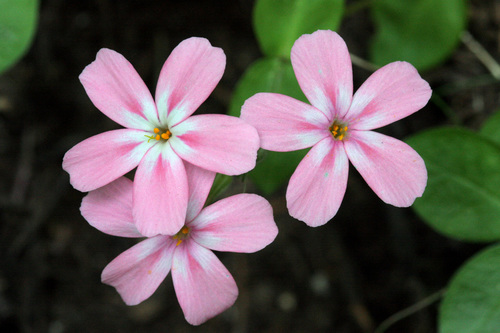
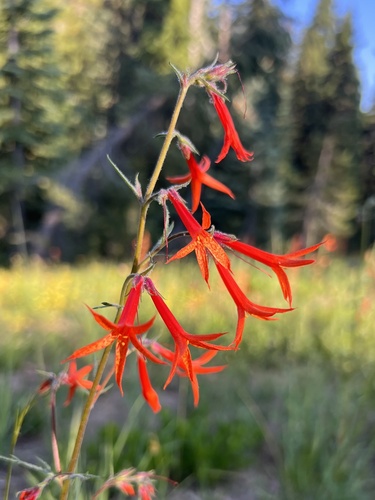
Ipomopsis aggregata (Pursh) V.E.Grant has characteristic red, trumpet-shaped flowers and basal leaves that grow from a single erect stem. Its height changes based on elevation, ranging from 30 centimetres (12 inches) in Rocky Mountain alpine areas, to over 1.5 metres (5 feet) in parts of southern Texas. Its trumpet-shaped flowers can be white, red, orange-red, or pink. Pink flowers are especially common on the high mesas of Colorado, including Flat Tops, Grand Mesa, and the Uncompahgre Plateau. Yellow flowers have been reported on this species but are extremely rare. Its fernlike leaves grow low to the ground, which helps trap warmth in colder environments. These leaves bear silver specks and a fine layer of white pubescence. Ipomopsis aggregata is a favored food source for wild herbivores, and it is well adapted to herbivory: it can regrow multiple new flowering stalks after existing ones are eaten. While herbivory initially reduces the plant's number of seeds and fruits, intermediate herbivory and the stimulation it causes may lead the plant to grow larger over time. In its first growing year, the plant only produces a cluster of its distinctive leaves, which store energy in its taproot. It grows rapidly from this stored energy in its second year. Ipomopsis aggregata is native to western North America, growing mainly in mountains across its west-central to western range, which extends from British Columbia to Mexico. It is most commonly pollinated by long-tongued moths and hummingbirds, though other pollinators may also visit the plant. Its basal leaves overwinter successfully even in the subalpine regions of the Rocky Mountains. It blooms from late spring to early summer, and can continue blooming into fall if weather conditions are favorable. It grows best with limited water, partial shade, and sandy soil. Although Ipomopsis aggregata is classified as hermaphroditic, it exhibits sex allocation across flowering months, with the proportion of phenotypic sex reaching 0.77 female components to male components. Elk and mule deer commonly feed on Ipomopsis aggregata. Some Plateau Indian tribes boiled this plant to make a drink to support kidney health.