About Ipomoea tricolor Cav.
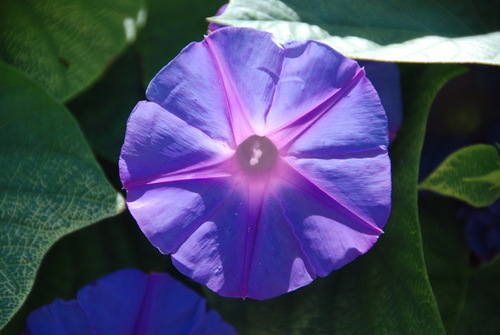
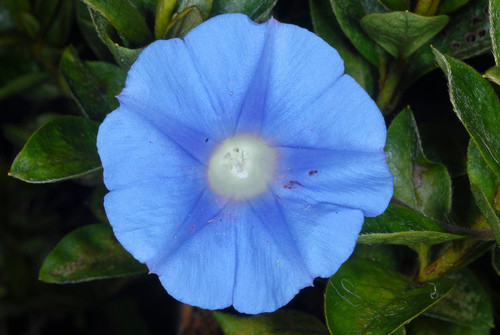
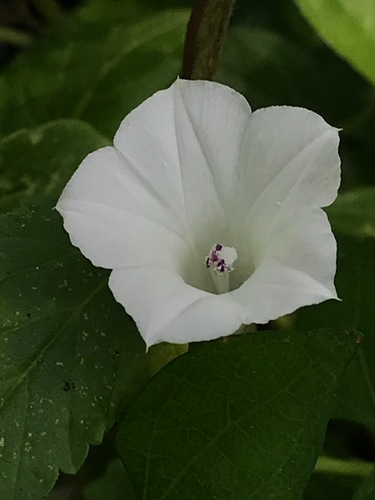
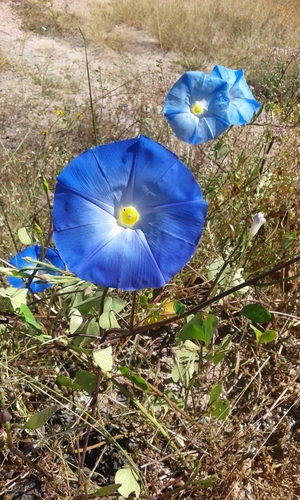
Ipomoea tricolor Cav. is an herbaceous twining liana that can be an annual or perennial, growing 2 to 4 metres (7 to 13 feet) tall. Its leaves are arranged spirally, are 3 to 7 centimetres (1 to 3 inches) long, and grow from a petiole 1.5 to 6 centimetres (1⁄2 to 2+1⁄2 inches) long. The flowers are trumpet-shaped, with a diameter of 4 to 9 centimetres (2 to 4 inches). Most commonly, flowers are blue, with a centre that ranges from white to golden yellow. I. tricolor, along with many rarer morning glory species, contains ergoline alkaloids, with ergine being the predominant alkaloid. Some supermarkets have stopped carrying I. tricolor seeds due to the presence of these alkaloids. In cultivation, this species is very commonly grown under the incorrect name Ipomoea violacea, which is actually a different but related species. I. tricolor cannot tolerate temperatures below 5 °C (41 °F), so it is usually grown as an annual in temperate regions. Regardless of growing region, it is a relatively short-lived plant. It prefers a warm, sheltered, sunny location, such as a south- or west-facing wall. Ingesting any part of this plant may cause discomfort. Numerous cultivars of I. tricolor with varying flower colours have been developed for use as ornamental plants. The cultivar 'Heavenly Blue' has received the Royal Horticultural Society's Award of Garden Merit.