About Ipomoea aquatica Forssk.
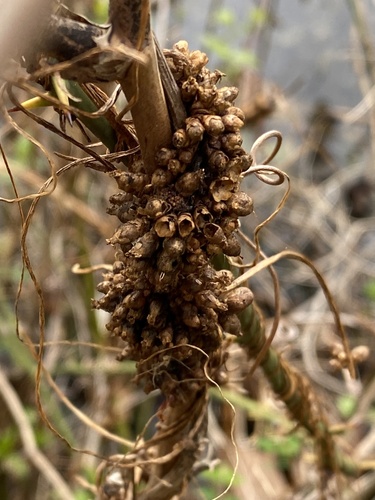
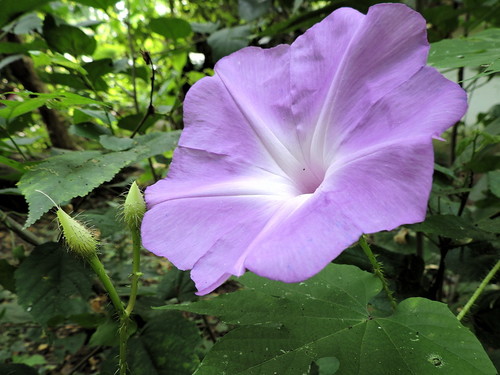
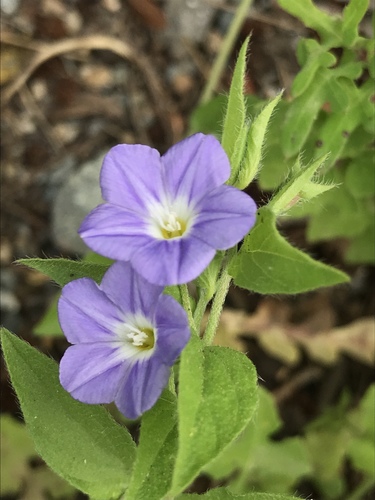
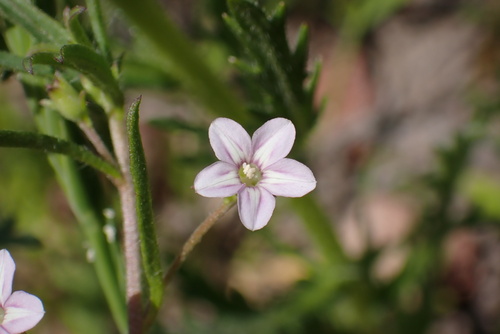
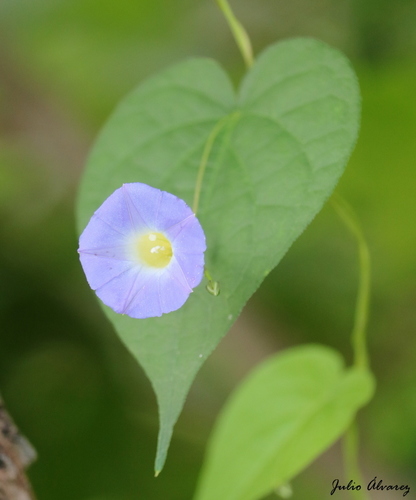
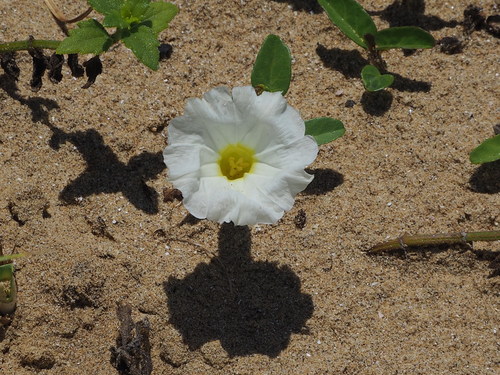
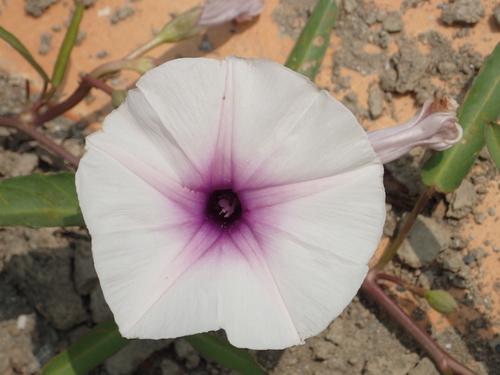
Ipomoea aquatica Forssk. grows in water or on moist soil. Its stems reach 2–3 metres (7–10 ft) or longer, and root at the nodes. A hollow cavity inside the stem makes the plant buoyant. Leaves typically range from sagittate (arrowhead-shaped) to lanceolate, and measure 5–15 cm (2–6 in) long and 2–8 cm (0.8–3 in) broad. Its flowers are trumpet-shaped, 3–5 cm (1–2 in) in diameter, and usually white with a mauve centre. The plant can be propagated either by planting stem shoot cuttings, which root along their nodes, or by planting seeds from the plant's seed pods.
The origin of Ipomoea aquatica is not fully clear, but it is generally accepted to be native to Southeast Asia, where it was first cultivated. This conclusion is supported by phylogenetic studies, the plant's ideal climatic conditions, the number of native pathogens present in the region (such as Albugo spp.), its predominant cultivation range, its common use as food and traditional medicine, and the large number of distinct native names for the species across Southeast Asian languages and language families. Some sources have named China or India as the location of the plant's domestication, but these claims have no supporting evidence beyond the appearance of the plant's name in historical records. The first clear mention of I. aquatica in Chinese records appears in the Nanfang Caomu Zhuang, written by Chinese botanist Ji Han (AD 263-307), who specifically identified I. aquatica as "a strange vegetable of the south" with a foreign origin brought over by "western countries". The claim for an Indian origin is based on the presence of an old Sanskrit name for the plant, kalamba, dated to around 200 BC, but this claim is unconfirmed.
Ipomoea aquatica is also found in Africa, southwestern Pacific Islands, and northern Australia. However, Africa and the Pacific Islands have far fewer varied native common names for the plant than Southeast Asia, and very few references to local use of I. aquatica for any purpose. Similarly, I. aquatica has no indigenous names in Australia and is entirely absent from the traditional diet of Indigenous Australians. This evidence suggests the species was not native to these regions, and was likely introduced relatively recently from tropical Asia.
I. aquatica is used in traditional medicine across Southeast Asia and in some African countries. In Southeast Asian traditional medicine, it is used to treat piles, nosebleeds, and high blood pressure, and is used as an anthelmintic. In Ayurveda, leaf extracts are used to treat jaundice and nervous debility. In Sri Lankan indigenous medicine, water spinach is believed to have insulin-like properties. Christophe Wiart cites multiple promising studies showing improvements in blood glucose levels in humans and rats, and concludes that further clinical trials are warranted. Antioxidant bioactive compounds and anti-microbial substances can be detected in water spinach. Additionally, plant extracts of water spinach inhibit cancer cell growth of Vero, Hep-2, and A-549 cells, though the plant only has moderate anti-cancer properties.
Ipomoea aquatica is most commonly cultivated in East, South, and Southeast Asia. It grows naturally in waterways and requires little to no care. It is used widely in Indonesian, Burmese, Thai, Lao, Cambodian, Malay, Vietnamese, Filipino, and Chinese cuisine, especially in rural or village (kampung) areas. It is also extremely popular in Taiwan, where it grows well. During the Japanese occupation of Singapore in World War II, the vegetable grew very easily across many areas, and became a popular wartime crop. Outside of tropical Asia, it is cultivated in the United States in California, Florida, Hawaii, Texas, Arizona, and the U.S. Virgin Islands. Wild I. aquatica is found in Africa, where it is collected and used by the Sambaa people of Tanzania. Water spinach is also potentially suitable for cultivation in greenhouses in more temperate regions. In non-tropical areas, it grows easily in containers if given enough water and a bright sunny location, and roots readily from cuttings.
Water spinach is cultivated in a range of systems. In Hong Kong, two traditional cultivation methods are used: the dryland method and the wetland method. In the dryland method, water spinach is grown on raised beds separated by irrigation ditches. Seeds can be sown directly onto the beds, or grown in a nursery and transplanted once seedlings reach a sufficient size. Regardless of starting method, plants should be spaced approximately 12 centimetres (4.7 in) apart by the time they reach 15 centimetres (5.9 in) tall. Regular irrigation and sufficient fertilization are crucial for the dryland system. Water spinach grown with the dryland method is ready for harvest 50 to 60 days after sowing, and harvesting is done by pulling up the entire plant.
The wetland method is the more common and important traditional cultivation method in Hong Kong. In the wetland method, water spinach is grown on flat fields surrounded by raised banks, which were often used as rice paddies in the past. These former rice paddies have heavy clay soil with an iron-pan that helps retain water for water spinach. Seedlings for this method are usually grown in a nursery on a dry field, because germination under water is very poor. Six weeks after sowing, cuttings can be taken from the seedlings for transplantation. Each cutting is an approximately 30 centimetre (12 in) long stem section containing seven or eight nodes. Cuttings are planted in the prepared field with a spacing of about 40 centimetres (16 in). The field is flooded to a depth of 3 to 5 centimetres (1.2 to 2.0 in) before planting, and the soil is tramped into a liquid mud to let cuttings root easily. Once plants are established, the flood depth is increased to 15 to 20 centimetres (5.9 to 7.9 in). The first harvest with the wetland method can usually be done around 30 days after transplantation. Harvesting differs from the dryland method: in wetland cultivation, the upper part of the main shoot is cut at approximately water level. This stimulates lateral growth and produces horizontal shoots that grow vertical branches. After the first harvest, these vertical branches can be harvested every seven to ten days throughout the summer. At the end of the growing season, fields are drained, and once the water spinach fruit is ripe it is harvested, dried, then trodden to release seeds for use the following season.
Fertilizer application rates for cultivation vary strongly by region, and most research on this topic dates to the 1980s and 1990s. Generally, a dose of 60 kilograms (130 lb) of nitrogen per hectare is sufficient, and applying potassium can improve yield. Application of plant growth regulators such as adenine and zetanine has been found to effectively promote water spinach growth. One study found the highest yields for the first harvest are produced by applying 60 kg/ha of nitrogen, 90 kg/ha of P₂O₅ and 50 kg/ha of K₂O. For the second harvest, the optimal fertilization is 120 kg/ha of nitrogen, 45 kg/ha of P₂O₅ and 100 kg/ha of K₂O. In Taiwan, the usual practice is to apply a base of about 10 t/ha of cow manure, followed by 50 kg/ha of ammonium sulfate after each harvest. In Bangkok, it is common to apply about 300 kg/ha of NPK fertilizer twice a month. In Indonesia, 150 kg to 300 kg of NPK are typically applied per hectare.