About Intsia bijuga (Colebr.) Kuntze
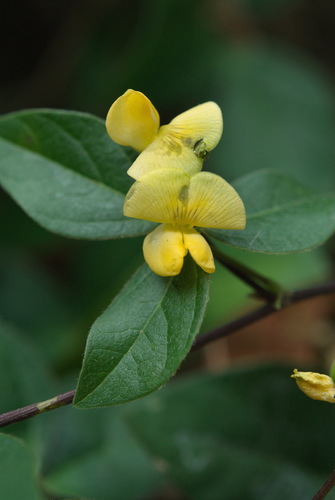
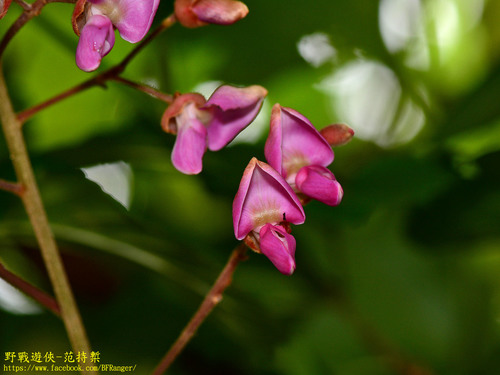
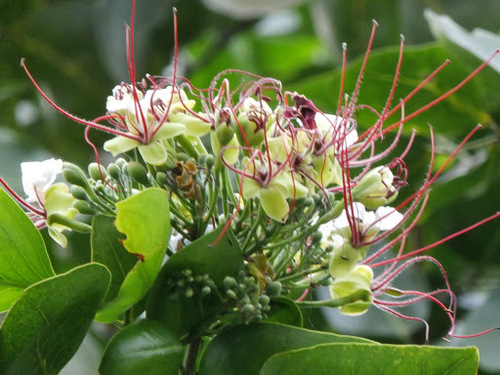
Intsia bijuga (Colebr.) Kuntze is an evergreen tree. It typically reaches 25–35 m (82–115 ft) in height, though it may grow as tall as 50 m (160 ft). Its trunk diameter ranges from 60 to 125 cm (24 to 49 in), and it can form buttresses up to 4 m (13 ft) tall and 2 m (6 ft 7 in) wide. Its compound leaves are arranged spirally on twigs, and usually have four broadly oval, asymmetrical leaflets. Each leaflet grows up to 18 cm (7.1 in) long and 12 cm (4.7 in) wide. Terminal inflorescences hold numerous bisexual flowers, which have both male and female reproductive parts. Only one petal develops fully; it reaches up to 3 cm (1.2 in) long, starts out white, and turns pink or red as it ages. The fruit is a relatively flat, woody pod that measures 10–28 cm (3.9–11.0 in) long and 4–8 cm (1.6–3.1 in) wide, containing up to 8 disc-shaped seeds. Each seed is roughly 3 cm (1.2 in) in diameter and 1 cm (0.39 in) thick. The natural distribution of Intsia bijuga spans the Indo-Pacific region. It is native to Tanzania in Africa; the Chagos Archipelago, Madagascar, Mauritius, and the Seychelles in the western Indian Ocean; Bangladesh, India, and Sri Lanka in the Indian subcontinent; the Andaman Islands, Cambodia, Myanmar, Nicobar Islands, Thailand, and Vietnam in Indo-China; Taiwan in the South China Sea; Borneo, Java, Malaysia, Maluku, the Philippines, Sulawesi, and Sumatra in Malesia; the Bismarck Archipelago, New Guinea, and the Solomon Islands in Papuasia; the Northern Territory and Queensland in Australia; and the Caroline Islands, Fiji, the Marianas, the Marshall Islands, New Caledonia, Palau, Samoa, Santa Cruz Islands, Tonga, and Vanuatu in the western Pacific Ocean. The species is primarily found in coastal areas, where it inhabits beach forest and the upper zones of mangrove forest, but it can also grow in rainforest, occurring at altitudes up to 600 m (2,000 ft). In Australia, this species flowers from December to May. The timber of Intsia bijuga is widely used, thanks to its greater durability and termite resistance compared to other wood types. This makes it suitable for engineering, construction, and decorative work. It has a density of 830 kg/m³ (1,400 lb/cu yd) and an above-ground life expectancy of more than 40 years. In indigenous communities within the tree's native range, it has historically had many uses: timber for house construction, building canoes and rafts, and carving ornaments and tools. A dye can be extracted from the wood, and an insect repellent can be made from the seeds. Decoctions prepared from different parts of the tree have been used to treat multiple ailments including diarrhoea, rheumatism, pain, colds, and influenza.