About Inocybe tahquamenonensis D.E.Stuntz
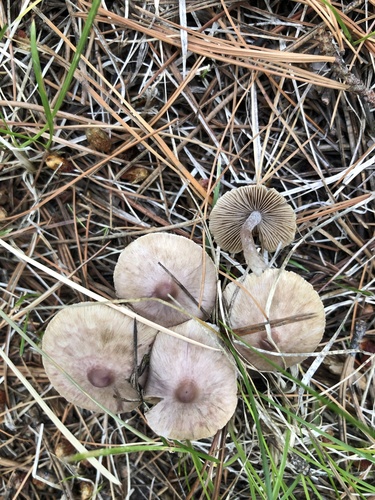
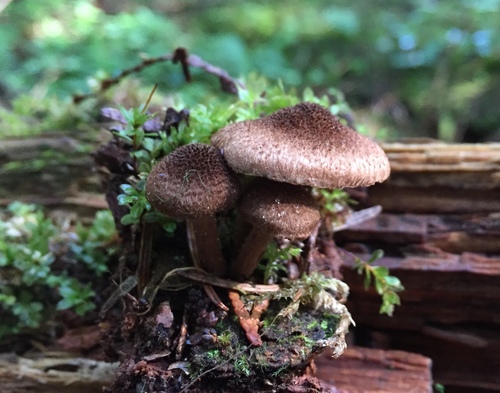
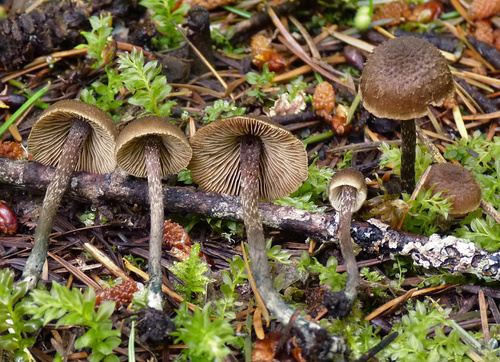
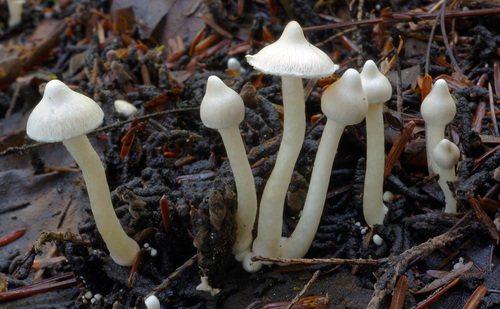
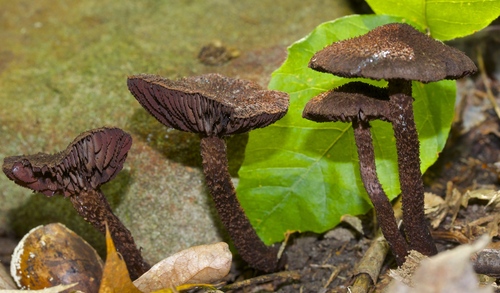
Inocybe tahquamenonensis is an inedible agaric fungus species that belongs to the family Inocybaceae. It was first formally described scientifically in 1954 by mycologist Daniel E. Stuntz. The fruit bodies of this fungus have caps that range from bell-shaped to convex to flattened, with a diameter between 1.2 and 3 cm (1⁄2 to 1+1⁄4 inches). Caps are colored dark purplish brown to reddish-brown or blackish-brown, and the fungal flesh is reddish-purple. The gills connect to the stipe, are spaced somewhat widely apart, and start out reddish brown before maturing to chocolate brown; they may sometimes develop whitish edges. This species produces a brown spore print, and individual spores measure 6–8.5 by 5–6 μm. Fruit bodies of Inocybe tahquamenonensis grow singly, scattered across an area, or in groups under deciduous trees in the United States.