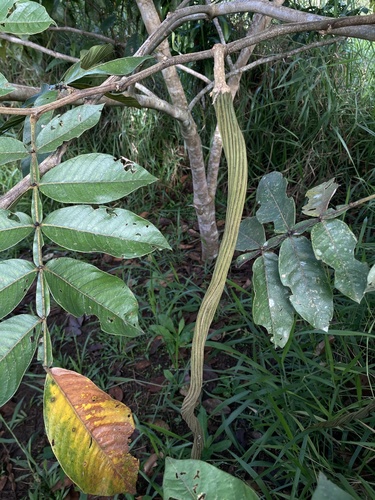
About Inga edulis Mart.
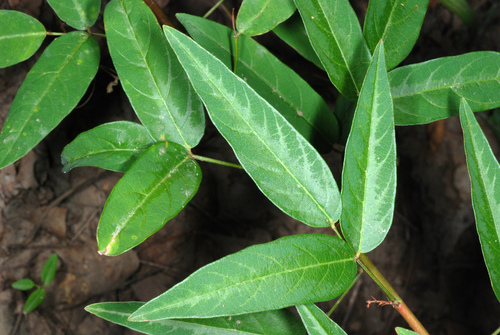
Inga edulis Mart., commonly called ice-cream bean, paterna, short variety cushín, joaquiniquil, cuaniquil, guama, or guaba, is a fruit species native to Central and South America. It belongs to the mimosoid tribe of the legume family Fabaceae. The generic name Inga comes from the Tupí word ingá for the species, while the specific epithet edulis is Latin for "edible". The common name "ice-cream bean" refers to the sweet flavor and smooth texture of the fruit pulp. It is widely cultivated, especially by Indigenous Amazonian communities, for shade, food, timber, medicine, and to produce the alcoholic beverage cachiri, and it is popular across Peru, Ecuador, Pernambuco (Brazil), Venezuela, Guyana, and Colombia. Its native range extends from Central America to South America, growing from subtropical dry to tropical wet environments at elevations between sea level and 2200 m. It grows best when mean annual daytime temperatures are between 23 and 30 °C, and can tolerate temperatures between 18 and 35 °C. During dormant resting periods, mature trees can survive temperatures as low as −2 °C, while young plants die at 0 °C. The species prefers annual precipitation between 1200 and 2500 mm, but can tolerate annual rainfall ranging from 640 to 4000 mm. It can grow in a wide variety of soil conditions, preferring a pH between 5.0 and 6.5, but can adapt to very strongly acidic soils as low as pH 4.5 or moderately alkaline soils up to pH 8.0. Its natural habitats include the margins of large rivers like the Amazon, thickets below the high water line, and wooded swamps. The tree can tolerate temporarily waterlogged soils for 2 to 3 months each year, and also withstands dry drought seasons up to 6 months. It also grows well on heavy soils or sloped terrain. As a leguminous tree, it is undemanding in terms of soil fertility and can actually improve soil quality by fixing nitrogen via root nodules, which helps restore nutrient-depleted soils. Unlike most legumes, where soil ammonium and nitrate salts reduce nodule formation, I. edulis produces larger nodules when soil ammonium levels reach 5 mM; nitrate still prevents nodulation and does not benefit the species. In addition to increasing nitrogen content, I. edulis is reported to significantly raise the amount of extractable phosphorus in soil, further improving degraded land. I. edulis is widely cultivated in agroforestry systems across its native Neotropical range, and this cultivation, often grown alongside coffee or cocoa, has been practiced since pre-Columbian times. Its seeds are recalcitrant, meaning germination is very easy, and seeds often sprout while still inside the pod. However, seeds lose their ability to germinate after two weeks of storage. Direct sowing is possible, but establishing seedlings that have already reached a moderate height reduces competition with harmful weeds and increases plant growth. In nutrient-depleted soils, inoculation with rhizobia and mycorrhizal fungi is recommended to promote growth; such inoculum can be easily made by collecting soil, nodules, and fine roots from mature, nodulated stands of I. edulis. The species is generally highly resistant to pests and diseases. Fungal attacks can cause minor damage during the seedling stage, mature trees may be defoliated by Lepidoptera larvae, and fruit fly larvae often damage the seed testa. In Ecuador, I. edulis is especially susceptible to mistletoe infestations. I. edulis has been grown as a fruit tree for thousands of years, and its fruit is widely sold in local South American markets, primarily for the sweet, succulent pulp that surrounds the seeds. The white pulp (aril) is eaten raw as a sweet snack, though it is less nutritious than the seeds. The seeds contain toxic compounds including trypsin and chymotrypsin inhibitors, which are destroyed by cooking. The pulp's flavor is described as similar to vanilla ice cream, and some varieties have a mild cinnamon flavor. Cooked seeds are edible and taste similar to chickpeas. In Colombia, the arils are used to make the alcoholic beverage cachiri for a festival of the same name: Indigenous women chew the arils and spit the mixture into a vat, where it is left to ferment. The fruit ripens quickly and can only be stored for 3 to 4 days, which limits export opportunities, but refrigeration can extend its shelf life to around three weeks. Thanks to its rapid growth and soil-improving properties, I. edulis is widely used in tropical agroforestry. Most notably, it is used in inga alley cropping as an alternative to slash-and-burn agriculture. It is also a popular shade tree for coffee, cocoa, and tea plantations, in large part because it retains its leaves through the dry season, unlike many other common shade tree species. Its cuttings and leaves are also used as mulch and animal fodder. Its wood is sometimes used for timber and fuel, and it is popular as firewood due to its high caloric content and low smoke output. Despite its rapid growth and clear potential to improve soils in agroforestry systems, I. edulis has never been the subject of formal improved breeding programs. However, the species is known to undergo strong introgression with Inga ingoides in areas where the two species come into contact. This could allow for selection of hybrids through interspecific hybridization to further increase crop yield and flood tolerance. In native South American folk medicine, I. edulis is widely used. Decoctions made from its leaves, bark, or root are commonly used to treat diarrhea, arthritis, and rheumatism. Crushed, boiled leaves are consumed to relieve coughing, or applied topically to lip sores that may be caused by herpes. Multiple studies have investigated I. edulis as a source of polyphenols for use as antioxidants, and have yielded promising results.