About Infundibulicybe gibba (Pers.) Harmaja
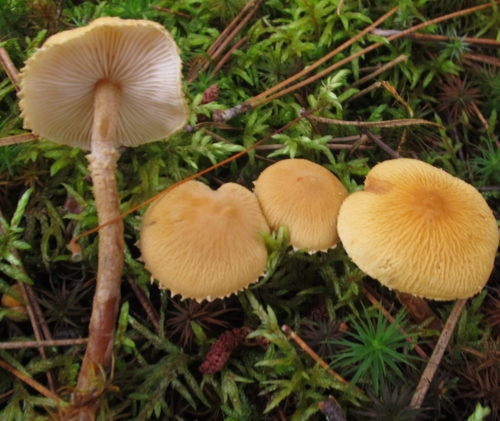
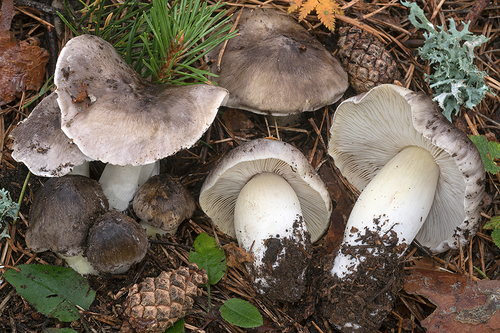
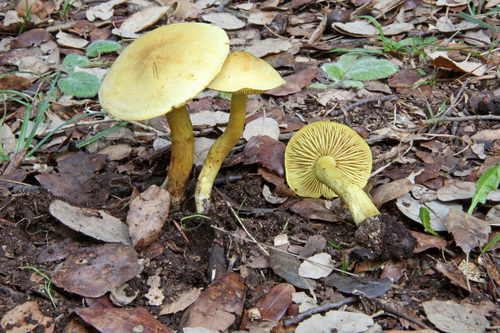
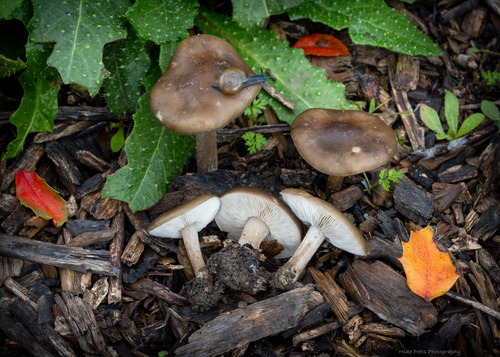
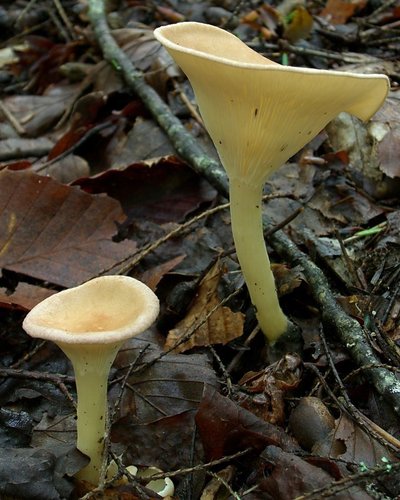
Infudibulicybe gibba (Pers.) Harmaja has a matt, slightly felted cap 3 to 9 centimetres (1+1⁄4 to 3+1⁄2 inches) across. The cap is beige to tan, and sometimes has a pink tinge; it may develop a small depression at its center, and quickly becomes funnel-shaped. No ring or other veil remnants are present. The stem is white or whitish, around 2–8 cm long and 1 cm in diameter. The white gills are crowded and very decurrent, meaning they run down the stem. This species has a faint cyanic smell similar to new-mown hay, and a mild flavour; however, the central European variety adstringens has an unpleasant taste. Its tear-shaped spores are white, measuring around 5.5–8 μm by 4–5 μm, and the spore print is white. This gregarious saprobic mushroom grows on soil in deciduous woods, or less commonly in coniferous woods, and can be found from summer to autumn. It sometimes forms fairy rings. It is very common across Europe, and also occurs in North America and Japan. I. gibba is edible when young, but is reported to have mediocre quality. It can be fried, or used in dishes like risottos and soups. The stems are tough and are often discarded. This species resembles some poisonous mushroom species. An extract of I. gibba shows inhibitory activity against thrombin.