About Indri indri (Gmelin, 1788)
Common Name & Baseline Weight
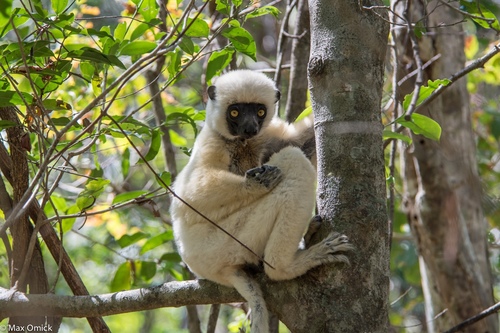
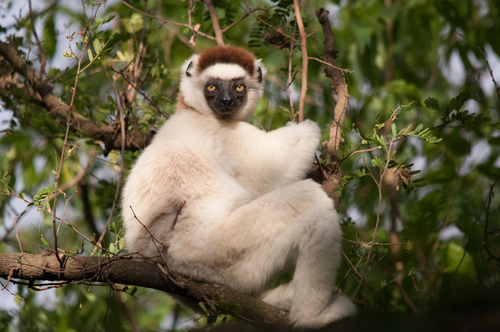
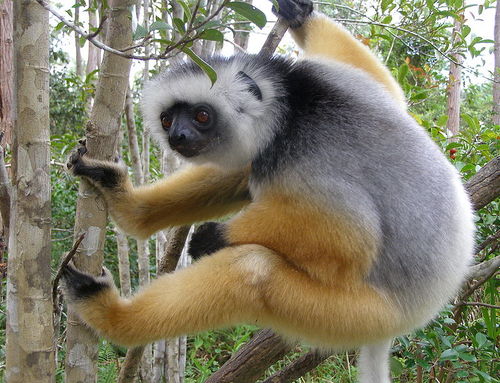
Indri indri (Gmelin, 1788), commonly called the indri, is the largest living lemur alongside the diademed sifaka; both species have an average weight of approximately 6.5 kg. The indri can reach weights of 9.0 kg to 9.5 kg, and may potentially grow as heavy as 15 kg.
Body Length Measurements
Its head-body length measures 64 to 72 cm, and its full body length can reach nearly 120 cm when its legs are fully extended.
Locomotion Posture
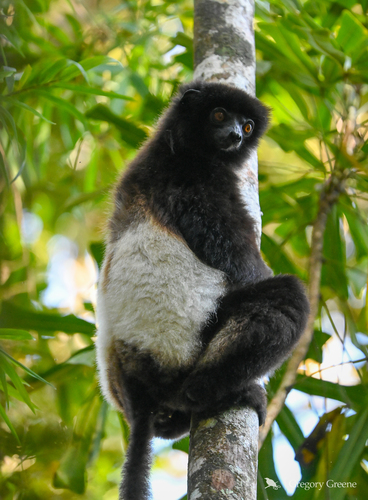
The indri is a vertical clinger and leaper, so it holds its body upright when moving through trees or resting on branches. It has long, muscular legs that it uses to propel itself between tree trunks.
Head & Facial Features
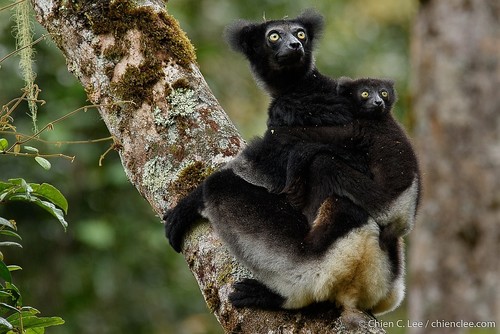
Its large greenish eyes and black face are framed by round, fuzzy ears.
Tail Structure
Unlike all other living lemurs, the indri only has a rudimentary tail.
Typical Fur Pattern
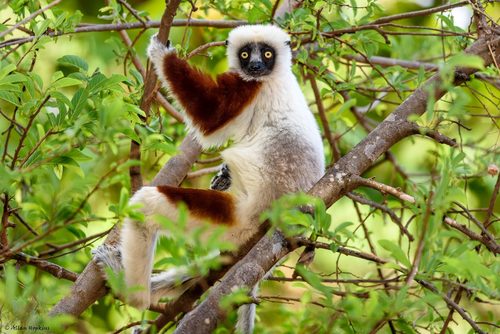
Its silky fur is mostly black, with white patches located along the limbs, neck, crown, and lower back.
Population Color Variation
There are wide color variations across different populations of the species: some northern populations are made up of mostly or entirely black individuals. The indri's bare face has pale black skin, and is sometimes bordered by white fur.
Proposed Subspecies Classification
Because of these color variations, Colin Groves described two indri subspecies in 2005: the dark Indri indri indri from the northern portion of the species' range, and the paler Indri indri variegatus from the southern range.
Subspecies Classification Rejection
Later editions of Lemurs of Madagascar by Russell Mittermeier et al. do not recognize this classification, and recent genetic and morphological research indicates that the indri's color variation is clinal.
Forest Habitat Range
This lemur lives in lowland and montane forests along Madagascar's eastern coast, ranging from Réserve Spéciale d'Anjanaharibe-Sud in the north to the Mangoro River in the south.
Range Gaps
It is not found in the Masoala Peninsula or Marojejy National Park, even though both areas are connected to forests that host indri populations less than 40 km away.
Sexual Maturity Age
Indris reach sexual maturity between 7 and 9 years of age.
Reproductive Cycle
Females produce offspring every two to three years, with a gestation period of approximately 120 to 150 days. A single infant is usually born in May or June.
Parental Care
The mother acts as the primary caregiver, but the father assists by staying with his mate and offspring.
Infant Fur Development
Infant indris are born mostly or completely black, and begin to develop white coloration (if they will have any) between four and six months of age.
Infant Carrying Behavior
The infant clings to its mother's belly until it is four or five months old, at which point it moves to cling to her back.
Juvenile Independence Timeline
Indri infants start showing signs of independence at eight months old, but do not become fully independent from their mother until they are at least two years old.