About Idia aemula Hübner, 1814
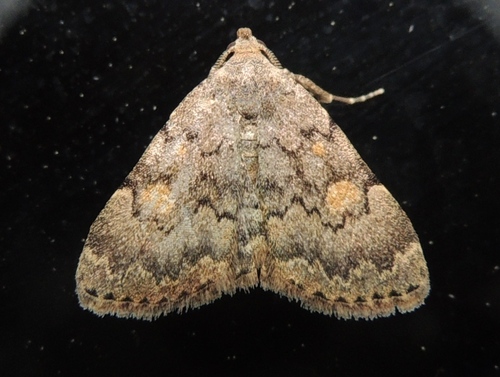
Idia aemula, commonly known as the common idia, powdered snout, or waved tabby, is a species of litter moth in the family Erebidae. The species was originally described by Jacob Hübner in 1814, matching its scientific naming authority year. This moth is distributed from Canada in the north, southward to Florida and Texas in the United States, and has also been recorded in the Palearctic region. Both the forewings and hindwings have a medium grey ground colour. The basal, antemedial, and postmedial wing lines are darker in colour and thin. A more diffuse median line is present, and a median shade sometimes appears. A pale subterminal line is preceded by a dark shade. The reniform spot is large, and coloured pale, warm ochre, or orange brown. The hindwing features several wavy light and dark lines, plus a dark discal spot. The wingspan of Idia aemula measures 20 to 30 mm. In North America, adult moths are active from May to October in the northern part of their range, and from April to November in the southern part. This species produces two to three generations per year. The larvae feed on dead leaves.