About Idaea contiguaria (Hübner)
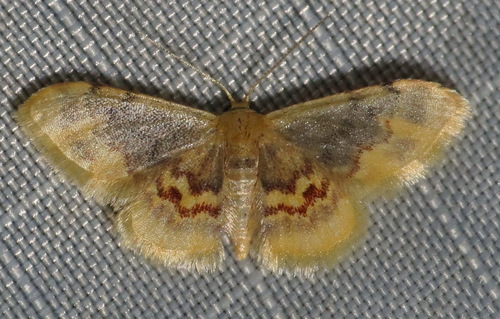
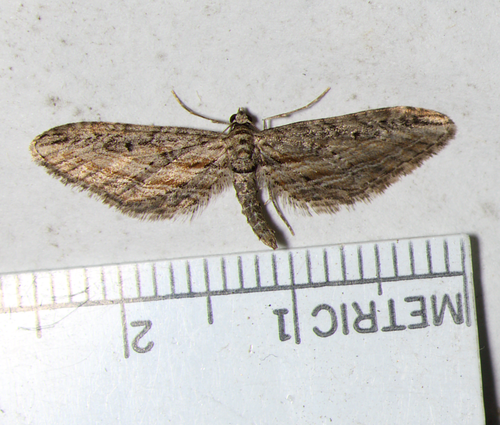
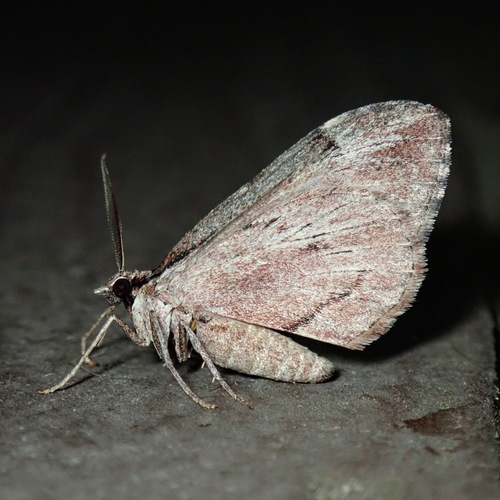
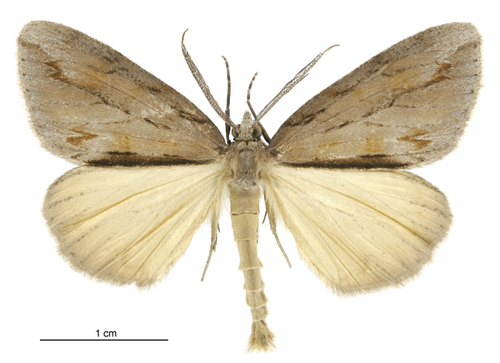
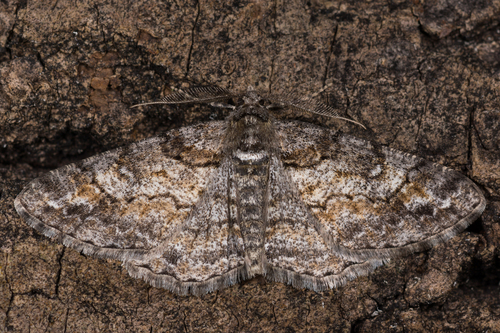
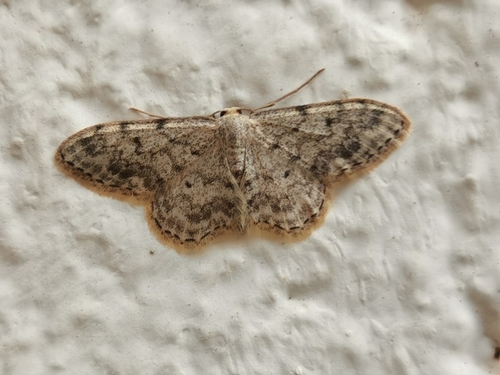
Idaea contiguaria, commonly known as the Weaver's wave, is a moth species belonging to the family Geometridae. This species was first described by Jacob Hübner in 1799, and is native to Europe. The adult moth has a wingspan of approximately 20 millimeters. According to South's description, the moth has a whity brown base color, with varying degrees of dark grey dusting or clouding. Three irregular black lines are clearly visible on the forewings, and two on the hindwings, except in the darker forms of the species. It flies at dusk during the months of June and July, and rests during the day on lichen-covered rocks. The caterpillar of Idaea contiguaria is pale ochreous brown, marked with irregular dark brown lines. Wild caterpillars feed on ling (Calluna) and crowberry (Empetrum) from September to May. If caterpillars hatch from collected eggs, they can be reared on plants like chickweed and knotgrass, and produce adult moths within the same year. In Easter 1906, Mr R. Tait found ten caterpillars on navelwort (Cotyledon) growing among heather in a sheltered rocky corner in North Wales, and also noted that moths reared in captivity pair easily. All recorded British localities for this species are located in North Wales: Aber, Bangor, Barmouth, Bettws-y-coed, Conway, Dolgelly, Llanfairfechan, and Penmaenmawr. Adults of this species produce one generation per year, which emerges and flies from June to July. The larval host plants are heather, crowberry, and Umbilicus.