About Ictinia plumbea (Gmelin, 1788)
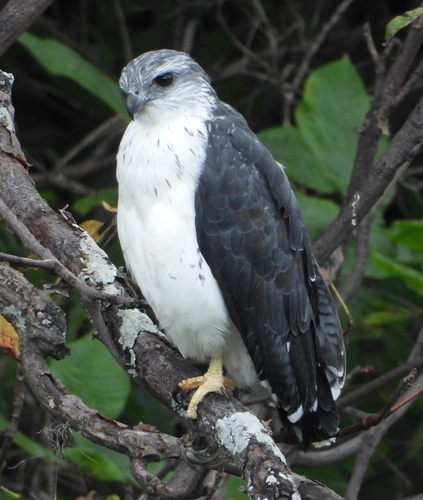
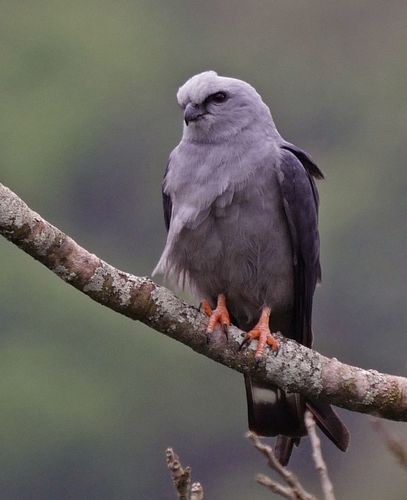
The plumbeous kite (Ictinia plumbea (Gmelin, 1788)) measures 34–37.5 cm (13.4–14.8 in) in total length. Males weigh 190–267 g (6.7–9.4 oz), while females are slightly larger, weighing 232–280 g (8.2–9.9 oz). This species has long, pointed wings. Adult plumbeous kites are primarily slate-grey, with a paler head and underparts. Their short black tail has 2 to 3 white bands on its undersurface. They have red eyes and orange legs. In flight, the kite displays a rufous patch on its primary feathers. The sexes have similar plumage, but immature plumbeous kites have grey upperparts streaked with white and whitish underparts streaked with dark markings, and they do not have the rufous wing patch. The call of the plumbeous kite is a whistled si-see-oo. The plumbeous kite is darker gray overall than the strongly migratory Mississippi kite; the Mississippi kite has white patches on its secondaries and lacks rufous patches on its primaries. The plumbeous kite inhabits lowland forest and savannah. It breeds in the Neotropical realm, ranging from eastern Mexico to Peru, Bolivia, and Argentina, and also breeds on Trinidad. Populations in the northern and southern parts of the breeding range, including those in Central America, Trinidad, Venezuela, Colombia, southern Argentina, and Brazil, are migratory, moving into tropical South America during the northern winter. The plumbeous kite is not especially gregarious, though it may sometimes be seen in flocks during migration. It catches insects either in flight or from a perch. It will also occasionally prey on snails, frogs, lizards, bats, birds, and snakes.