About Ibervillea tenuisecta (A.Gray) Small
Classification and Native Range
Ibervillea tenuisecta, commonly known as the "Coyote Melon" or "Slimleaf Bitter Cucumber," is a perennial vine belonging to the Cucurbitaceae family. Native to the southwestern United States and northern Mexico, this plant features a slender stem that can grow up to 10 feet long, aided by tendrils that help it climb other plants or structures.
Leaf Features
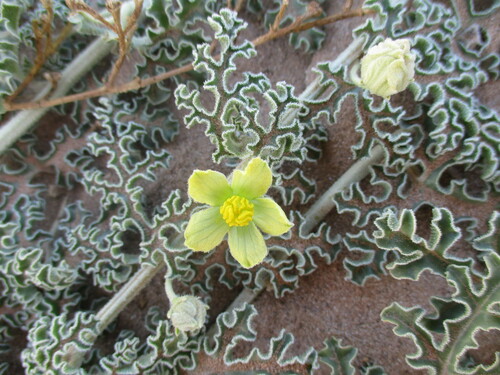
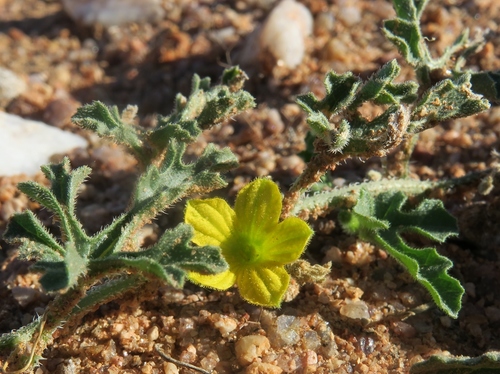
The leaves of Ibervillea tenuisecta are deeply lobed with five to seven pointed segments.
Flower Characteristics
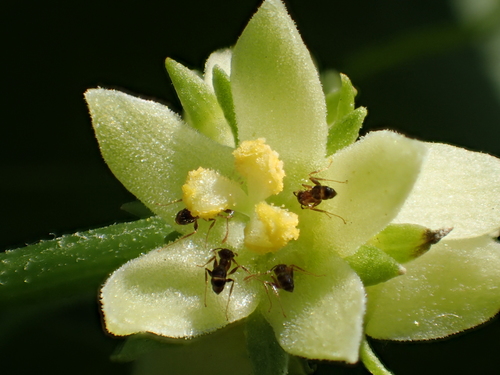
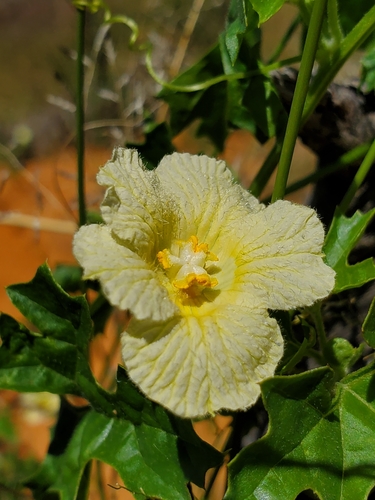
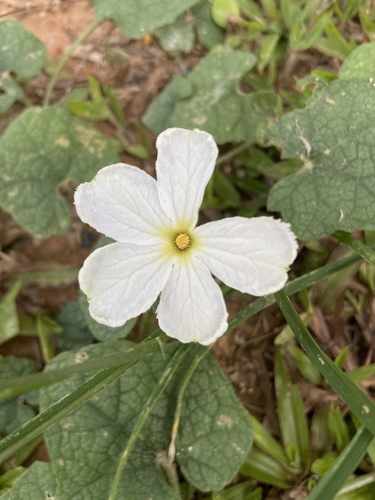
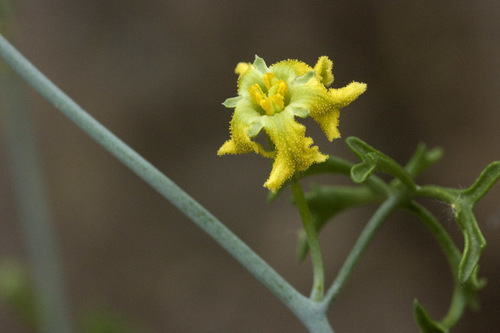
Its small, yellow-green flowers bloom in clusters from late spring through summer.
Fruit Traits
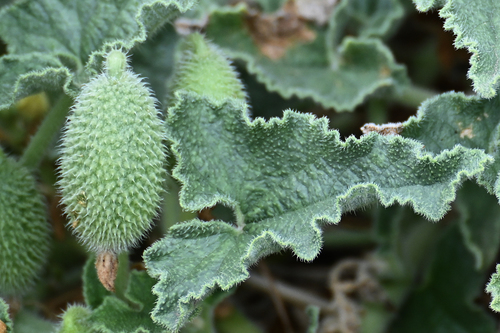
The fruit is an oblong-shaped berry, up to 2 inches long, with a bitter taste.
Growing Conditions
Ibervillea tenuisecta thrives in well-drained soil and can grow in full sun or partial shade.
Water Requirements
While it can tolerate drought conditions, regular watering during the growing season is essential for optimal growth.
Traditional Medicinal Uses
Historically, the Coyote Melon has been used for medicinal purposes by Native American tribes.
Active Compounds and Applications
It contains anti-inflammatory compounds and has been used as an analgesic to alleviate pain from arthritis, rheumatism, headaches, and more.
Distinctive Qualities
Overall, Ibervillea tenuisecta is an intriguing plant species because of its distinctive appearance and traditional medicinal uses.
Research and Cultural Significance
It holds potential for further exploration both from a botanical research perspective and an ethnobotanical perspective, considering its cultural significance among Native American tribes who have relied on it for centuries as part of their traditional medicine practices.