About Iberis umbellata L.
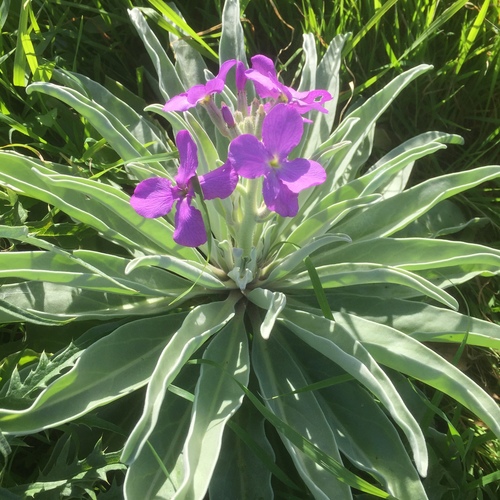
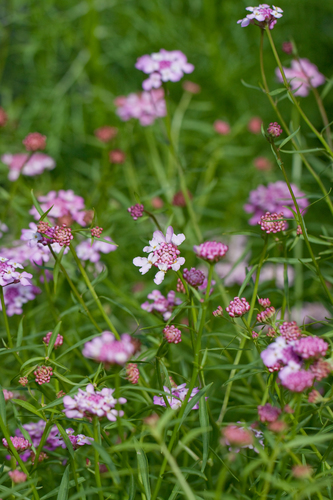
Iberis umbellata L. has a biological form classified as hemicryptophyte scapose. Its overwintering buds are located just below the soil surface, and its floral axis is more or less erect with only a few leaves. The stem of this plant is twisted at the base, while its flowering branches are erect and leafy. Mature plants reach 30 to 50 centimetres (12 to 20 inches) in height. Its leaves are green, linear-lanceolate, and measure 15 to 25 millimetres (0.59 to 0.98 inches) in length. This plant produces flowers arranged in umbel-shaped corymbs. The calyx is violet, and the corolla is made up of four petals that can be white, pink, or purple. The petals are rounded at the apex, and the peripheral petals form a large vexillum 8–10 millimetres (0.31–0.39 inches) long. Its flowering period runs from May to June. The flowers are hermaphroditic and are pollinated by bees and butterflies. After flowering, it produces a silique (fruit) 7–10 millimetres (0.28–0.39 inches) long. This species is native to the Mediterranean region. It is found across most of Europe, particularly along coasts from Spain to Greece, and also occurs in northern America. It grows in dry rocky hillsides, bushy areas, and clearings. It prefers calcareous soils, and grows at altitudes between 0 and 1,300 metres (0 to 4,265 feet) above sea level.