About Hyposidra talaca (Walker, 1860)
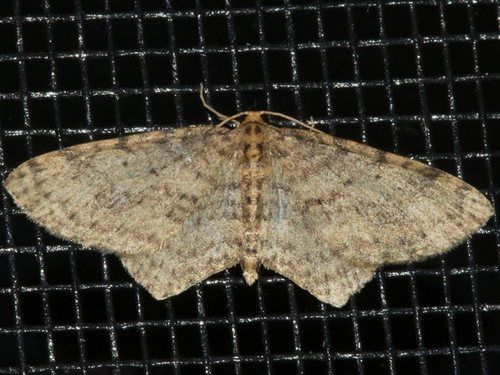
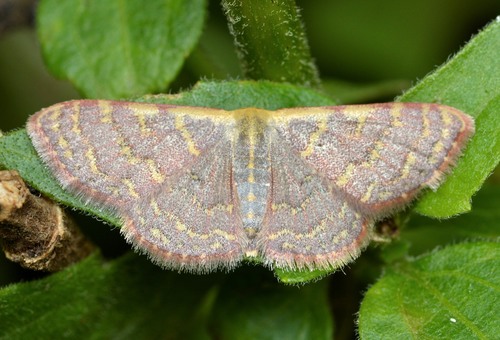
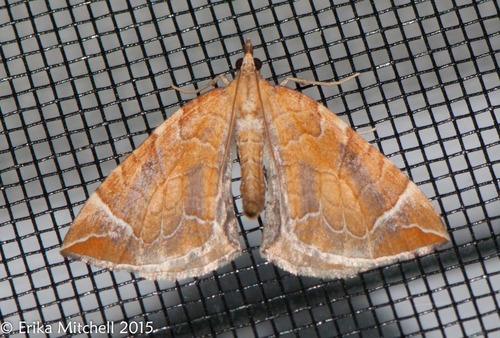
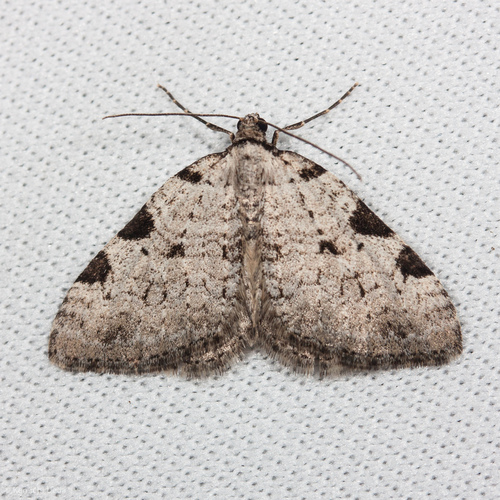
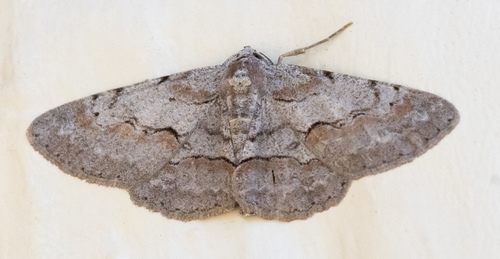
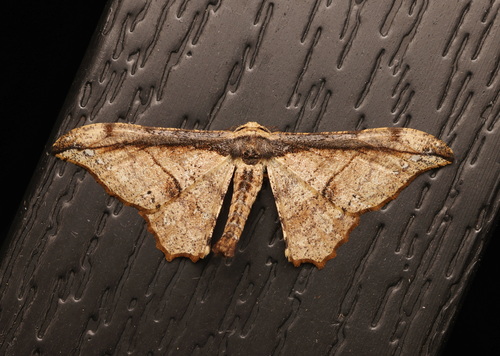
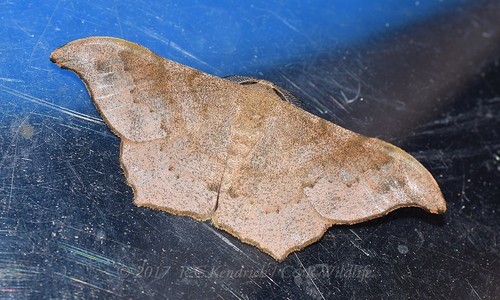
Hyposidra talaca (Walker, 1860) has a wingspan of approximately 30 millimeters. In females, the outer margin of the hindwings is barely crenulate. In males, the outer margin of neither wing is excised; males also have a more or less distinct sub-apical patch on the forewings. The antennae are pectinated. The outer margin of the hindwings is angled at vein 4. The body is dark olive fuscous, more or less speckled (irrorated) and suffused with grey. Faint traces of medial and crenulate postmedial lines are present on both wings, and the cilia are dark. Traces of an antemedial line can be found on the forewings. A crenulate postmedial line is present on the underside of both wings.
The larvae are loopers. Young larvae have a pinkish olive green body irrorated with black, and dark patches on the 4th and 6th somites. Later larval instars are uniformly brown. The larvae feed on the foliage of a very wide variety of plants, including species from the genera Anacardium, Bombax, Terminalia, Chromolaena, Gynura, Mikania, Cupressus, Aleurites, Aporosa, Bischofia, Breynia, Glochidion, Hevea, Manihot, Ficus, Morus, Psidium, Polygonum, Rubus, Cinchona, Coffea, Mussaenda, Citrus, Euodia, Schleichera, Theobroma, Camellia, Tectona, and the species Perilla frutescens. Eggs and caterpillars of Hyposidra talaca are mostly susceptible to parasitism by many hymenopterans, and to predation by birds.