About Hypolycaena phorbas (Fabricius, 1793)
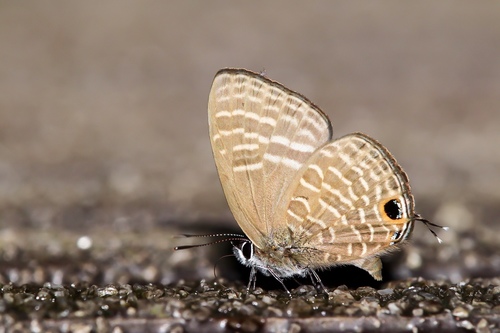
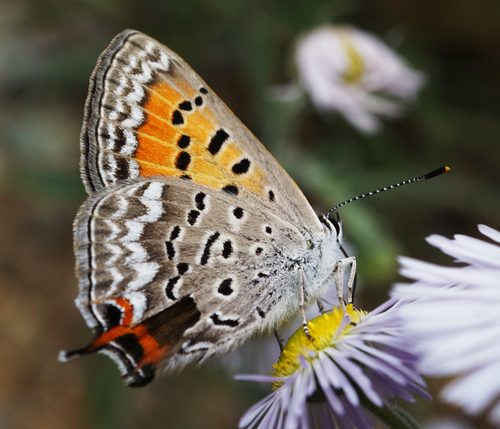
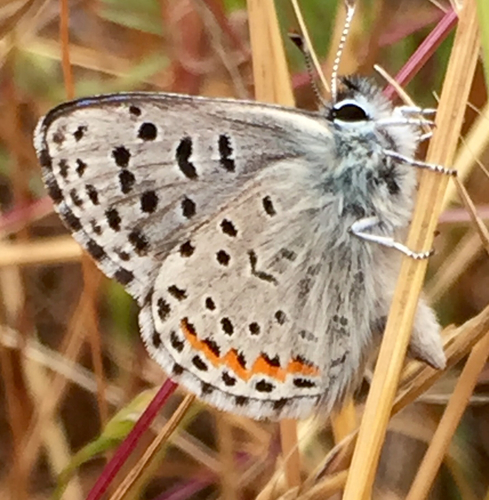
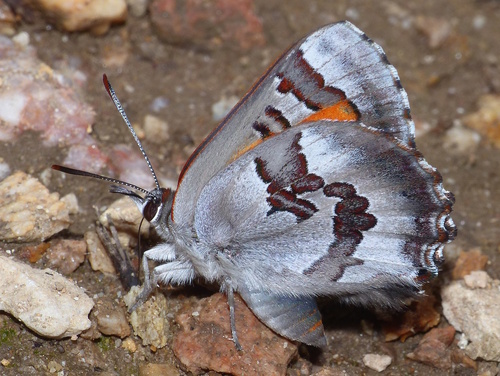
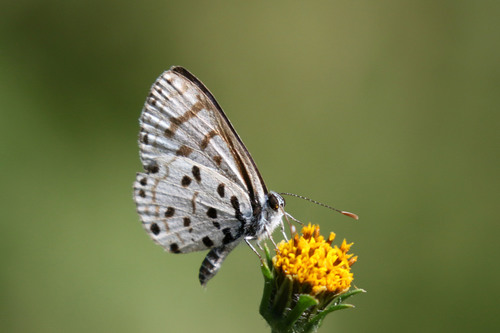
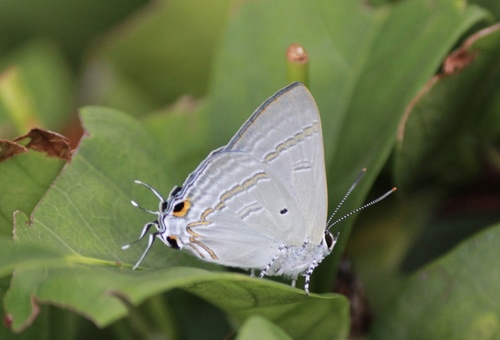
Hypolycaena phorbas (Fabricius, 1793) is a butterfly species that belongs to the family Lycaenidae. Its known distribution covers Waigeo, Biak, Roon Island, mainland New Guinea, various outlying islands near New Guinea, and Australia. This species has an approximate wingspan of 30 millimeters. Adult individuals of Hypolycaena phorbas are brown on their upper wing surfaces. Male forewings feature a blue sheen and a large dark patch at the center, while female forewings have a white patch edged with blue. The hindwings of both males and females have two tails positioned next to a large black-and-white eyespot. The underside of the wings is fawn-colored, with two rows of darker spots that run parallel to the wing margins. Two small orange-and-black eyespots are present on the underside of the hindwings. Recorded host plants for the larvae include Flagellaria indica, Dendrophthoe vitellina, Cassia alata, Cassia fistula, Cupaniopsis anacardioides, Acmena species, Eugenia species, Syzygium wilsoni, Planchonia careya, Ceriops tagal, Lumnitzera racemosa, Terminalia melanocarpa, Aegiceras corniculatum, Clerodendrum floribundum, Clerodendrum inerme, and Oxera splendida. Larvae feed on the leaves, young shoots, buds, and flowers of these plants. Larvae may be green or brown, and they have a white-edged dorsal line. The larvae are attended by Oecophylla smaragdina ants, and they typically hide beneath a leaf during daytime. Pupation occurs on the stem of the larval food plant, and this process often takes place in groups. The pupa of Hypolycaena phorbas is green or brown, marked with dark flecks and mottling.