About Hypolepis millefolium Hook.
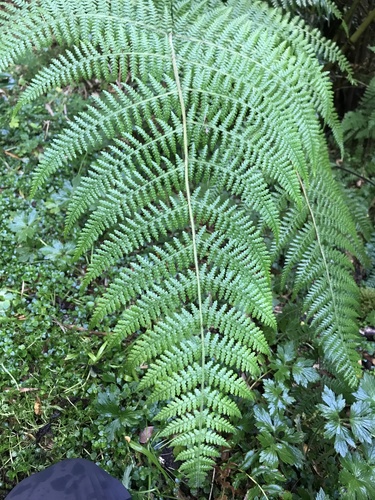
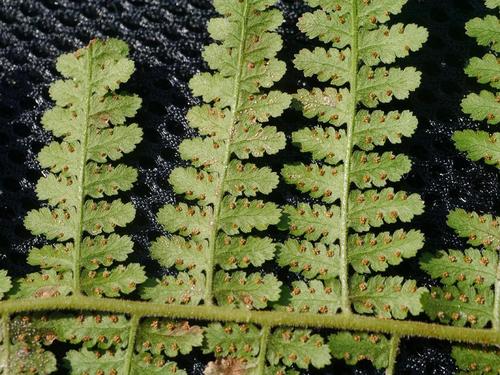
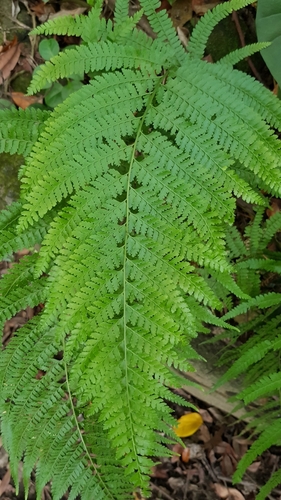
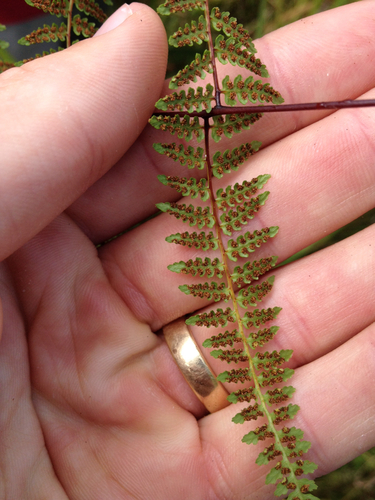
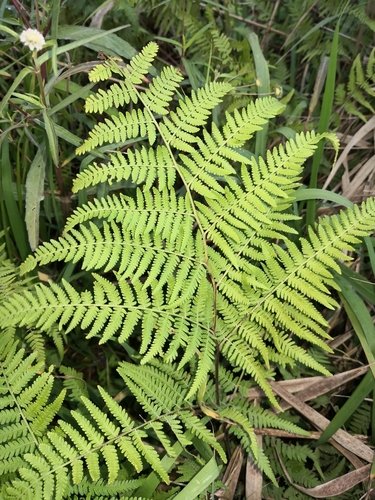
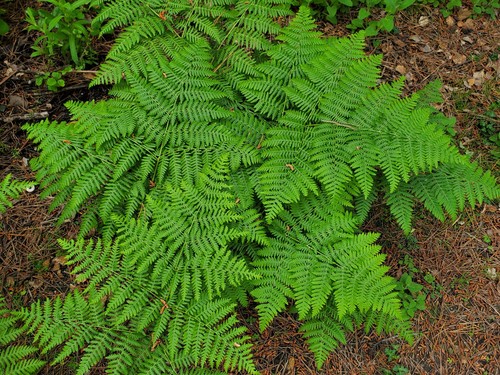
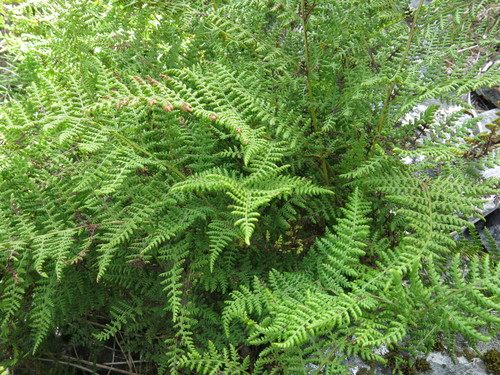
Hypolepis millefolium Hook. is a fern that can be easily distinguished from other related fern species by its numerous lacy leaf blades (laminae), a feature that inspired its name. Its laminae are typically bright green. The sori of this fern are uncovered and glabrous, meaning they are free of hairs. It can be told apart from Hypolepis ambigua, a species that grows in more lowland areas, by the size of its ultimate segments: H. ambigua has ultimate segments wider than 1mm, while H. millefolium has smaller ultimate segments. Compared to Hiya distans, H. millefolium has distal pinnae that attach to the rachis at an acute angle rather than a right angle, and it also has a thinner stipe. This fern is deciduous and loses its leaves in winter. Hypolepis millefolium is native to New Zealand, where it occurs on all three of the country’s main islands, as well as the Chatham Islands, Antipodes Islands, Auckland Islands, and Campbell Island. It has not been recorded from the Kermadec Islands or the Snares. Its altitudinal range spans from 30 meters to 1500 meters above sea level; in the North Island, it grows mainly at altitudes above 250 meters, and is most commonly found in montane areas. This fern grows in a wide variety of habitat types, including grassland, tussockland, swamp margins, and forests. It typically forms large colonies from spreading rhizomes. On the Chatham Islands, it is specifically known to grow in peat bogs. Ecologically, Hypolepis millefolium acts as a food source for takahē during winter, and it is also browsed by deer. It can be used to make perfume.