About Hypogymnia krogiae Ohlsson
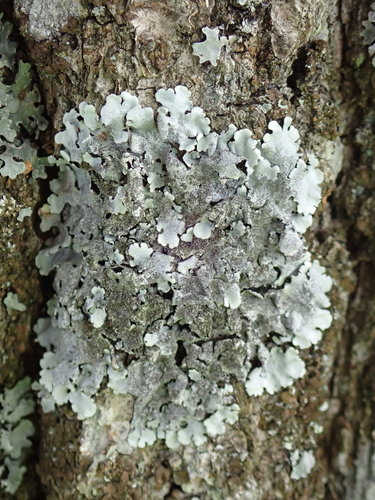
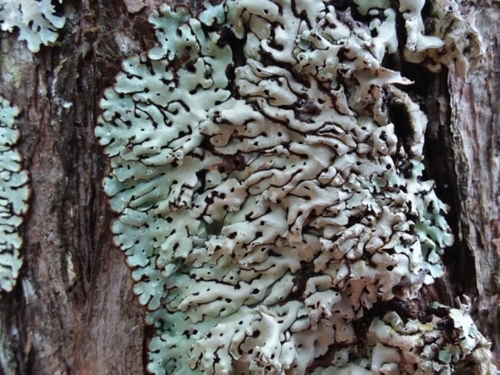
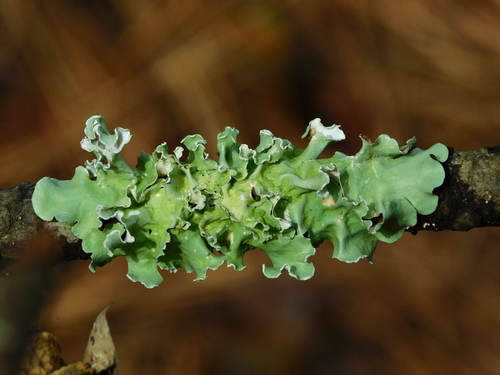
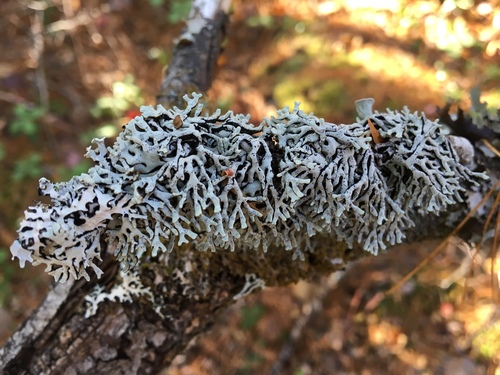
Hypogymnia krogiae Ohlsson is a lichen that has a greenish-gray thallus, which can reach up to 8 centimeters (3 inches) in diameter. The thallus is made up of individual overlapping lobes that measure 0.8–2.5 millimeters (0.03–0.10 inches) wide, and the marginal lobes have slightly upturned edges. The undersurface of the thallus is dark brown to black and wrinkled, and it lightens in color near the tips of the lobes. Sexual fruiting bodies called apothecia are common on the surface of the thallus; these apothecia are stipitate (borne on a small stalk), have a brown disc, and measure 2.0–3.0 millimeters wide. Each ascus contains 8 ascospores, which measure 4.0–6.0 micrometers. This lichen produces the secondary compounds atranorin, chloroatranorin, physodic acid, physodalic acid, and trace amounts of protocetraric acid. For standard chemical spot tests on the medulla, the expected results are PD+ (red), K−, KC+ (pink), and C−. Hypogymnia krogiae reproduces sexually via apothecia, and does not produce soredia. It has a sorediate counterpart called Hypogymnia incurvoides, which also occurs in North America. This pair is one of three fertile/sorediate species pairs in the genus Hypogymnia. Hypogymnia krogiae is found in eastern North America, ranging from Tennessee and North Carolina in the United States north to Quebec in Canada. It is a corticolous lichen, meaning it grows on bark, and specifically colonizes fir and spruce trees in both open and shaded forests.