About Hyphaene compressa H.Wendl.
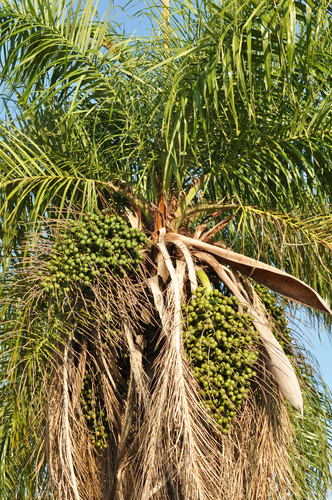
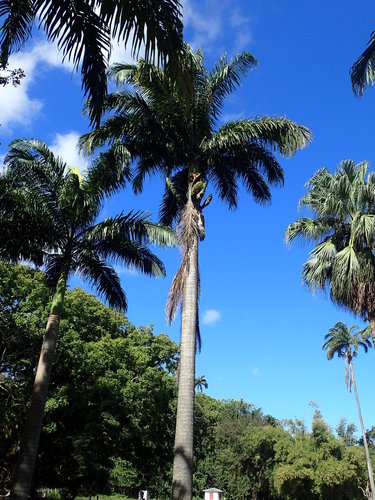
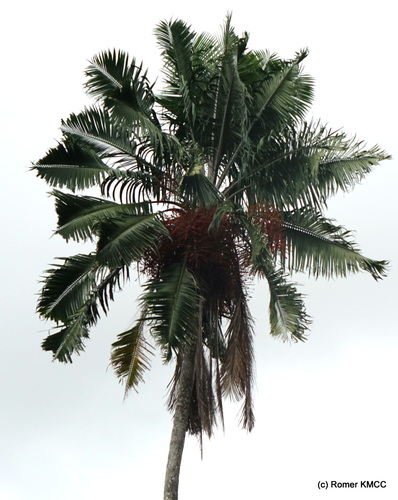
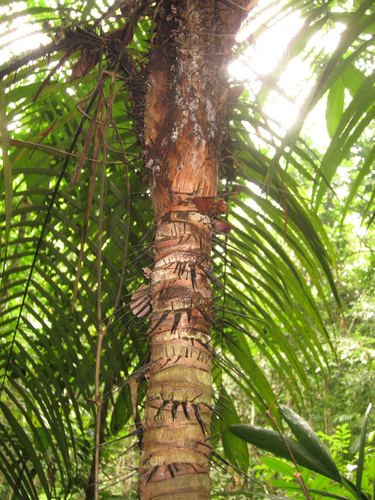
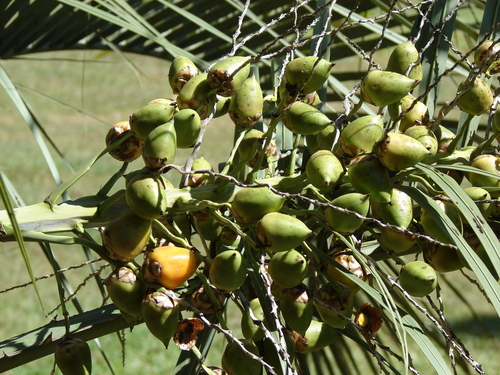
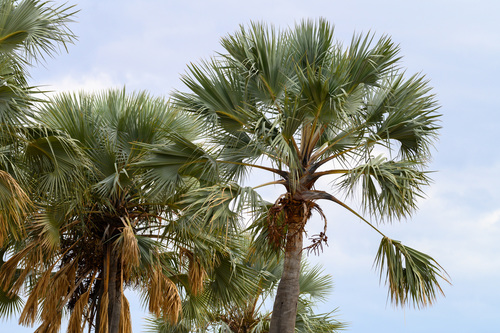
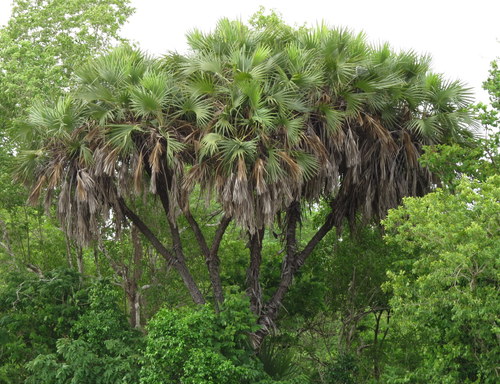
Hyphaene compressa H.Wendl. is an erect, robust tree that reaches 10–20 m (33–66 ft) in height. It is fairly resistant to fire and drought, and is considered difficult to destroy: it grows underground bulbs and deep taproots that let it regrow if damaged above ground. Mature individuals of this species are dichotomously branched; stems may branch about five times by full maturity, or as many as six times. A 20-meter-tall tree can produce up to 64 frond heads, and reaches up to 40 cm in diameter at breast height (DBH). Little is known about the dichotomous venation of this species; the only other palm genera that naturally exhibit this trait are Dypsis, Korthalsia and Laccosperma. The leaves are medium to large-sized, palmate (fan-shaped), and emerge in small crowns at the top of the tree. Spiny leaf stalks and fruit develop at the base of these crowns. Hyphaene compressa has a high concentration along the coasts of northern East Africa, particularly Kenya and Tanzania. Other countries with a high distribution include Somalia, Madagascar and Ethiopia. It also occurs to a lesser extent in the Arabian Peninsula and India. In Kenya, this species (often called the East African doum palm) is densely concentrated around lakes and river ecosystems of the Turkana Valley and surrounding national parks. It has been introduced into the United States for horticultural interest. Hyphaene compressa grows in hot, dry climates. It flourishes in tropical and subtropical regions with temperatures between 36 and 38 °C, and is adapted to semi-arid to arid climates with low annual rainfall of 150 to 600 mm. The tree uses its deep taproots to access water from high water tables. It thrives in full direct light in open grasslands, and along the edges of lakes, swamps, rivers, and oceans. It tolerates salty, calcareous, alkaline (up to pH 9) and generally poor-quality soils. This is a slow-growing, long-lived, woody dioecious tree. Some individuals can reach 100 years of age, but high human interference means few survive much longer than 30 years. The fruit of Hyphaene compressa (which also goes by the common name Gingerbread Palm) is produced only after the tree reaches 30 years of maturation. When the tree is between 40 and 50 years old, fruit can be harvested regularly every 6 months. The fruit is a drupe that grows almost year-round, and takes 3 to 10 months to germinate. The fruit is eaten by elephants, baboons, and monkeys including the endangered Tana River red colobus. Elephants prefer this fruit and are the main agent of seed dispersal for the species. The fruit is edible for humans and is energy-dense. When ripe, the fruit is orange-brown and has a sweet taste. A single doum palm can produce up to thousands of fruits; each fruit grows 6–12 cm long and 4–9 cm wide.