About Hypericum hircinum L.
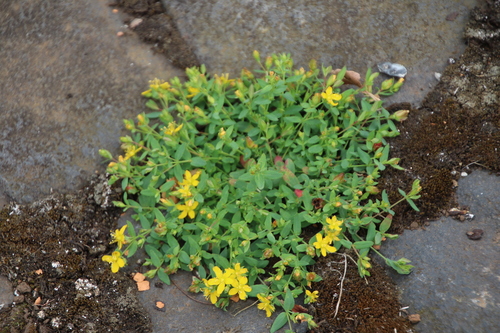
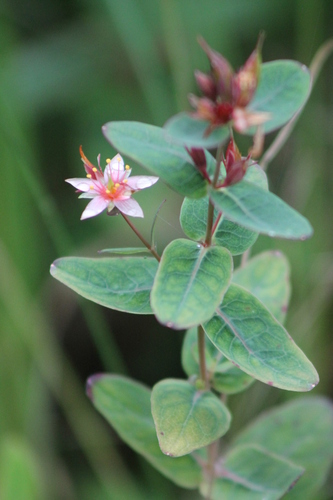
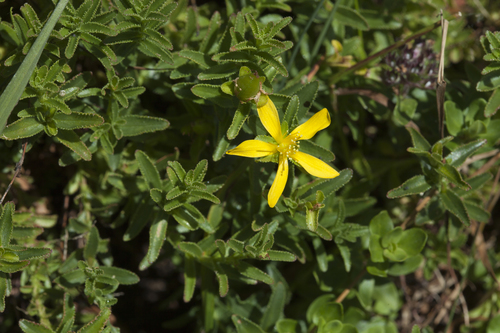
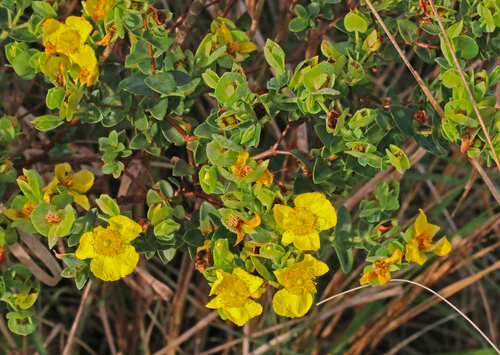
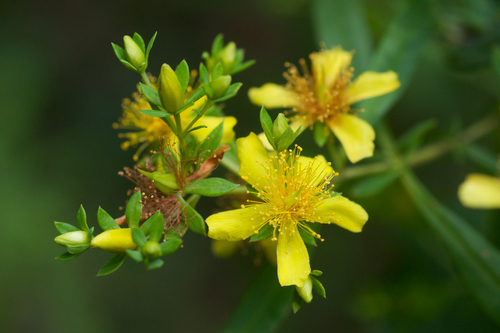
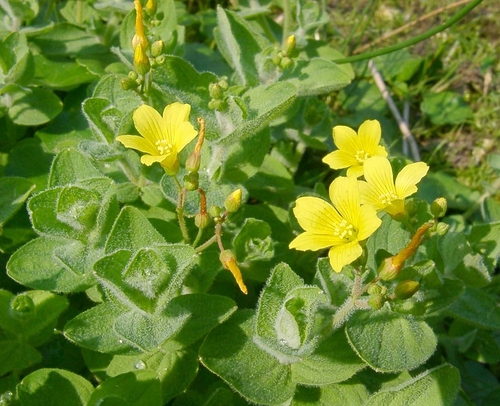
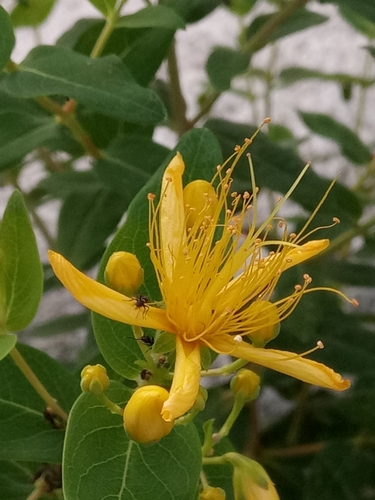
Hypericum hircinum L. is a perennial bushy shrub with many stems. It usually grows 0.6 to 0.9 meters tall, and can reach a maximum height of 1.5 meters. In the 18th century, Carl Linnaeus documented Hypericum hircinum in Sicily, Calabria, and Crete. In 1836, Édouard Spach reported that the species grew in southern Europe and the East. Currently, it is recorded as native to Saudi Arabia, Jordan, Syria, Cyprus, Turkey, Greece, Italy, France, Spain, and Morocco, and has been introduced to the Balkans, Portugal, and the British Isles. It grows in damp, shady riverside habitats, most often at elevations between 300 and 1200 meters. The species has been cultivated across much of Europe, and it very commonly escapes cultivation to become established in native ecosystems of many areas, most notably in Spain, France, and Sicily. Hypericum hircinum has been used as an ornamental plant since at least 1836. It is also often used in folk medicine, particularly to treat respiratory conditions. In Italy, for example, it is used to treat persistent colds, asthma, and coughing. The plant is also used for topical applications: its oil is applied to skin burns, and its extracts are used to relieve rheumatism and other muscular ailments. Formal scientific studies have confirmed some of the medicinal properties of Hypericum hircinum. It has stronger antioxidant activity than the well-studied Camellia sinensis, a difference mostly caused by its content of flavonols, flavanones, and caffeoylquinic acids. It also contains compounds that inhibit collagenase, which may allow for future use in cosmetic products. The antimicrobial properties of the species have also been confirmed by research. It is especially effective against multiple species of Candida fungus and the bacterium Streptococcus mutans, and is also effective against other species of fungi. Unlike many other antifungal treatments, it does not cause cytotoxic effects in humans.