About Hypericum cumulicola (Small) P.B.Adams
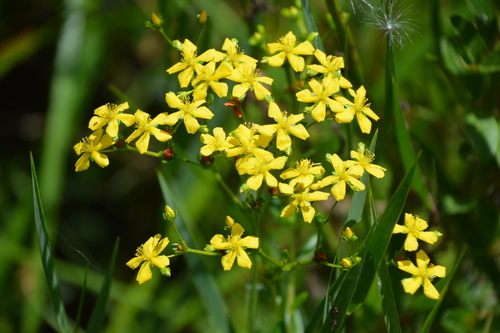
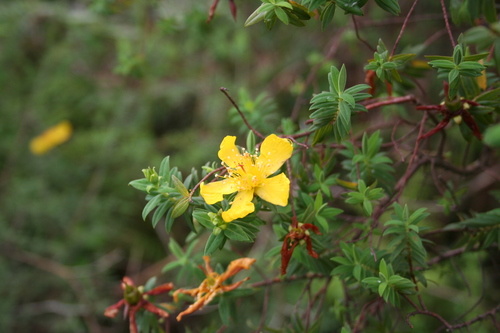
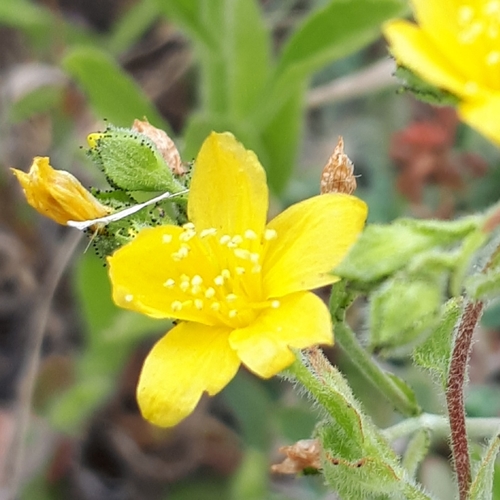
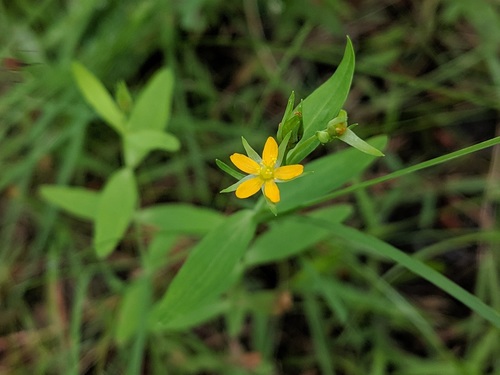
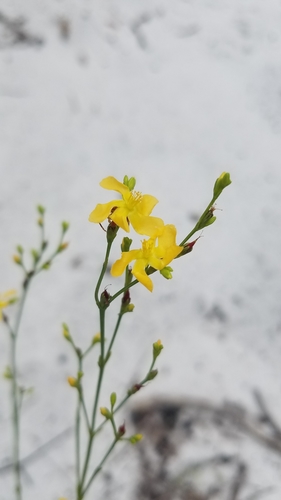
Hypericum cumulicola is a rare species of flowering plant in the family Hypericaceae, commonly known as highlands scrub hypericum or highlands scrub St. John's wort. It is endemic to Florida, where it is threatened by habitat loss and degradation, and it is a federally listed endangered species of the United States. This is a perennial herb with wiry, sometimes woody stems that grow from a taproot and reach a maximum length of about 60 centimeters (24 inches). Its leaves have slightly succulent, linear blades that measure just a few millimeters long. Flowers grow scattered on the upper branches; each flower has five yellow petals 3 to 4 millimeters long and many stamens at its center. The flowers open in the morning and close by midday, and they are most often visited by bees of the genus Dialictus. This plant only occurs in Highlands and Polk Counties in Florida, and is one of many endemics native to the Lake Wales Ridge. 66 occurrences of the plant are known, but only 31 are located on protected land, and even protected land may be improperly managed. This species grows in the Florida scrub, an endangered habitat type, on a substrate of white sand. It may grow alongside other rare scrub vegetation, such as wedge-leaved button snakeroot (Eryngium cuneifolium). The plant is a gap specialist that grows in gaps in the tree and shrub layer where sunlight can reach it. These gaps in the scrub's woody vegetation are maintained by periodic wildfires, and fire suppression is one of the main threats to the species' existence. Without a normal fire regime, taller woody vegetation grows in and shades out understory plants. The plant is fire-dependent: it resprouts after fire, and becomes more abundant in the seasons following a fire that passes through the area. Habitat is also lost outright when land is cleared for development, which is used for residential and agricultural purposes including ranches and citrus groves. Land management practices that can benefit this plant include less fire suppression, avoiding setting fires during drought periods, creating gaps in the scrub through other methods, and avoiding disturbance to the soil crust, which may offer protection to seedlings.