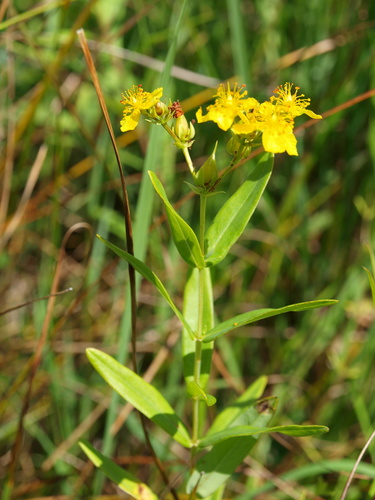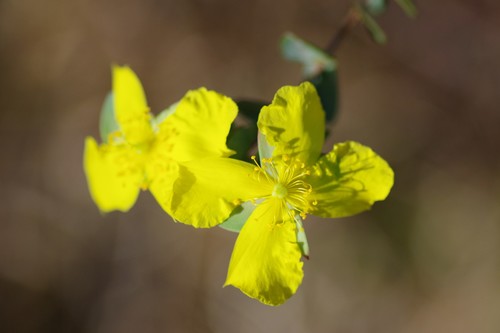
About Hypericum aegypticum L.
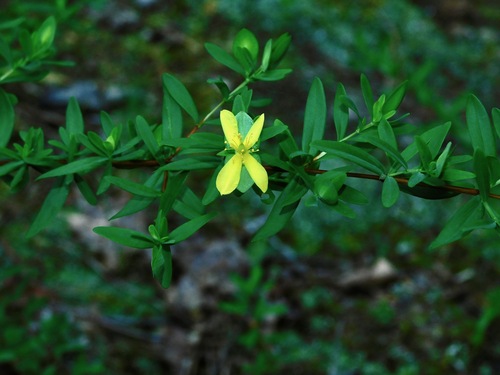
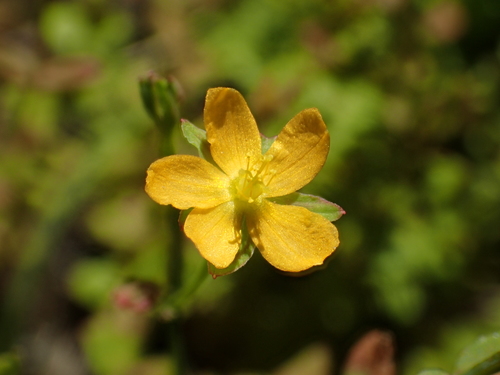
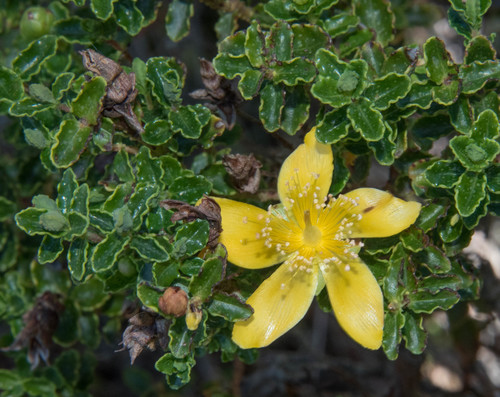
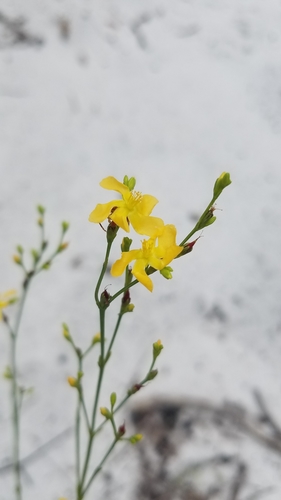
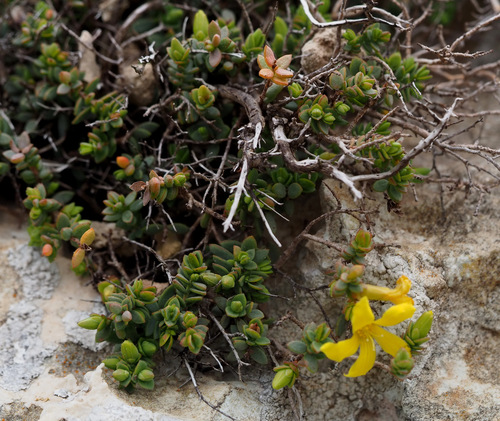
Hypericum aegypticum L. is a shrub or shrublet that ranges in height from 0.05 to 2 meters (0.16 to 6.56 ft) tall. It grows in a crowded, spreading habit, with stems extending outward from the plant's center. Branches grow roughly perpendicular to these main stems, though they can also spread in other directions. It has a chromosome number of 2n=20. This species is common in the wild and is indigenous to Malta, Greece, Morocco, Algeria, and Libya. Its overall distribution across these regions is unusual, as it is split into multiple highly fragmented population strands. Three subspecies are separated across these different strands: H. aegypticum subsp. aegypticum is native to Libya; subsp. maroccanum is native to Morocco and Algeria; subsp. webbii is native to Sardinia, Sicily, Malta, and Greece. Hypericum aegypticum grows among limestone rocks and scree in coastal valleys, and can be found at elevations between sea level and 1,600 meters (5,200 feet) above sea level. In wind-swept or exposed habitats, the species has been observed growing in much denser, carpet-like patterns, and often only reaches 20–30 centimetres (8–12 in) tall. It grows best in open, sunny areas with no other competing plants. As of 2021, while the Maltese Red Data Book lists this species as threatened in Malta, no legal protection measures have been put in place for it. Hypericum aegypticum is not widely cultivated, but it is kept in botanical gardens, including in a greenhouse at the University of Oxford Botanic Garden.