About Hypera postica (L.Gyllenhal, 1813)
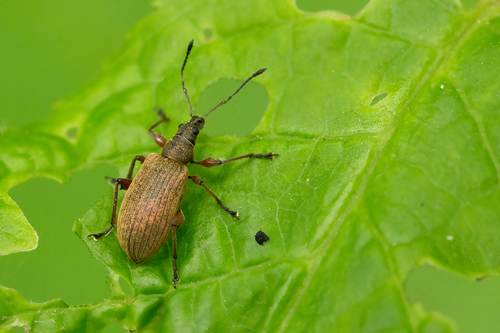
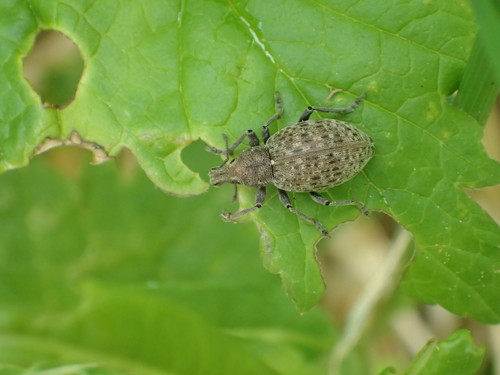
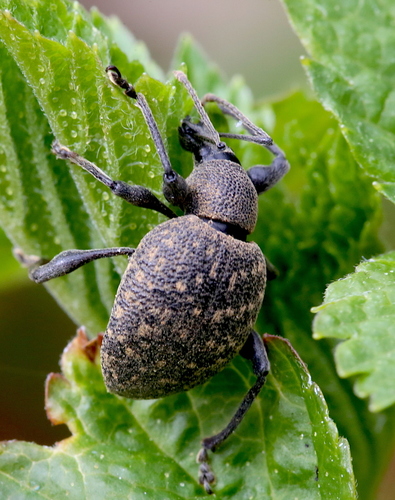
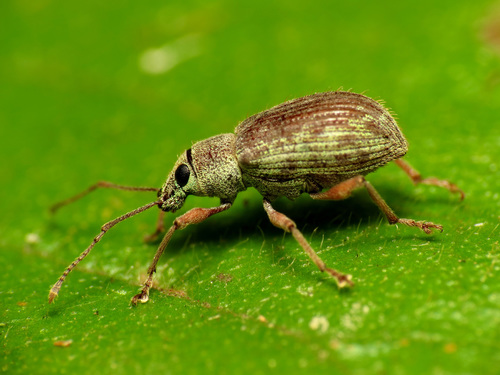
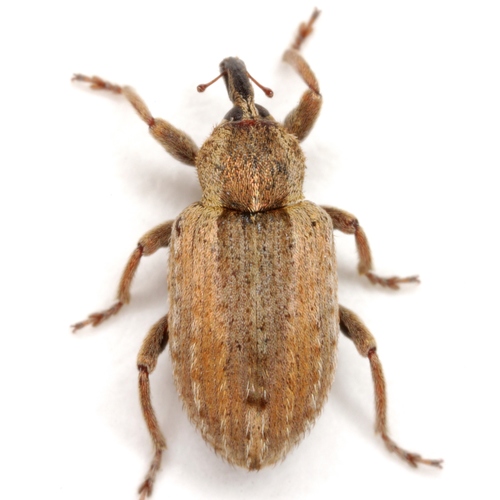
Hypera postica, commonly called the alfalfa weevil, reaches an adult length of approximately 4 to 5.5 mm (0.16 to 0.22 inches). Its rostrum, also known as the beak, is short and broad. The frons is half as wide as the rostrum, and the pronotum is widest at its center. Adult alfalfa weevils are generally brown with a dark mid-dorsal stripe. Alfalfa weevil larvae have a distinctive black head and no legs; they are yellowish-green, with a white stripe running along their back and faint white stripes along their sides. Just before pupation, larvae reach a length of about 1 cm (0.4 inches). Pupation occurs inside a white, pea-sized cocoon constructed from loosely woven silk. The alfalfa weevil resembles the clover leaf weevil (Hypera punctata), but the clover leaf weevil is almost twice as large, its larvae have tan-colored heads, and clover leaf weevils rarely cause significant damage to alfalfa crops. In Illinois, some alfalfa weevil eggs are laid in late fall or winter when weather conditions are suitable. Adult alfalfa weevils also overwinter, and become progressively more active in March and April. Females lay eggs in batches of up to 25 inside alfalfa stems. Larvae feed for three to four weeks and molt three times before pupating inside the cocoons they produce. They emerge as adults after approximately one to two weeks. After feeding for one to two weeks, adults may enter aestivation for the rest of the summer, during which their metabolic, respiratory, and nervous system activities slow. In fall, adult alfalfa weevils hide in the crowns of alfalfa plants, or move to coarse vegetation growing in ditches, along fences, or in nearby woodland.