About Hypenodes humidalis Doubleday, 1850
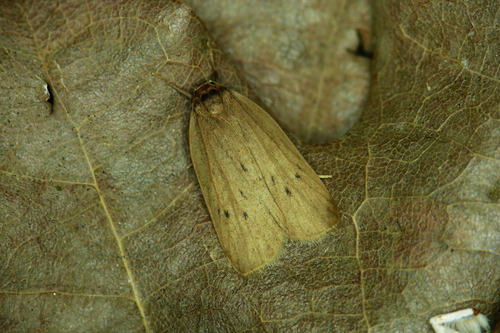
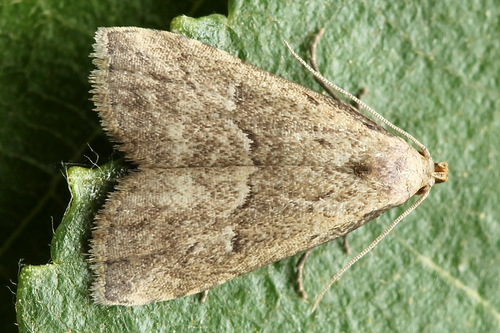
Hypenodes humidalis, commonly known as the marsh oblique-barred, is a moth species belonging to the family Erebidae. This species was first formally described by Henry Doubleday in 1850. It is distributed across most of Europe, and extends through the Palearctic region to Siberia. The wingspan of adult Hypenodes humidalis measures 14–15 mm. Its forewings are whitish ochreous, and are irregularly sprinkled with brown and dark fuscous scales. The inner line on the forewing is indistinct. The outer line is irregular, oblique, dark fuscous, and has a whitish edge along its posterior side. The small, dark cellspot on the forewing has a whitish edge on its outer side. The subterminal line is straight, whitish, poorly defined, and is preceded by fuscous suffusion as it runs to the wing apex. The hindwings of this moth are grey. Adult moths are in flight from the end of May through the beginning of October. The larvae of this species are thought to feed on species of the genera Juncus and/or Carex. Larvae can be found from July to May. This species overwinters in its larval stage. Pupation occurs on the stem of the host plant.