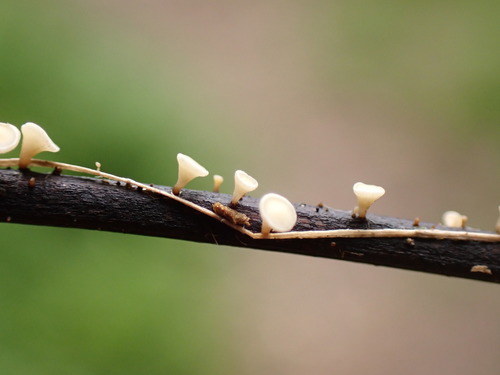
About Hymenoscyphus fraxineus (T.Kowalski) Baral, Queloz & Hosoya
Hymenoscyphus fraxineus is an ascomycete fungus that causes ash dieback, a chronic fungal disease of ash trees in Europe. Infected trees develop symptoms of leaf loss and crown dieback. This fungus was first scientifically described in 2006 under the name Chalara fraxinea. Four years after this initial description, researchers discovered that Chalara fraxinea was actually the asexual (anamorphic) stage of a different fungus, which was first named Hymenoscyphus pseudoalbidus and later renamed to Hymenoscyphus fraxineus. The first recognized report of ash dieback came in 1992, after a large number of ash trees died in Poland. Today the disease is widespread across Europe, with recorded mortality rates reaching up to 85% in ash plantations and 69% in ash woodlands. Hymenoscyphus fraxineus is closely related to Hymenoscyphus albidus, a native fungus that does not harm European ash trees. A 2016 report in the Journal of Ecology proposed that combined attacks from H. fraxineus and the emerald ash borer could lead to the extinction of European ash trees.

