About Hylotelephium maximum (L.) Holub
Hylotelephium maximum, commonly known as stonecrop or showy stonecrop, is a perennial succulent plant belonging to the family Crassulaceae. Native to North America, this plant thrives in rocky areas, cliffs, and open woods.
Size and Stem Traits
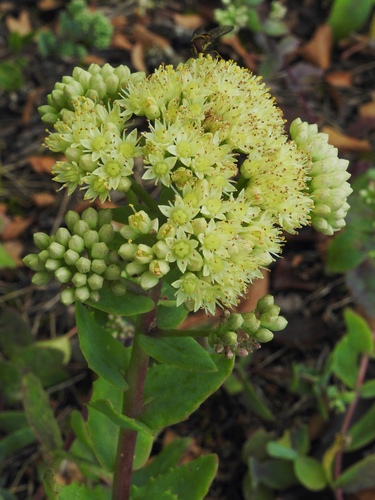
It can grow up to 2 feet tall and is characterized by its thick stems and fleshy, blue-green leaves. These leaves are arranged in a rosette pattern at the base of the stem, becoming smaller as they ascend.
Flowering Period
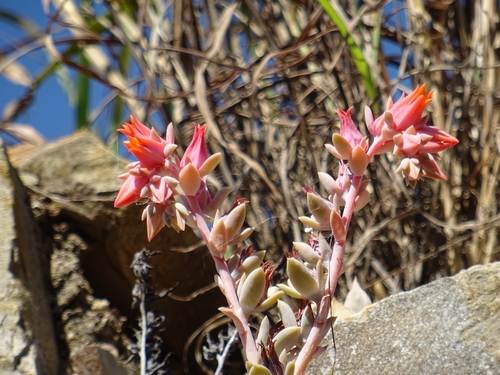
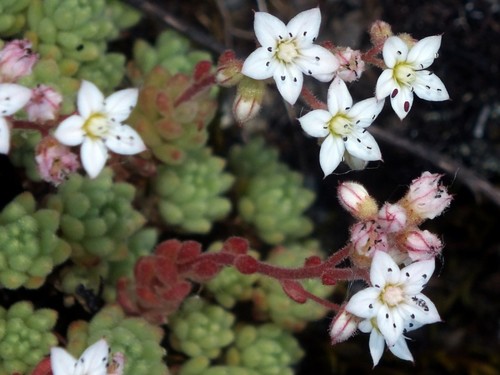
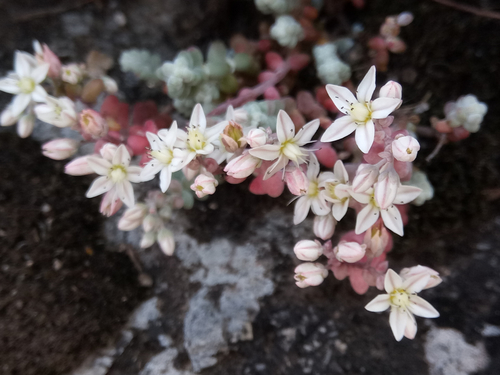
In late summer or early fall, Hylotelephium maximum produces clusters of small pink flowers that attract bees and butterflies. These star-shaped flowers, each with five petals, bloom atop tall stems that rise above the foliage.
Soil and Water Preferences
This hardy plant can tolerate drought conditions but prefers well-drained soil with moderate moisture levels. While it thrives in full sun, it can also grow in partial shade.
Medicinal Uses
Hylotelephium maximum has several medicinal uses, such as treating wounds, burns, insect bites, and sore throats, due to its antibacterial properties.
Garden Suitability
Overall, Hylotelephium maximum is an attractive perennial succulent suitable for rock gardens or mixed borders. Its showy flowers add vibrant color in late summer, a time when most plants have stopped blooming, making it an excellent choice for garden enthusiasts looking for low-maintenance plants with appealing foliage throughout most of the year.