About Hylobius abietis (C.Linnaeus, 1758)
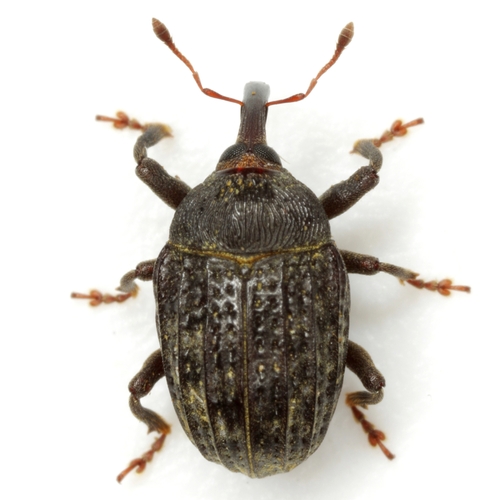
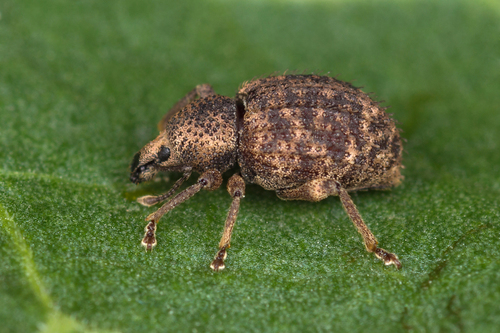
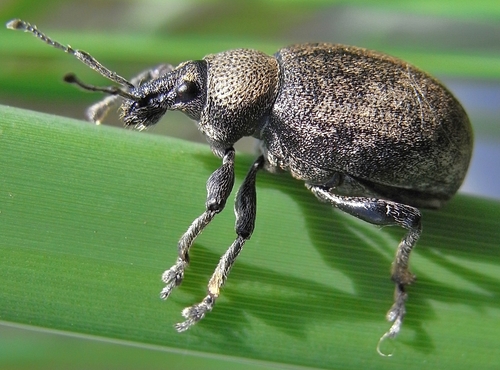
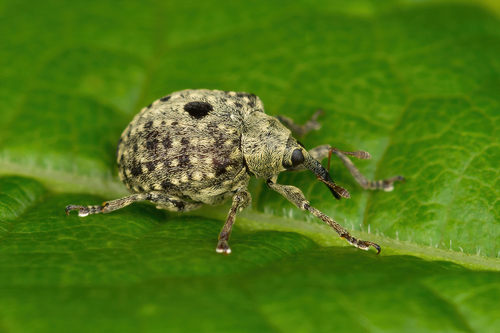
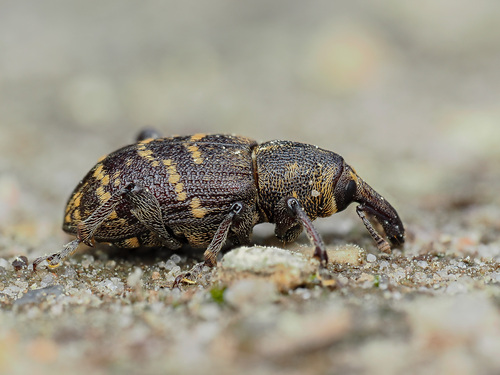
Description: Adult large pine weevils measure approximately 10–13 mm (0.39–0.51 in) in length excluding the beak (snout). They are dark brown with patches of yellow or light brown hairs arranged in irregular rows across their elytra. Their legs are black or deep red, with a distinctive tooth on the femora and at the end of the tibiae. Fully grown larvae are 14–16 mm (0.55–0.63 in) long; as is typical for weevils, they are apodial (legless), curved, whitish, and have a brown head. Life cycle: After hibernating in the ground within forest litter in spring, adult females lay eggs on, in, or near the roots of sick or freshly felled trees. A single female can lay up to 100 eggs over her lifetime. Larvae hatch 2 to 3 weeks after laying, and feed under the bark while excavating galleries. They complete development by forming a pupation case, and block the entrance to the case with sawdust. Pupae are immobile, cream-colored, and have soft bodies. This pupal stage lasts 2 to 3 weeks, after which the adult weevil leaves the pupal chamber. When weather conditions are favorable, the entire development process lasts four to five months. If eggs are laid in April or May, adult weevils emerge in August or September, but do not become sexually active until after they overwinter. Adult weevils (imago) live 2 to 3 years, and reproduce in subsequent seasons over their lifespan. In colder conditions, larval development is slower, so the full life cycle lasts 12 months, and resulting adults are able to reproduce quickly. A biennial generation cycle is also common: in this pattern, larvae hatch from eggs laid in May, survive through the entire first season and overwinter, and the adult imago emerges in July or August of the following year.