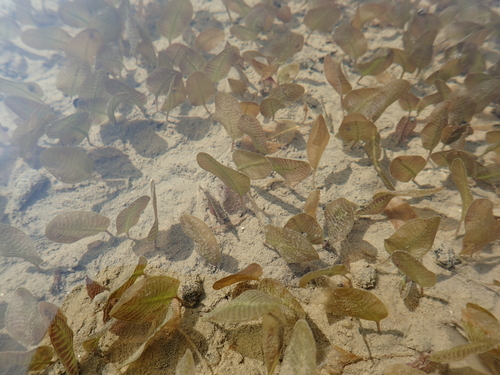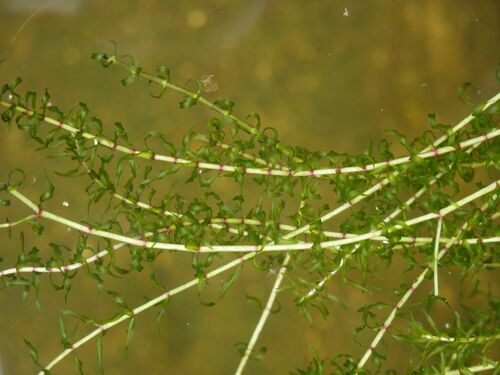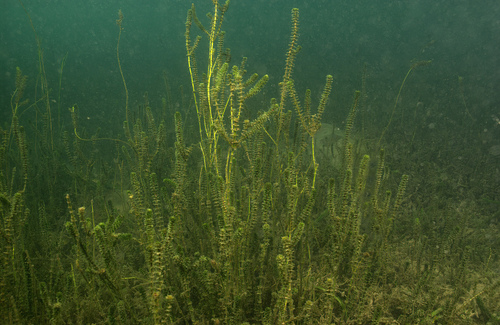
About Hydrilla verticillata (L.f.) Royle
Why accurate identification matters. Accurate identification of Hydrilla verticillata is essential for regulatory reporting, ecological monitoring, and management planning. Misidentification can lead to unnecessary treatment of native vegetation, or a delayed response when Hydrilla spreads as an invasive species. Hydrilla verticillata is frequently confused with Elodea canadensis and Egeria densa, because all three share a similar submerged growth form. A complete biological overview of this species can be found in the Hydrilla master guide. Ecology. Hydrilla verticillata exhibits negative allelopathy toward the common hornwort (Ceratophyllum demersum) and the prickly hornwort (C. muricatum), meaning it produces chemical compounds that inhibit the growth of these two species. As an aquatic macrophyte, Hydrilla verticillata plays critical roles in aquatic ecosystems. It shapes nutrient cycles, influences the overall ecology of the water body it occupies, and also impacts the ecology of underlying sediments. Hydrilla interacts with other aquatic organisms: it provides food, nutrients, habitat, and shelter to these communities. At the same time, Hydrilla can cause negative impacts in aquatic communities. When it grows to high abundance, it alters dissolved oxygen levels, which can trigger population declines in native fish, invertebrates, and other native plant species.