About Hydrangea aspera Buch.-Ham. ex D.Don
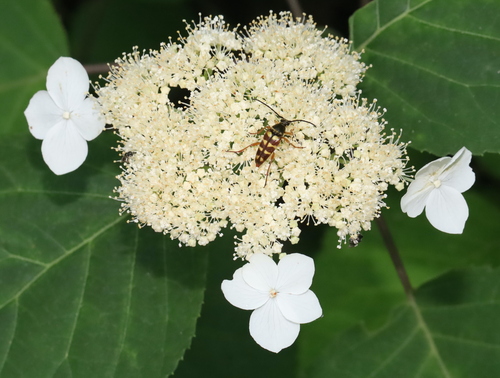
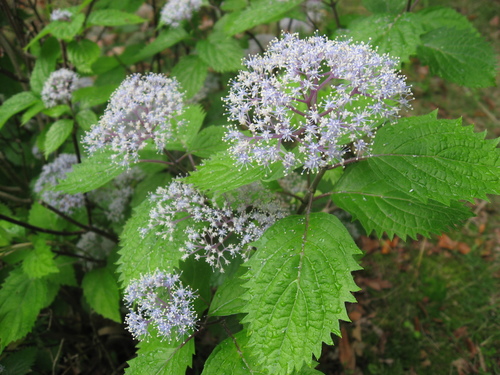
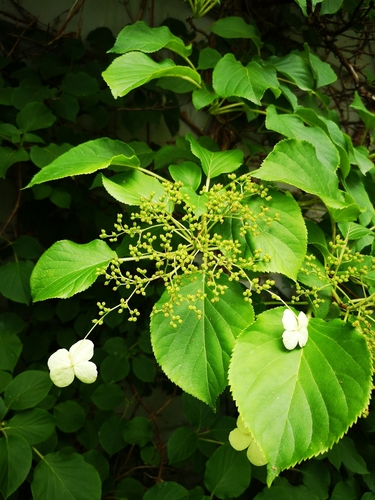
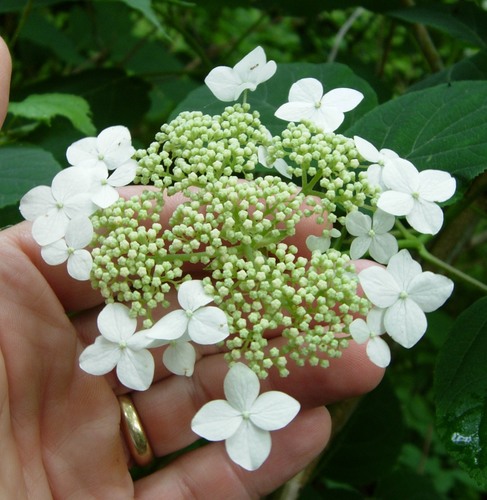
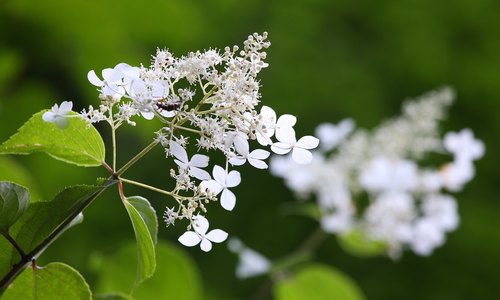
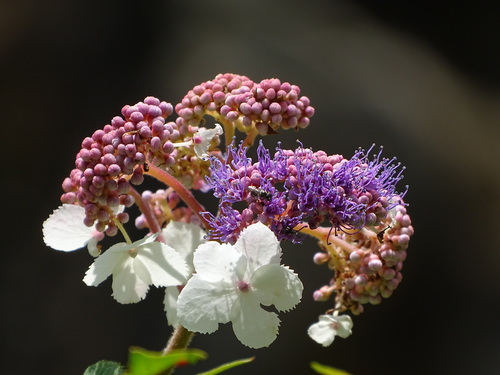
Hydrangea aspera Buch.-Ham. ex D.Don produces lacecap, flat-topped inflorescences, with flower color that changes based on soil pH. Sterile flowers of this species have longer sepals than its fertile flowers. When growing in more acidic soil, the species produces flowers in various shades of blue; the lower the soil pH, the more vibrant the blue flower color. In more alkaline soil with higher pH, flowers appear in various shades of pink. Along with soil pH, the amount of soluble aluminum available in soil also influences flower color: when the plant absorbs more aluminum ions, its flowers become a deeper blue. One key characteristic that sets Hydrangea aspera apart from other Hydrangea genus species and its own subspecies is its coarsely textured leaves. The shape, size, and lower surface texture of its leaves vary slightly depending on the native region where the plant grows naturally. This species is widely cultivated. It prefers a sheltered growing position in acidic or neutral soil, and grows best in partial shade or afternoon shade. Its leaves, which can exceed 30.5 cm (12 inches) in length in some forms, are susceptible to damage from drying winds and strong physical wind. Many cultivars have been developed for use as ornamental plants in parks and gardens. In addition to garden-origin forms, several wild-origin forms are also cultivated, including Kawakamii, Macrophylla, Robusta, Sargentiana, Strigosa, and Villosa. Web search results for plant images matching these terms show very wide variation in appearance, which signals either unsettled taxonomic classification or complex trait expression caused by the species' broad geographic range or other factors. Some taxonomic authorities classify related forms like H. robusta and H. longipes as full separate species, while other sources group them as subspecies of Hydrangea aspera, such as H. aspera ssp. robusta or H. aspera ssp. kawakamii. Most researchers and horticulturalists agree that additional study is needed to formalize the species' taxonomy, as insufficient relevant data has been published to date. This is particularly true for data on hybrid viability, hybrid sterility, and chromosomal differences between the currently recognized groups; more data in these areas would greatly help in clearly distinguishing between separate species and subspecies. The cultivar H. aspera 'Macrophylla' — which is not to be confused with the separate species H. macrophylla — has earned the Royal Horticultural Society's Award of Garden Merit.