About Humulus lupulus L.
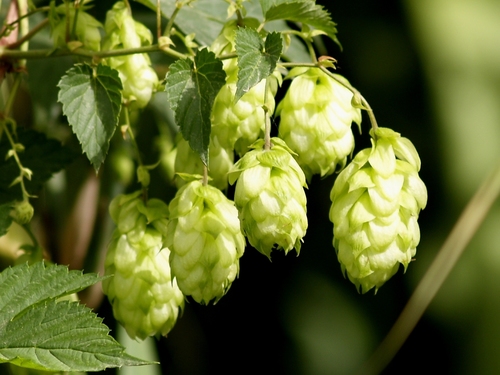
Humulus lupulus L. is a perennial herbaceous climbing plant that can reach up to 10 metres (33 feet) in height and live up to 20 years. It bears simple leaves with 3–5 deep lobes, which can grow in either opposite or alternate arrangement along stems. Longer summer days trigger flowering, which typically occurs around July or August in the Northern Hemisphere. This species is dioecious, meaning male and female flowers develop on separate individual plants. Its fragrant flowers are pollinated by wind. Staminate (male) flowers have no petals, while pistillate (female) flowers have petals that envelop the developing fruit. The clustered female flower structures, called strobili, are commonly known as hops. The fruit of H. lupulus is an achene: a dry fruit that does not split open when it reaches maturity. Each achene is surrounded by tepals, and glands that secrete lupulin are concentrated on the fruit. This species is often classified as a bine rather than a vine, because it has stiff downward-facing hairs that provide stability to support its climbing growth habit. H. lupulus is native to Europe, western Asia, and North America. It grows best in full sun, with moderate rainfall, within the latitude range of 38° to 51°. In its ecology, the flowers of this plant attract butterflies and other insects. Handling H. lupulus can cause dermatitis in some people; it is estimated that approximately 1 in 30 people experience this reaction.